
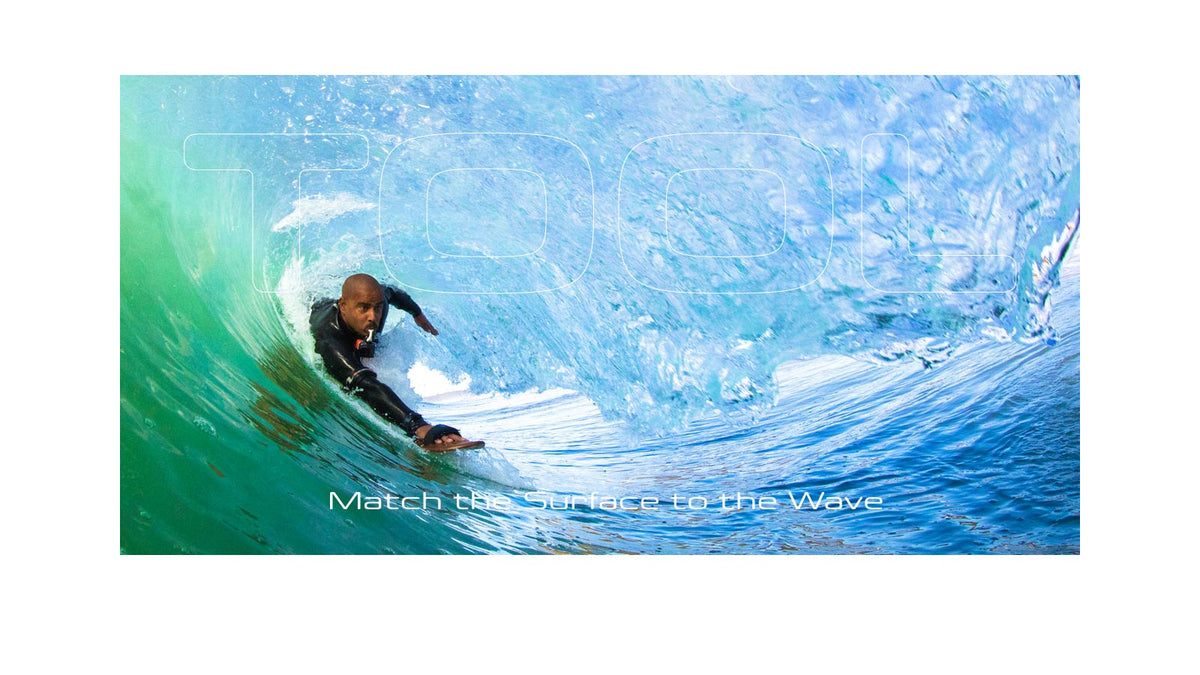
A handboard, also called a bodysurfing handplane, extends your planing surface. Choosing the right surface area and rail profile is the final step in understanding how speed works in bodysurfing.
You now understand the physics of speed and how to read the ocean. This is where the tool connects the two.
A handboard reduces your body's natural drag by lifting your torso out of the water. The right board depends on the wave types you read and the line style you want to hold.
Choosing the right handboard is not about preference alone. It is about matching the tool to the wave, and the wave to how you ride it.
The system is clear by this point. Speed comes from your body, trim, control, and the surface. A handboard does not replace that system. It supports it.
The question is not which board is best. The question is which board works best for the conditions in front of you and the way you approach the water.
This article is the final in the bodysurfing speed series. If you have not yet read Why Body Position Changes Speed in Bodysurfing, How Trim Controls Speed on a Wave, How Your Arms Control Direction and Speed, Hands vs Handboards - What Changes and What Doesn't, How Different Wave Types Affect Bodysurfing Speed, and How to Read a Wave for Speed in Bodysurfing, those articles cover the system this one completes.
Start With the Wave, Not the Board
Every decision begins with the wave.
Different wave types place different demands on your body, your line and your control. The board should match those demands, not override them.
- Hollow waves: fast, steep, high energy
- Fat waves: softer, slower, longer sections
- Fast walls: require quick alignment and control
- Slow walls: require efficiency and speed generation
Once you understand the wave, the board choice becomes clearer.
What the Board Actually Changes
A handboard increases surface area.
That changes how water flows around the hand. It can improve lift, reduce drag when positioned correctly, and help hold a cleaner line at speed.
It does not create speed on its own. It extends what the body already does well.
If body position, trim, and control aren't working, the board can't fix that.
For a deeper understanding of how the concave bottom and planing surface generate lift, read The Invisible Cushion - Why Handboards Fail vs Physics-First.
Matching Board to Conditions
Hollow Waves
Hollow waves move quickly and offer concentrated energy. The board needs to support control and stability at speed, with a clean entry into the line and a steady hold through tighter sections. A smaller surface with a smaller rail radius holds the line on a steep face. The goal is not to overpower the wave. It is to stay connected to it.
Fat Waves
Fat waves take more effort to keep speed. Here a wider surface earns its place, adding lift in weaker sections and helping you carry momentum along longer, flowing lines. In softer waves, small efficiency gains make a big difference.
Fast Walls
Fast walls demand immediate alignment. The board should help you settle into the line quickly and keep direction stable under speed. A medium-sized board with balanced lift and control suits most riders here.
Slow Walls
Slow walls give you time, but they need active input. The board should support speed generation without creating drag, so light, controlled contact with the water matters more than raw surface area.
Matching Board to Style
Conditions matter, but so does how you ride. Some riders prefer a direct, controlled approach. Others move freely and adjust constantly as the wave changes. The right board supports your natural movement instead of working against it.
- The power rider - deep entries and strong projection. Choose a board with a defined concave and stability.
- The technical rider - rotations, rolls and transitions. Choose a forgiving template with a larger rail radius.
- The down-the-line rider - long, fast lines across the face. Choose a longer, cleaner template with minimal drag.
One Board, Two Boards, or Hands
There is no single correct setup. It comes down to how you like to ride.
With one hand or one board, your leading arm reaches forward and your body turns side-on along the wave. With both hands or two boards, your shoulders face the wave and both arms plane at once. Many freestyle bodysurfers switch from hand to hand, or use both together, for more leverage, lift, control and speed. Two boards add planing surface to that same style of riding.
Think of a one-arm push-up against a two-arm push-up. The load spreads differently, and your body sits in a different position.
Size matters more with two boards. Large boards are hard to swim with as a pair and can knock into each other, so the right pair scales with the rider, the same logic as sizing a bodyboard or surfboard. For the average-sized rider, POD pairs the EGO 9", a board just larger than an adult hand. Like swim hand paddles, a matched pair gives you a balanced stroke as you swim out, something a single board cannot offer. The Duo POD Handboards are that pair. For bigger riders, around 85 to 90 kg and over, two WOW 13" boards are an option, because their low weight keeps a larger pair manageable.
The Core Selection Factors
- Surface area - more surface increases lift. Essential in fat, slower-moving waves.
- Rail radius - every POD board has fully rounded edges. A smaller radius holds steeper faces. A larger radius offers more forgiveness and smoother transitions.
- Volume - more volume helps maintain momentum when the wave loses energy.
Board and Rider Size
Wave conditions and riding style are two variables. The third is the rider's own body size.
The relationship between foot length, hand size and board surface area affects how efficiently the board generates lift and how much load it places on the wrist, arm and shoulder. A board that is too large for the rider's body creates drag rather than reducing it. A board that is too small provides insufficient lift in the conditions where it is needed most.
For a full guide to bodysurfing handboard and handplane sizes for your body, read How to Choose a Bodysurfing Handboard.
The POD Handboard Range
The POD handboard range applies the same principles this series has covered. Each board suits a specific rider profile, wave type and performance intention.
- Original Classic - the signature shape in solid polypropylene, made from the same steel mould since 1995. A rigid board with a lower float, and the most affordable way into the range.
- EGO 9" - compact and agile. Suited to experienced riders in tighter, faster sections where control and precision matter more than surface area. Also available as the Duo, a matched pair for riders who use both hands.
- WOO 12" - the all-round performer. Balanced lift and control across a wide range of wave types and experience levels.
- FLO 15" - the largest surface in the POD range, with the most lift and speed potential of any POD board in larger, more powerful surf. The choice for experienced riders who need more surface in demanding conditions.
- WOW 13" - lightweight polyurethane, the first formulation developed specifically for bodysurfing. 18% to 28% lighter than wood at the same volume, with the ergonomic palm support first shaped into the cedar and walnut range. Suited to riders who want performance without the weight of a timber board.
Each board is the result of shaping, testing and refining in real surf conditions since 1988. The range doesn't cover every possible variation. It covers the variations that actually matter in the water.
Common Mistakes When Choosing a Handboard
- Choosing based on appearance instead of conditions
- Using the same setup in every type of wave
- Expecting the board to create speed instead of supporting it
- Ignoring how body position and trim affect performance
- Choosing a board sized for the wave rather than the rider's body
The board is part of the system, not a shortcut around it.
Questions About Choosing a Handboard
Which hand do I ride the handboard on?
Start with your dominant hand. There is no set rule, and the choice becomes natural the more you ride. Some riders keep their dominant hand whichever way the wave breaks.
Can I use a handboard between the flags?
It depends on the beach. Councils set their own rules on hard craft in the flagged area, so check the signage and ask the lifeguards before you go in.
What suits a child or a bigger rider?
Extra float helps both. The WOW 13" has about 70% more volume than the Original Classic on almost the same footprint, so it sits higher in the water. For sizing by body, read the handboard guide linked above.
What This Means in the Water
The right handboard does not make you faster on its own.
It makes it easier to hold speed, control direction and stay connected to the wave when everything else is working together.
When the match is right, the board feels like a natural extension of the body.
When it is not, it feels like something you have to manage.
Bodysurfing on Its Own Terms
Bodysurfing shares principles with bodyboarding and surfing, but it's executed differently. No equipment separates the body from the water.
Every adjustment, every line, every gain in speed comes directly from the rider.
That direct connection is what makes it the purest form of wave riding. The handboard extends that connection. It does not replace it.
The Complete System
Six articles. One system.
- Body position - the foundation of speed
- Trim - how speed is held or lost
- Control - how direction and balance are managed
- Surface - how hands and boards extend the system
- Wave - the terrain that sets the conditions
- Line - how the speed opportunity is found and used
Match the Tool. Complete the System.
Choosing a handboard is not about finding the best board. It is about finding the right match for the wave, the conditions and the way you ride.
Wave type, body position, trim and control all come first. You choose the board last, and deliberately.
Speed still comes from body + trim + control + surface.
Every piece is in place. The wave will tell you the rest.
Share:
Why Earplugs Fail in Surf and Open Water (What Actually Holds)
Open-Water Swimming - What You Need to Know Before You Enter