


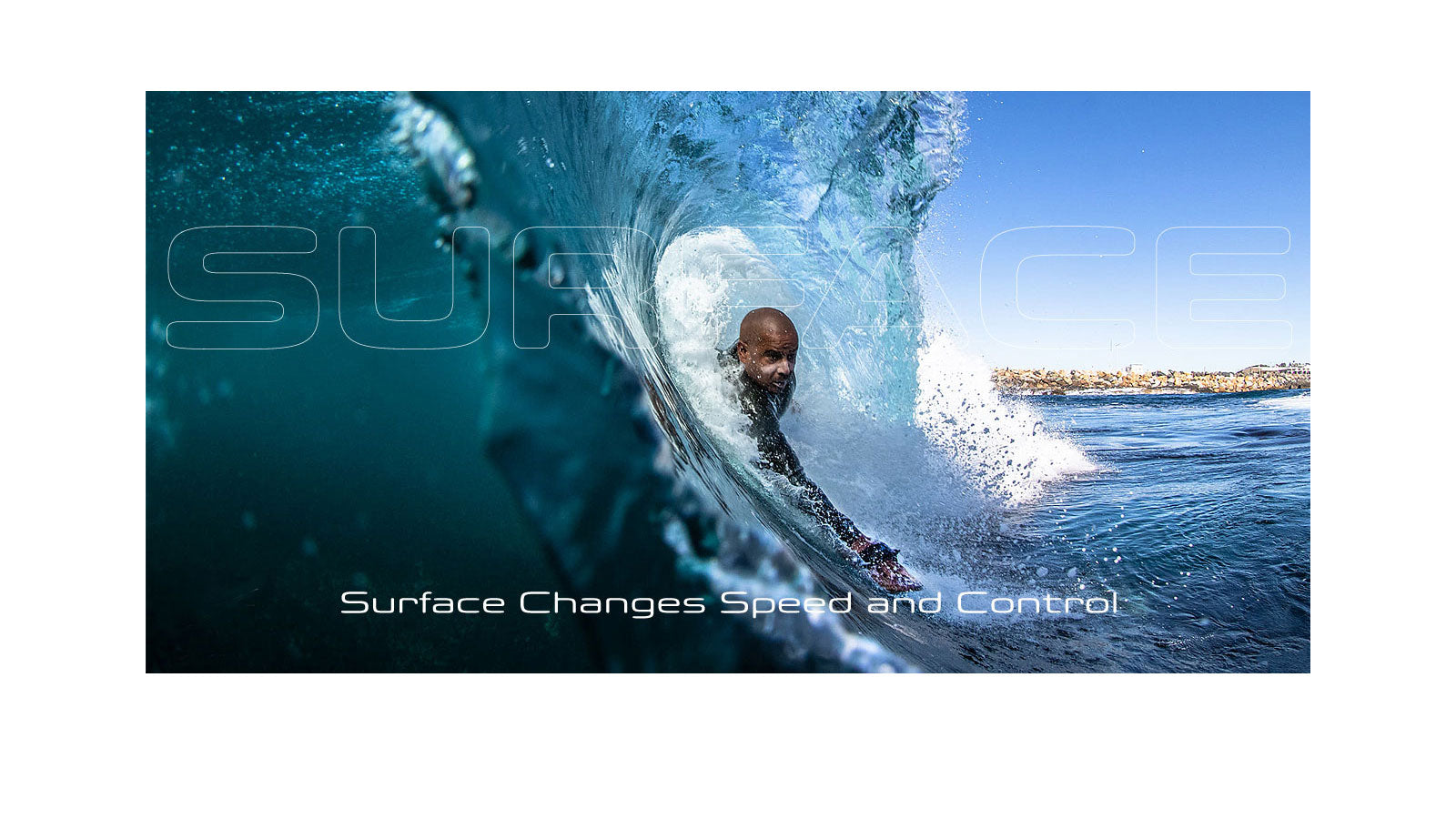
Many people believe the handboard creates speed in bodysurfing. Once you introduce a board, everything changes.
The reality is different.
The handboard does not replace the hand. It extends what the hand already does. To understand that, start with the hand's role.
Speed in bodysurfing comes from the whole system working together. If you haven't read Why Body Position Changes Speed in Bodysurfing, How Trim Controls Speed on a Wave, and How Your Arms Control Direction and Speed, those articles cover the foundation that this one builds on.
What Your Hands Already Do
Your hands are not passive in the water. They act as control surfaces. They help guide direction, manage pressure and support the body as it moves across the wave.
They are adaptable, responsive and constantly adjusting. The fingers, palm angle and wrist position all change in real time as the wave changes beneath you.
Palm angle is particularly important. When the palm faces slightly downward and forward, it generates lift by directing water flow beneath the hand. When it faces too far down or too far forward, it increases drag rather than supporting lift. The hand is not just steering - it is actively shaping how the body interacts with the water surface.
But there is a limit. The hand's surface area is relatively small. At higher speeds or in more powerful waves, that limitation becomes more noticeable. The hand can only provide so much lift and so much stability before the system needs more to work with.
What a Handboard Changes
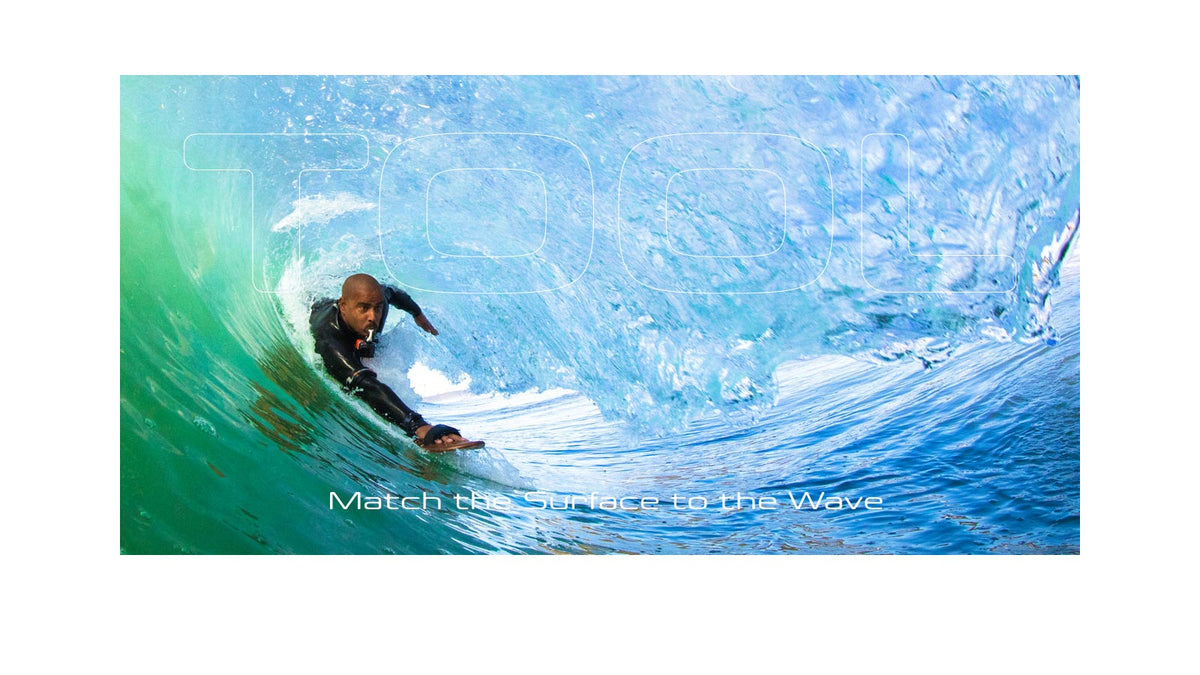
A handboard increases surface area and creates a more consistent leading surface. It takes what the hand is already doing and makes it more stable, repeatable, and efficient.
Added surface area improves lift, helps the rider hold a cleaner line and makes it easier to stay connected to the wave at speed.
It also reduces variability. While the hand can change shape constantly, the board provides a fixed, reliable surface that behaves more predictably in the water.
But this is the key point. The board is working with the system, not replacing it.
When a Rider Moves from Hand to Handboard
The decision to introduce a handboard usually comes from a specific feeling. The hand is doing its job, but the wave is moving faster than the hand can comfortably manage. The connection starts to feel marginal - enough to ride, but not enough to hold the line cleanly or carry speed through more demanding sections.
When a rider picks up a handboard for the first time, what often surprises them is not just the added speed. It is how much easier it becomes to hold trim. The board provides leading-surface consistency that the hand alone cannot sustain at pace.
What doesn't change is the need to use the board correctly. If the rider's body position, trim, and arm control are poor, the board reveals those weaknesses rather than hiding them. A larger, poorly angled surface creates more drag, not less.
For a deeper understanding of how handboard design affects performance, read The Invisible Cushion - Why Handboards Fail vs Physics-First.
A Note on Terminology
Bodysurfing boards go by different names. Some brands use "handplane." POD uses "handboard." The distinction matters because a hand plane in woodworking has a specific, unrelated meaning: it is a tool used to shave wood surfaces. Using "handboard" avoids that confusion and keeps the focus on what the product actually does: a board held in the hand while bodysurfing.
For a full explanation of sizing, shape and selection, read How to Choose a Bodysurfing Handboard.
What Does Not Change
Even with a handboard, the fundamentals remain the same.
- The body still drives speed
- Trim still controls how that speed is held or lost
- The arms still guide direction and balance
- The connection to the wave still determines the outcome
A board cannot fix poor positioning or poor timing. It can enhance what is working well, but it cannot replace the system itself.
One Hand vs Two Hands
In many situations, riders naturally bring both hands forward. Bringing both hands forward increases surface area, improves stability and helps hold a cleaner line.
Two hands working together provide more support than one. This becomes especially noticeable in faster sections or when the rider needs more control.
It is a natural response to speed and wave energy, not a technique separate from the rest of the system.
When One Surface Becomes Two
Some riders have taken this idea further by using a handboard on each hand.
The motivation is not novelty. It directly extends the same principle. As speed increases, the system needs more usable surface area to stay connected to the wave.
Using two handboards increases that surface area again. It can provide more lift, more forward support and more control in high-speed waves where a single surface may not be enough.
This approach has emerged from real use in powerful conditions. Riders adapt the system to match the wave's energy
Where Each Approach Works Best
Hands, handboards and dual handboards each have their place.
- Hands offer freedom, adaptability and a direct connection to the water
- A handboard adds consistency, control and a more efficient leading surface
- Two handboards increase usable surface area for higher speeds and more powerful waves
The choice is not about right or wrong. It is about what the conditions demand and how the rider wants to interact with the wave.
The Surface Changes. The System Stays.
The handboard changes the surface. It does not change the system.
Your body, your trim, your control and your connection to the wave still determine how fast and how clean the ride will be. Whether you use your hands, one handboard or two, that principle stays the same.
Speed comes from body + trim + control + surface.
The board refines the system. It does not replace it.
Next in this series, read How Different Wave Types Affect Bodysurfing Speed.

Share:
How to Choose Swim Goggles for Your Face Shape
How Surfboard Leash Stretch Affects Control and Safety