

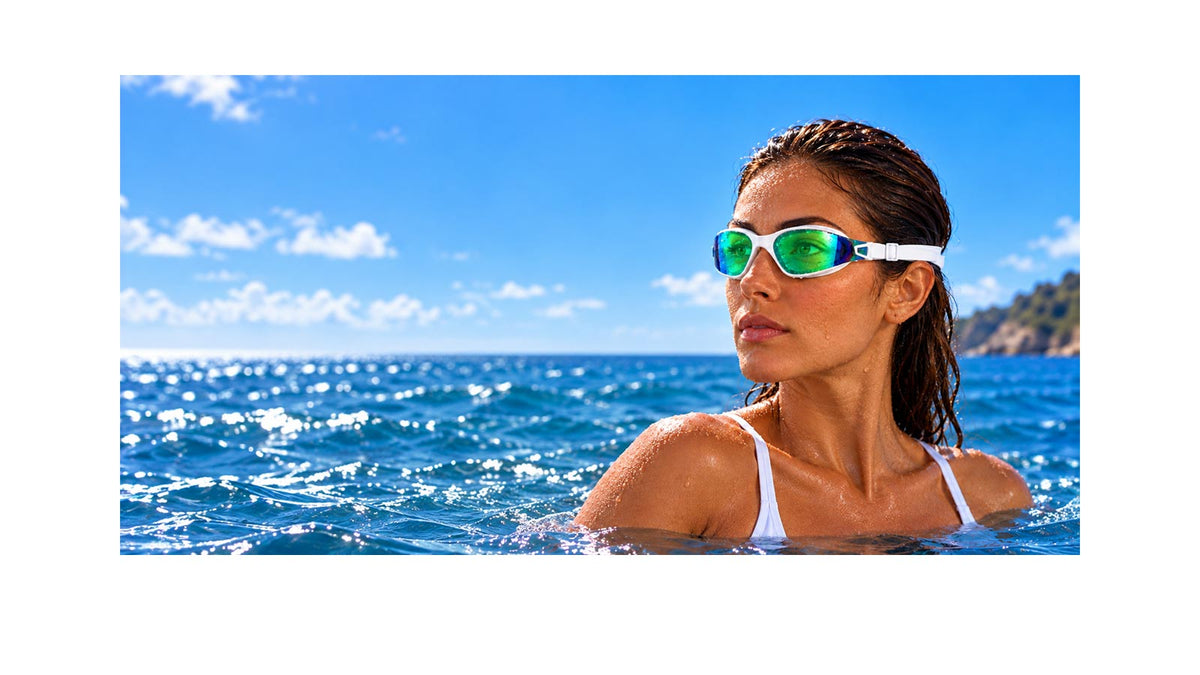
Achieving a reliable seal in the water is not a matter of luck or strap tension. It results from anatomical alignment. When swim goggles match your face shape, they form a watertight seal with minimal pressure, letting you focus entirely on your stroke. When the fit is incorrect, you are left managing persistent leaks, uncomfortable pressure marks, and constant mid-session adjustments.
Most common issues in the water, from fogging to leaking, trace back to a single structural problem: the goggle frame and gasket don't match the contours of the wearer's face. Understanding the relationship between facial anatomy and goggle construction removes the guesswork from the selection process. Over time, the equipment must support the body's natural movement, not work against it.
Why Fit Matters More Than Strap Tension
A common mistake is believing goggles stay dry because they are tight. Goggles function by forming a balanced, low-pressure seal around the orbital bone. If the gasket shape matches the natural curves of your eye socket, the seal forms with little effort. If there is a mismatch, no amount of tightening will create a reliable seal; it will only cause discomfort and pressure marks from uneven tension across the skin around the eyes.
The Suction Test
You can assess a goggle's suitability in seconds without entering the water. Press the lenses gently against your eye sockets without using the head strap. If the goggles stay in place for a few moments through natural suction, the gasket geometry matches your anatomy. If they fall away immediately or feel uneven, the frame isn't suited to your face shape and will likely leak while swimming. This test takes seconds and removes the most common source of goggle selection errors.
The suction test has a second stage that most guides omit. Once the goggles hold by natural suction, open your mouth wide as if inhaling mid-stroke or inserting a snorkel mouthpiece. The cheek muscles flex and shift during this movement, and a frame that seals correctly in a static position can break contact the moment the jaw moves. If the goggles hold through both the static press and the open-mouth movement, the gasket geometry suits your face under real swimming conditions. If the seal breaks during jaw movement, the frame is not a good match, regardless of how well it passed the first stage.
Understanding Face Shape and Seal Contact
Human facial structures vary significantly, from narrow eye spacing and high nose bridges to wider cheekbones and deeper eye sockets. These variations dictate how a gasket must sit to maintain a consistent seal. Eye socket depth also matters. Swimmers with deeper set eyes need a gasket with enough profile to reach the orbital rim without the frame bridging across the socket. A goggle with sufficient inherent flexibility contours to these subtle differences without compromising seal consistency.
The reverse problem affects swimmers with prominent eyes, flatter nose bridges, or longer eyelashes. When the gasket profile is too shallow, the eyelashes brush against the inner lens surface with every blink. This is not only distracting; it also causes the contact to transfer oils from the eyelashes directly onto the internal anti-fog coating. That oil transfer degrades the coating within minutes and accelerates fogging, a process that rinsing alone cannot reverse. Swimmers in this category need a gasket with enough internal clearance to keep the lens surface away from the lash line throughout the full blink cycle.
One Material, One Seal
Material choice is one of the biggest factors in achieving a reliable fit across a range of face shapes. Many goggle designs use a mixed-material approach combining a rigid plastic or TPR nose bridge with a softer gasket. Because these materials have different flex characteristics, they do not move at the same rate. This creates a leverage effect where the rigid bridge pulls the soft gasket away from the skin during facial movement, breaking the seal.
A unified silicone system allows the entire frame, nose bridge, and gasket to flex, stretch, and return to shape as a single unit. This creates a dynamic seal that adapts as you move, breathe, or squint. The goggle conforms to the face rather than compressing the anatomy into a fixed shape.
The Critical Role of the Integrated Nose Bridge
The nose bridge is frequently the point of failure in goggle fit. Adjustable or multi-part bridges may appear versatile, but they often introduce rigid friction and weak points. Goggles with integrated, flexible silicone bridges provide the most consistent results across the widest range of face shapes. This design maintains uniform tension around the inner corners of the eyes, where most leaks begin.
Why Over-Tightening Fails
Attempting to fix a poor fit by tightening the strap is counterproductive. Excessive tension compresses the gasket unevenly, which creates small channels for water to enter. High strap tension also places unnecessary stress on the eyes and surrounding skin. The strap stabilises the goggles on the head. The seal itself results from a correct anatomical match - not from force. A balanced fit keeps the goggles comfortable and secure during longer sessions without adjustment.
How to Identify Your Fit Before You Buy
To find goggles that provide a reliable seal, run through these four checks before committing to a pair.
- Perform the suction test: press the lenses against your eye sockets without the strap, and check for natural hold
- Check that the nose bridge flexes naturally with the rest of the frame rather than acting as a rigid pivot point
- Look for unified material construction to avoid tension mismatches between the bridge and the gasket
- Check for even contact around the entire circumference of the eye socket before and after the suction test
How Strap Positioning Affects the Seal
Strap placement is as important as strap tension. A single strap positioned too low pulls the goggle downward, loading pressure onto the nose bridge and breaking the seal along the upper orbital rim. A split strap, where one section sits high on the crown and the other lower at the occipital curve, creates a neutral, linear pull that keeps the gasket centred over the orbital bone without directing force in any single direction.
When fitting a split strap, position the upper section above the ear line, toward the crown, and the lower section below the ear line, toward the base of the skull. The two sections should pull in slightly different directions, balancing each other out so the goggle sits flat against the face without tilting up or down. A correctly positioned split strap maintains the anatomical alignment established by the suction test even through head turns and breathing movements.
Questions About Goggle Fit
Should the strap go over or under the swim cap?
Over, for most swimmers. Put the cap on first, then the goggles, so the strap sits on the cap where you can reach it. You can make a quick adjustment as you enter the water without taking the cap off. Under the cap, the strap can press down on the tops of your ears, which gets uncomfortable on a longer swim. Racers sometimes wear the strap under the cap, or add a second cap over it, to lock the goggles in place for dives.
Does sunscreen or moisturiser affect the seal?
Yes. Keep sunscreen, moisturiser and make-up off the skin where the gasket sits. They leave a film the silicone slides on, and a goggle that passes the suction test on clean skin can lose its seal once that film is there.
Can I wear goggles over contact lenses?
A goggle that seals correctly keeps water away from your eyes, which is why fit matters even more if you wear contacts. A wave, a dive or a quick adjustment can still let water in, though. Optometry Australia advises against swimming in contact lenses in a pool or the ocean because organisms that cause serious eye infections live in both and can survive normal chlorine levels. Ask your optometrist about the safest option for you, such as prescription goggles.
What about children or smaller faces?
The same fit principles apply, and the suction test works at any age. For goggles suited to children, read Our Top Three Swim Goggles for Children.
When the Fit Is Right, the Goggles Disappear
The AquaLuxe Swim Goggles feature a unified silicone frame, gasket, and nose bridge that move as a single unit. That construction provides a natural, adaptive seal across a broad range of facial profiles without requiring excessive strap tension. When the fit is correct, the equipment stops being something you manage and becomes something you forget is there.
Choose your lens based on the conditions you swim in.
- Clear Lens: pool use and low-light conditions
- Black Tinted Lens: mixed to bright light without reflective coating
- Blue Mirror Lens: surface glare and reflective conditions
- AquaLuxe White Line Swim Goggles - Green Mirror Lens: variable light and open water
- Gold Mirror Lens: strong sunlight and high glare
- AquaLuxe Black Max Swim Goggles - Silver Mirror Lens: maximum glare reduction in bright open water
To complete your understanding of goggle selection, read why swim goggles fog, why swim goggles leak, and mirror vs clear swim goggles - when each actually works.
Share:
How Your Arms Control Direction and Speed in Bodysurfing
Hands vs Handboards - What Changes and What Doesn’t