

As a parent, you play a crucial role in your child's swimming journey. Whether they're starting swim lessons or already a recreational swimmer, your choice of swim goggles can significantly affect their comfort and performance. No child wants to struggle with uncomfortable frames or lenses fogging up. Let's explore the different types and our recommendations, so you can choose the best option for your child.
Key Features to Consider
When picking swimming goggles for your child, the three key features are lens types, frame materials and sizing, which can make the difference in comfort and performance.
Clear vs Tinted vs Mirrored Lens Types:
Choosing the right lens type is crucial, depending on where your child will swim. Each lens type has its benefits:
- Clear Lenses: Perfect for indoor swimming or low-light conditions. They provide clear visibility and work well in pools with good lighting.
- Tinted Lenses Helpful for outdoor swimming or brightly lit pools. They reduce glare and protect the eyes from harsh light.
- Mirrored Lenses: Best for sunny outdoor environments. They reflect sunlight and offer the highest glare reduction, making them great for open-water swimming.
Frame, Lenses, Seals and Strap Materials
The frame material and design play a significant role in durability and comfort.

- Polycarbonate: PC lenses are robust and impact-resistant.
- Silicone: The frame, lens seals and split headband are soft, flexible silicone.
- Thermoplastic Rubber: TPR frames and lens seals are flexible, adapting to different facial shapes and providing a comfortable fit.
Choose a combination of frame, lens seals, and head strap that balances durability and comfort. Durable components last longer, while flexible materials help your child enjoy wearing the goggles.
Sizing and Fit
Choose an adjustable strap that fits your child's face shape and size.
- Adjustable Straps: For a secure, comfortable fit.
- Soft Seals: Silicone or TPR seals ensure a watertight seal
- Size Options: Adjustable strap design ensures a secure, tailored fit for growing children.
A proper fit lets your child focus on swimming instead of constantly adjusting their goggles. A good fit also helps keep them leak-proof and comfortable during swim sessions, so you can be confident your child enjoys a secure, comfortable experience.
Choosing the proper goggles involves more than picking a pair with great colours. It's about lens type, frame material, and a snug fit. Your choices shape your child's swimming experience, and we're here to guide you.
Frequency of Use
How often your child swims will influence what goggles work best for them.
- Frequent Swimmer: If your child swims several times a week, choose durable goggles. Look for goggles made from high-quality materials that can withstand regular use. Features like anti-fog coating, UV protection, and replaceable parts are beneficial. You may also want multiple pairs, one for indoor pools and another for outdoor swimming.
- Occasional Swimmer: If your child swims less frequently, they don't need all the bells and whistles. Basic but comfortable goggles will do the job. However, it's still worth investing in a pair with a good soft seal and an adjustable fit. Even for occasional swims, comfortable, reliable goggles can make your child's time in the water much more enjoyable.
Children Recommendations
Choosing the right pair of swim goggles for your child can make a difference in their swimming experience. From comfort to functionality, there are many features to consider. Below, we have outlined our top picks to help you find the perfect match for your child's needs.
POD SCAT Youth Swim Goggles
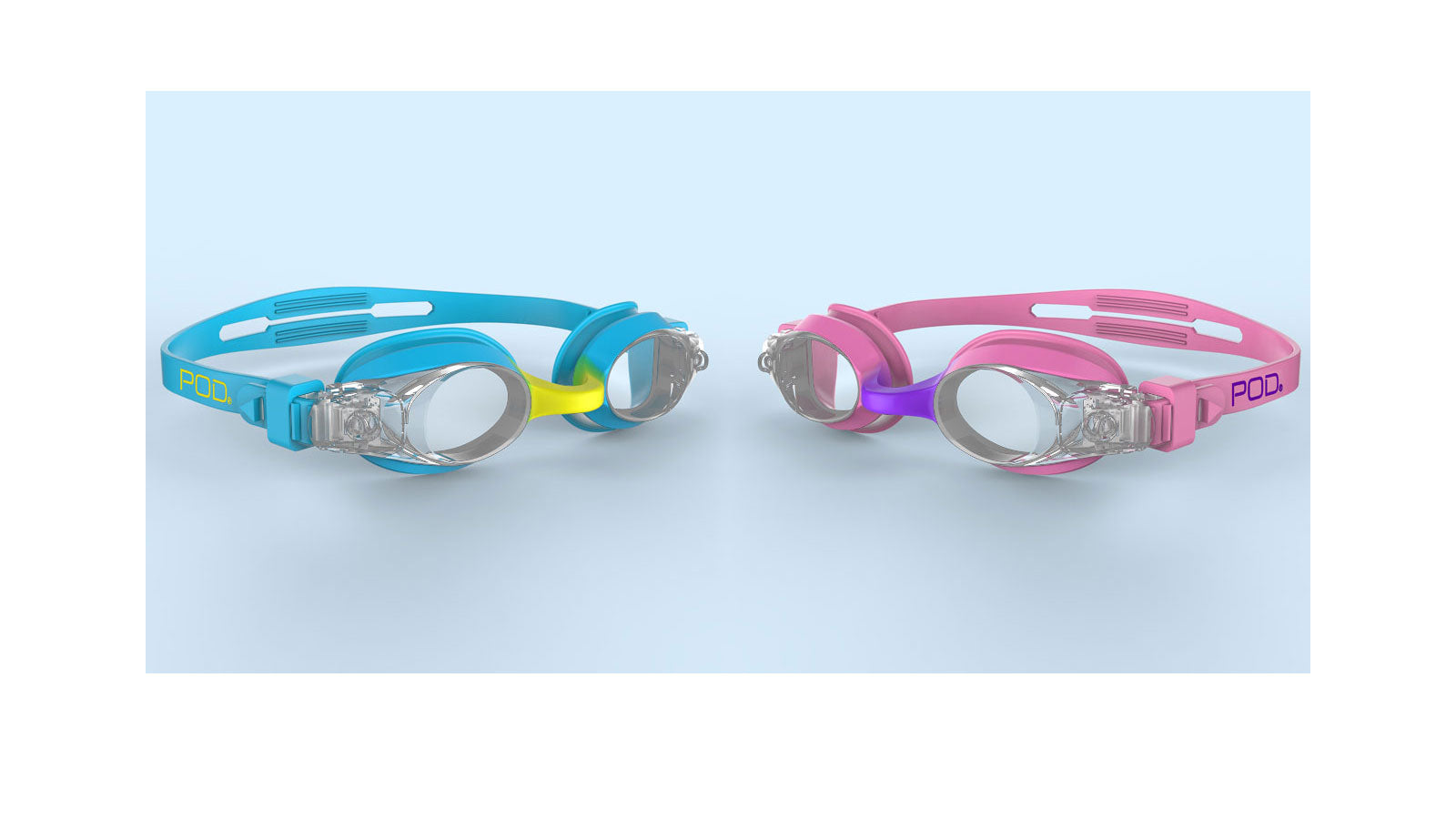
These swimming goggles feature clear, anti-fog, UV-protection lenses and two frame and strap colour options.

Features:
- Clear Lenses: Perfect for indoor swimming, with clear, distortion-free vision.
- UV Protection: Safeguard your child's eyes with a Polycarbonate anti-fog lens with UV Protection
- Available Colours: Soft, flexible silicone frame and lens seals; choose between yellow-aqua and pink-purple.
These goggles are designed with kids in mind, making them an excellent choice for young swimmers.
POD FLOW Youth Swim Goggles
Available with clear or tinted, anti-fog, UV-protected lenses, plus two soft, flexible frames and headband colours.

Options:
- Clear Lenses: Ideal for indoor pools with consistent lighting.
- Tinted Lenses: Suited for sunny outdoor conditions, reducing glare and providing better visibility.
Whether your child swims in a pool or open waters, Flow goggles offer the flexibility to handle lighting conditions effortlessly.
POD TRITEK Youth Swim Goggles
Available in clear or tinted anti-fog, UV-protection lenses with a clear frame and adjustable split headband.

Highlights:
- Two Lens Colour Options: Select aqua and blue lenses to suit your child's preference.
- Frame Design: The clear, soft, flexible TPR seals and frame fit comfortably for all children.
POD TRITEK children's swimmers goggles have a flexible TPR soft seal and frame, allowing the lenses to float in a frame-perfect design for children of all ages.
Consider these recommendations above to help your child swim comfortably and confidently.
How to Care for Children's Swimming Goggles
Ensuring kids' swimming goggles are well maintained can significantly extend their lifespan. Proper care involves regular cleaning and mindful storage. Here are some easy-to-follow tips.
Cleaning Techniques
Keeping the lenses and frames clean is essential to maintain clear vision in the water and avoid damage.
-
After Use: Rinse with fresh, lukewarm water after swimming to remove chlorine, salt, or other chemical residue.
Mild Soap Usage: Use soap or baby shampoo to gently clean the lenses and frames. Avoid harsh detergents, which can damage the anti-fog coating and the materials.
Avoid Scrubbing: Do not scrub the lenses. Instead, use your fingers to swirl the soapy water around. Scrubbing can scratch the lens surface.
Drying: Let the goggles air dry completely before storing them. Pat them dry with a soft towel, but avoid rubbing the lenses.
These simple steps can keep the goggles clear and hygienic, ready for the next swim.
Storage Tips
Proper storage is just as important as cleaning. It prevents scratches and keeps them in good shape.
- Protective Case: Always store goggles in a hard protective case. This shields them from any damage when tossed in a swim bag.
- Avoid Sunlight: Do not leave goggles in direct sun; UV rays can degrade the materials.
- Avoid Hot and Humid Places: Don't leave them in the car or boot on hot summer days; excessive heat may cause damage.
- Do Not Bend Straps: Do not twist or bend the straps in awkward positions. This can stretch out or weaken the elastic over time.
These storage tips can help goggles last longer and stay in better condition. These precautions will ensure they are ready for the next swimming session.
Lunch Time - Out of the Water
When wearing eyewear close to the eyes, please take precautions to prevent eye injuries. This is especially important for children who may not pay attention while wearing goggles.
This article will help you choose the proper swim goggles for your child, which is crucial for their comfort and safety in the pool. Quality goggles like POD SCAT, FLOW, and TRITEK are designed to fit well and protect young eyes from chlorine and UV rays. Soft frames work well for smaller faces and add extra comfort.
Regular maintenance ensures goggles stay clear and comfortable. A Lukewarm rinse with fresh water after each use, plus storage in a protective case, helps prevent scratches and prolongs their lifespan.
Happy swimming!.
Share:
Bodyboards: Leave it to the Shaper POD Bodyboard Accessories
Bicep vs Wrist Bodyboard Leash - Which One Stays Out of Your Way