
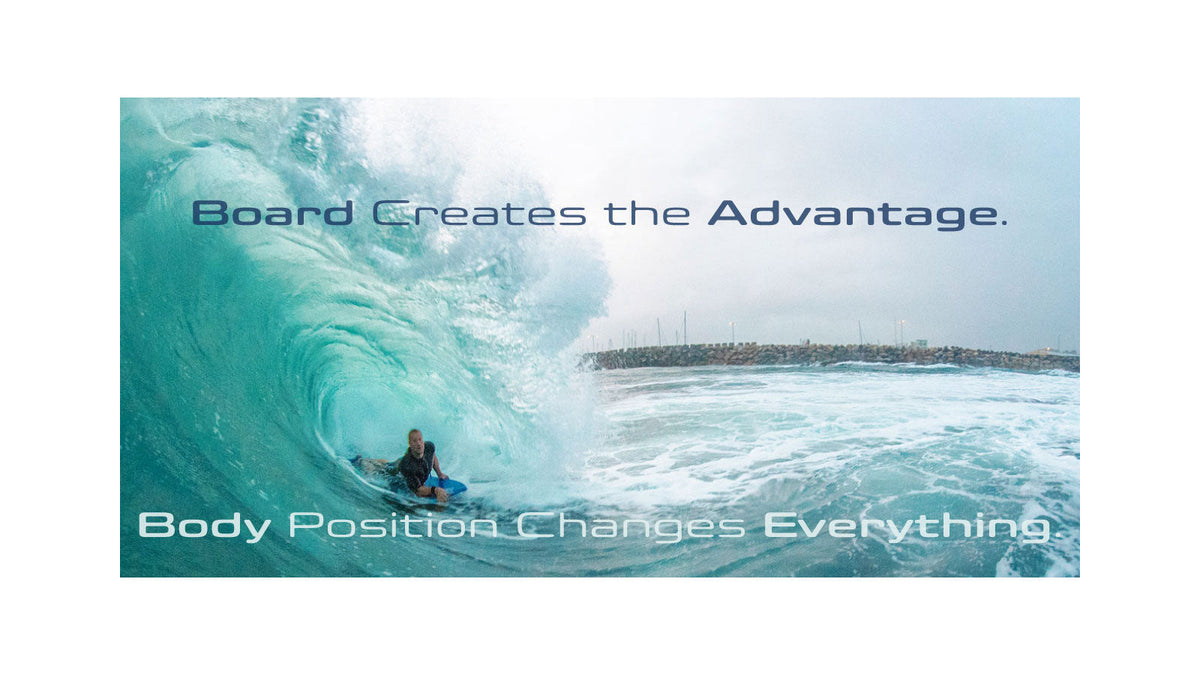
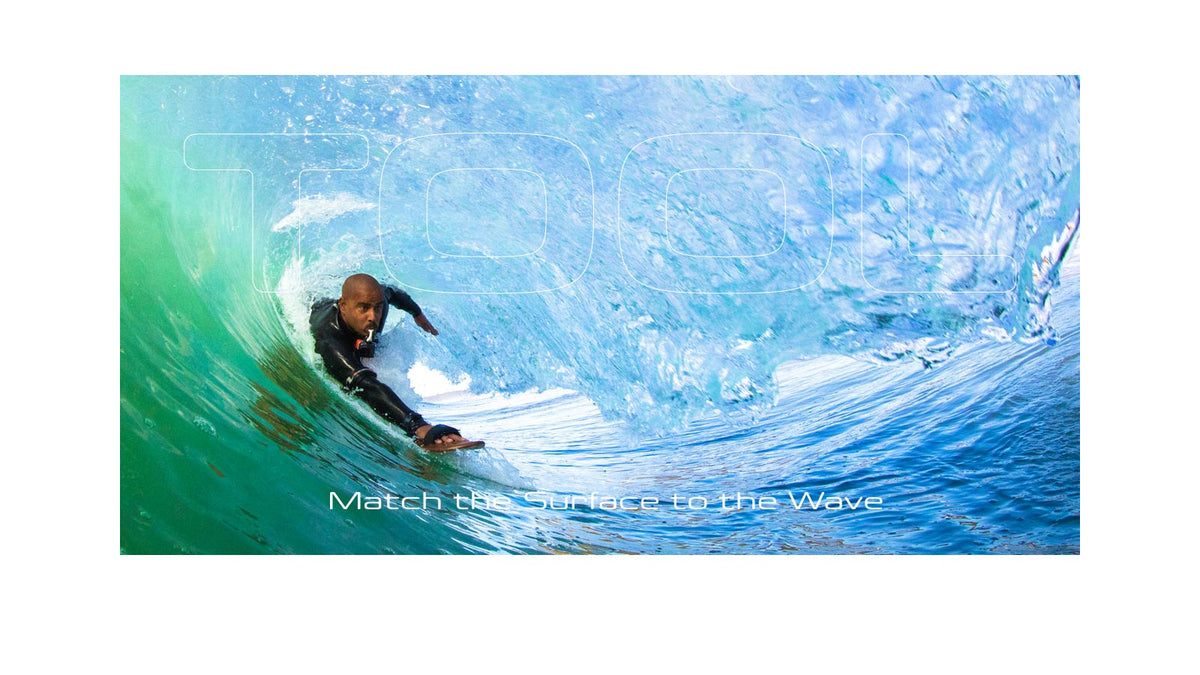
The bodyboard's total surface area gives bodyboarding a mechanical advantage over bodysurfing. A bodysurfer uses a handboard to generate lift at a single contact point. A bodyboarder distributes their weight across the board's full surface. That surface area generates lift, trim, and rail engagement that control speed and direction on the wave face. Whether that advantage works for or against you depends entirely on where and how you position your body on the board.
Whitewash vs Open Face - Two Different Physical Environments
Whitewash and open face waves are not two versions of the same experience. They are fundamentally different physical environments that demand different things from the rider.
In whitewash, the rider is ploughing. Turbulent, multidirectional energy pushes the board toward shore regardless of trim or body position. There is no face to read, no line to hold, no rail to engage. The board and the rider are passengers in broken water. Whitewash teaches the rider what it feels like to be on a board. It does not teach them how to control one.
On the open face, the rider must generate and manage their own speed across a clean, moving wall of water travelling in one direction. The rider is moving across the wave rather than being pushed by it. That lateral movement demands an understanding of trim, weight distribution, rail engagement, and fin drive that whitewash never requires. A rider who has learned only in whitewash arrives at the open face without the mechanical foundation they need.
The progression happens naturally. As a rider's confidence and ocean familiarity grow, the open face becomes the heart of the experience. Once they hold a line across a wave face, whitewash becomes the entry point; it was never the destination. From there, the techniques that matter work on a clean, moving wall of water.
The Planing Threshold - What Separates Control from Survival
On the open face, a specific point in correct body position lifts the board onto the water surface and minimises drag. Below that point, the board is ploughing through the water. Above it, the board is planing across it. The difference in speed and control between those two states is significant.
Two failure modes sit on either side of the planing threshold.
Too far back, the tail sinks, the fins dig in, and the board stalls. The wave moves under the rider rather than carrying them. Speed drops, and the rider loses their position on the wave face. In larger surf, this failure mode leaves the rider in the impact zone.
Too far forward, the nose dives into the water surface, the board pitches, and the rider is ejected forward. The wave overtakes the board, and the rider loses control entirely.
The correct position sits between these two failure modes. Developing riders seek to find it consistently, without knowing the mechanical reason it matters. Every adjustment to hand position, hip placement, and weight distribution is an attempt to stay on the right side of the planing threshold as wave conditions change.
The Connected System - Hands and Hips
Once on the open face, control comes from the mechanical connection between three contact points: the lead hand, the trailing hand, and the hips. Each has a specific role. Together they form the steering and throttle system that holds the rider on the wave.
The lead hand sits on the nose corner of the board. This is not a security grip. It is structural leverage. Pulling up on the nose with the lead hand introduces rocker into the board's profile; the nose lifts and the board curves to navigate tight transitions or drive up the wave face. Pushing the nose down flattens the rocker line and creates a fast planing surface for projection across open sections. The lead hand actively changes the board's shape under load with every adjustment.
The trailing hand sits flat on the rail approximately halfway down the board. This hand acts as the fulcrum. Applying downward pressure through the trailing hand forces the inside rail into the wave face, holding the board's line against the lateral pressure of the moving water. The trailing hand is not passive. It is the primary rail engagement tool.
The hips are the weight distribution lever, the most powerful control input the rider has. Shifting the hips back anchors the tail and engages the fins, giving the rider control and resistance against the wave's force. Shifting the hips forward flattens the board against the water surface, maximising surface area contact and planing speed. Hip position is the throttle. The lead hand is the steering. The trailing hand holds the line.
These three contact points do not operate independently. A hip shift changes the load on both hands. A lead hand adjustment changes what the hips need to do to maintain balance. The rider who understands this connection controls the board deliberately. The rider who does not is reacting to the wave rather than working with it.
Variable Rocker - Using the Board's Flex as a Control Tool
A surfboard has a fixed rocker line. A bodyboard does not. The flexible core of a bodyboard is not a manufacturing limitation; it is a mechanical advantage that the rider can use intentionally to change how the board behaves under load.
Pulling up on the nose with the lead hand and pressing down through the elbows introduces a temporary rocker into the board's profile. The board curves. This increased rocker drives the board up the wave face for tight transitions, allows the rider to redirect across sections, and prevents the nose from catching in steeper conditions.
Flattening the weight across the board and pushing the nose down straightens the rocker line. The board becomes a flat, fast planing surface. Drag reduces. Speed increases across open sections of the wave. This is the correct position for generating maximum projection across a flat or fading section of the wave.
Most riders experience this flex and rocker change without understanding what they are doing or why it works. Naming the mechanism gives the rider conscious control over something they previously did by instinct, and instinct alone isn't consistent across changing conditions.
Rail Engagement and Fin Drive - Two Systems, One Balance
On the wave face, two distinct systems hold the rider in position in parallel. The inside rail holds the board to the wave face through displacement: the rail edge presses into the moving water, and the wave pushes back, keeping the board on its line. The swim fins act as a rudder and secondary anchor, preventing the tail from sliding out under lateral load.
These two systems must work in balance. Neither alone is sufficient.
The inside rail, without fin support, allows the tail to slide out on steeper or more powerful sections of the wave. The board loses its line, and the rider washes down the face rather than across it.
Fin drive without rail engagement allows the board to skip off the face. The fins anchor the tail, but without the rail holding the inside edge, the board loses contact with the wave surface.
The correct balance comes from a diagonal weight shift: inside elbow down, outside hip slightly raised. This distributes the load between the board's inside rail and the rider's inside swim fin simultaneously. The board holds its edge, and the fins hold the tail. The rider stays connected to the wave face throughout the entire ride.
Understanding this balance is what separates a rider who holds their line consistently from one who slides out whenever the wave steepens or the pace increases.
From Whitewash to the Open Face
A rider who understands the planing threshold knows where their weight needs to be relative to the board. A rider who understands the hand and hip connection knows how to adjust that position deliberately as conditions change. A rider who understands variable rocker knows how to use the board's flex as a control tool rather than fighting against it. A rider who understands rail engagement and fin drive knows how to hold a line across the wave face without sliding out.
You can't learn any of these skills in whitewash. Whitewash doesn't require trim, rail engagement, or fin drive because turbulent energy pushes the board regardless of the rider's actions. Open face requires all of them because the rider works with a moving wall of water that responds directly to every weight shift and hand adjustment.
The progression from whitewash to open face is not a change of instinct.
It applies the same mechanical principles with more precision, because the consequences of getting them wrong are more immediate. A nose dive in whitewash is an inconvenience. A nose dive on a clean, open face wave at speed is a wipeout.
The board's surface area is the mechanical advantage. Body position is what activates it. The rider who understands the connection between their hands, hips, rails, fins, and the board's flex has the foundation to progress from whitewash to open face waves - and to keep improving beyond that point with every session in the water.
For the full guide to bodyboarding gear, ocean safety, and wave reading, read How to Bodyboard - Your Complete Guide to Surf and Safety. For leash selection and how the connection between rider and board affects control, read Bicep vs Wrist Bodyboard Leash - Which One Stays Out of Your Way. For the parallel mechanical principles in bodysurfing, read How Movement Creates Speed in the Water.
Explore the full POD Bodyboarding range, including swim fins, leashes, fin accessories, and bodyboard covers.
Next in this series, read Bodyboards: Leave it to the Shaper POD Bodyboard Accessories.
Share:
Open-Water Swimming - What You Need to Know Before You Enter