The Connection Series
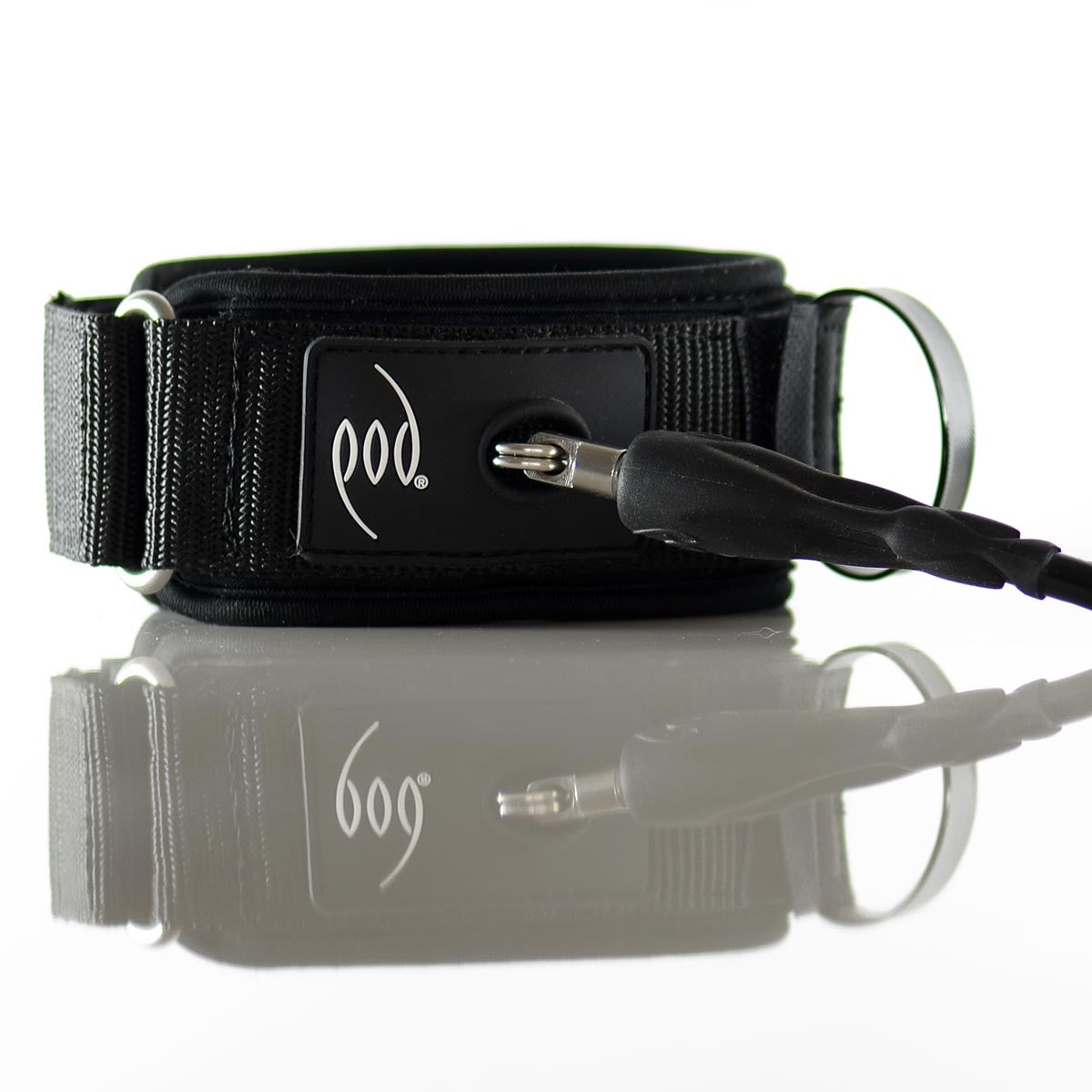
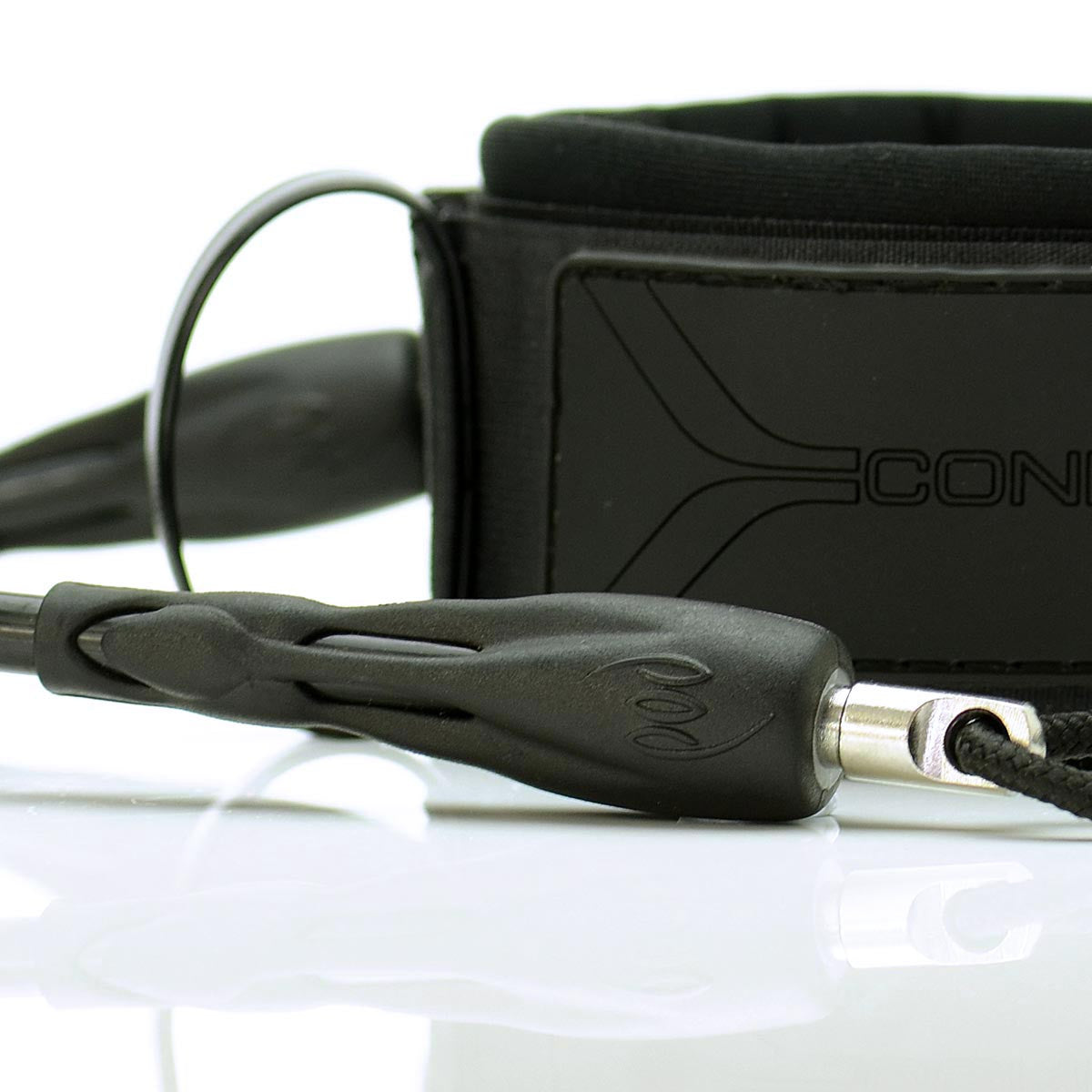
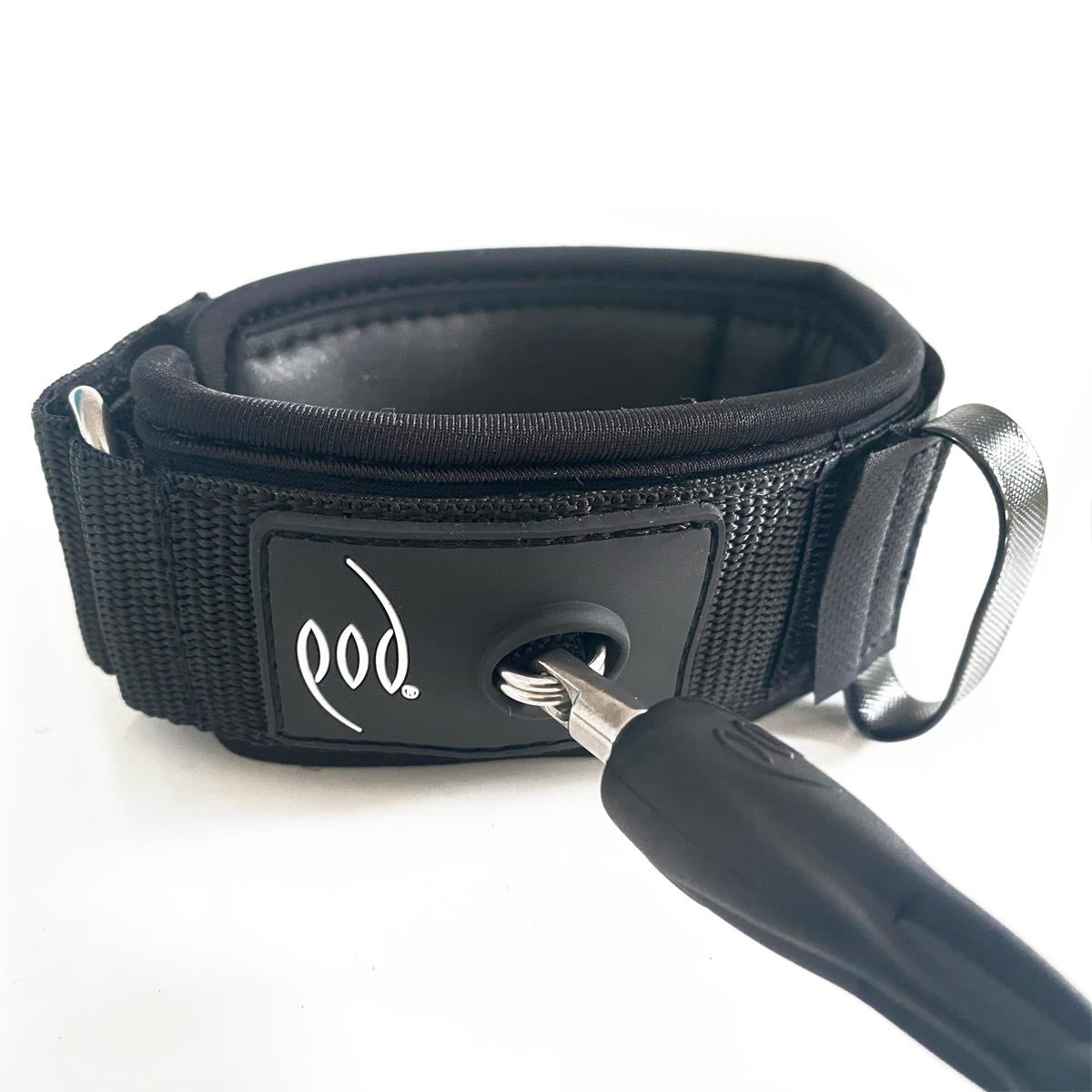
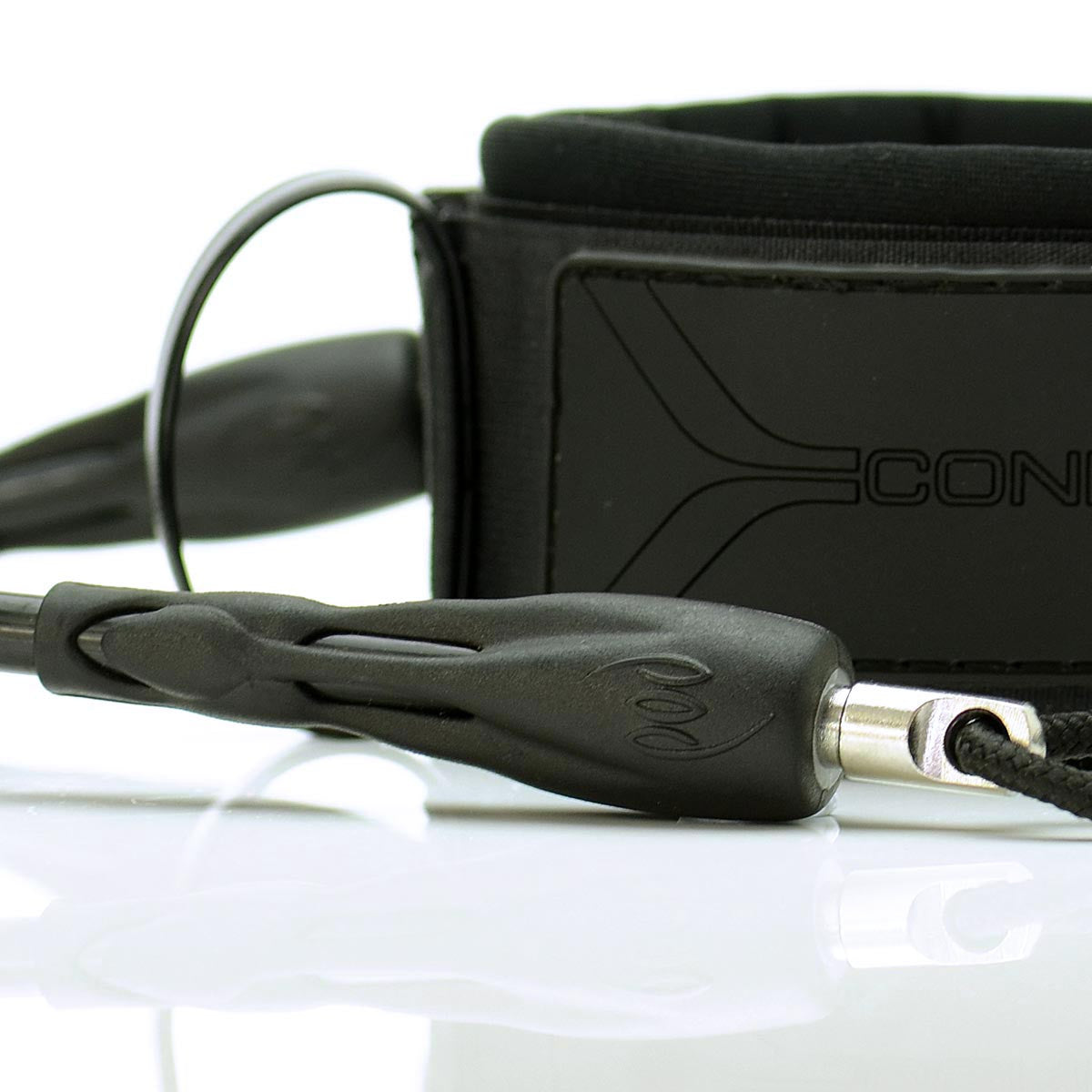
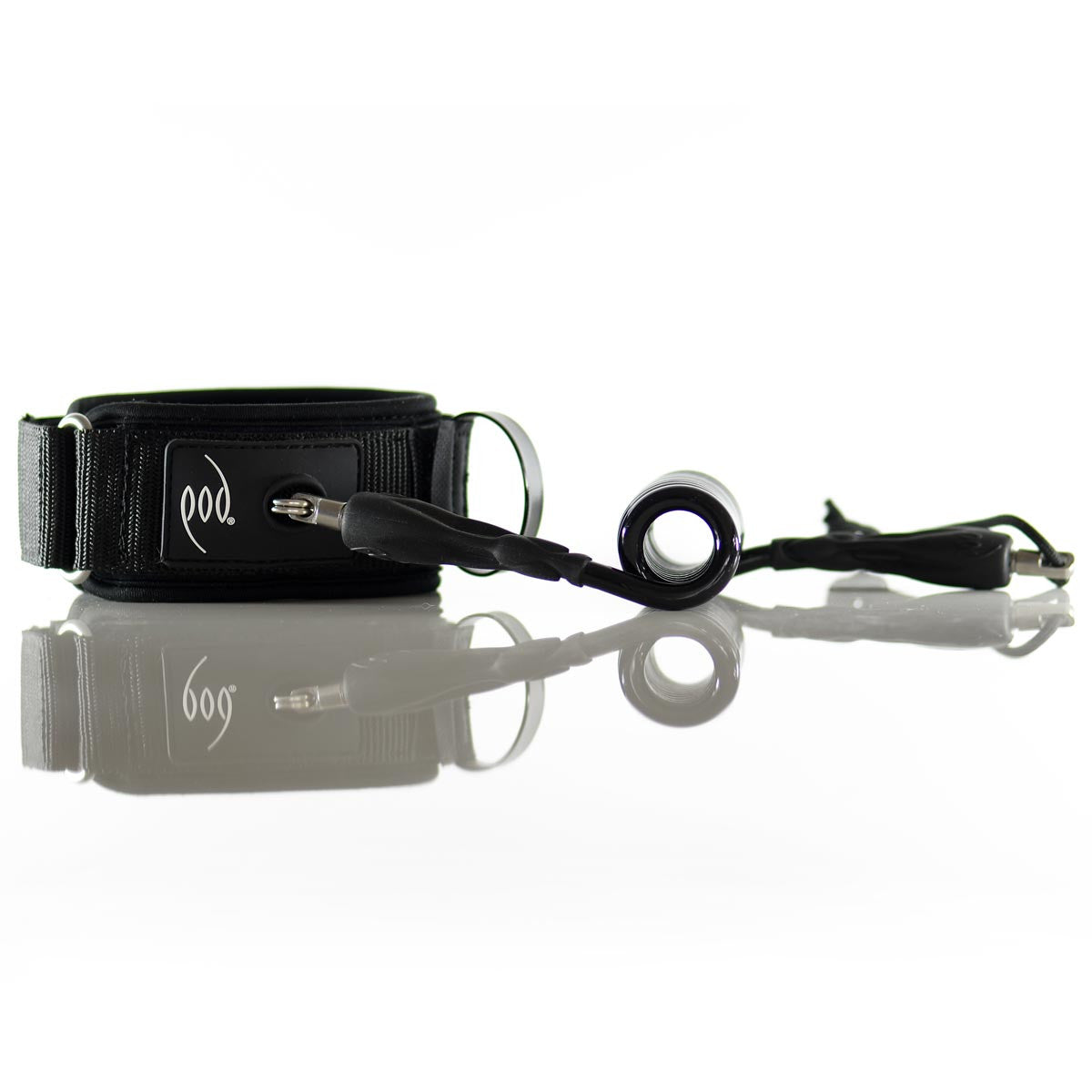
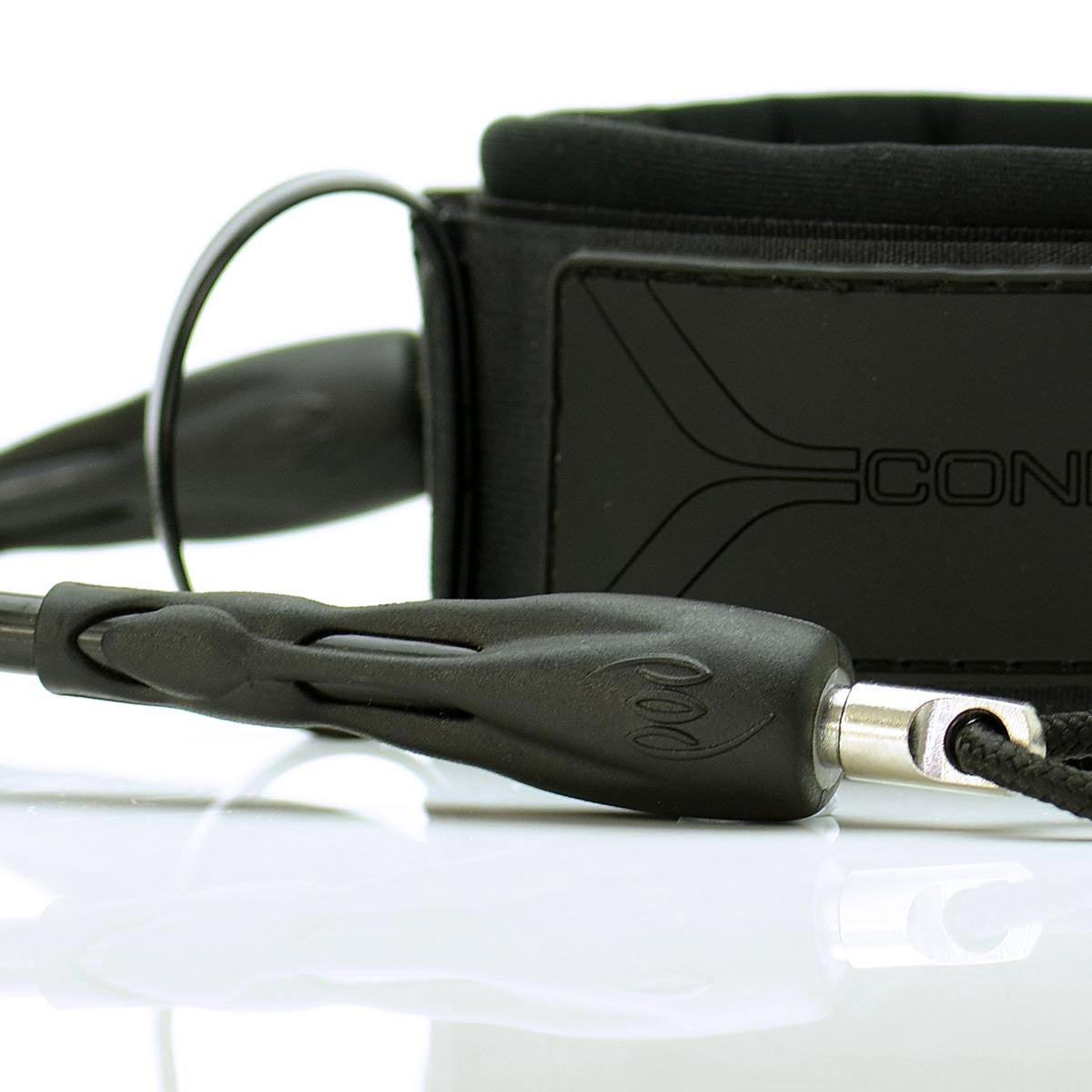
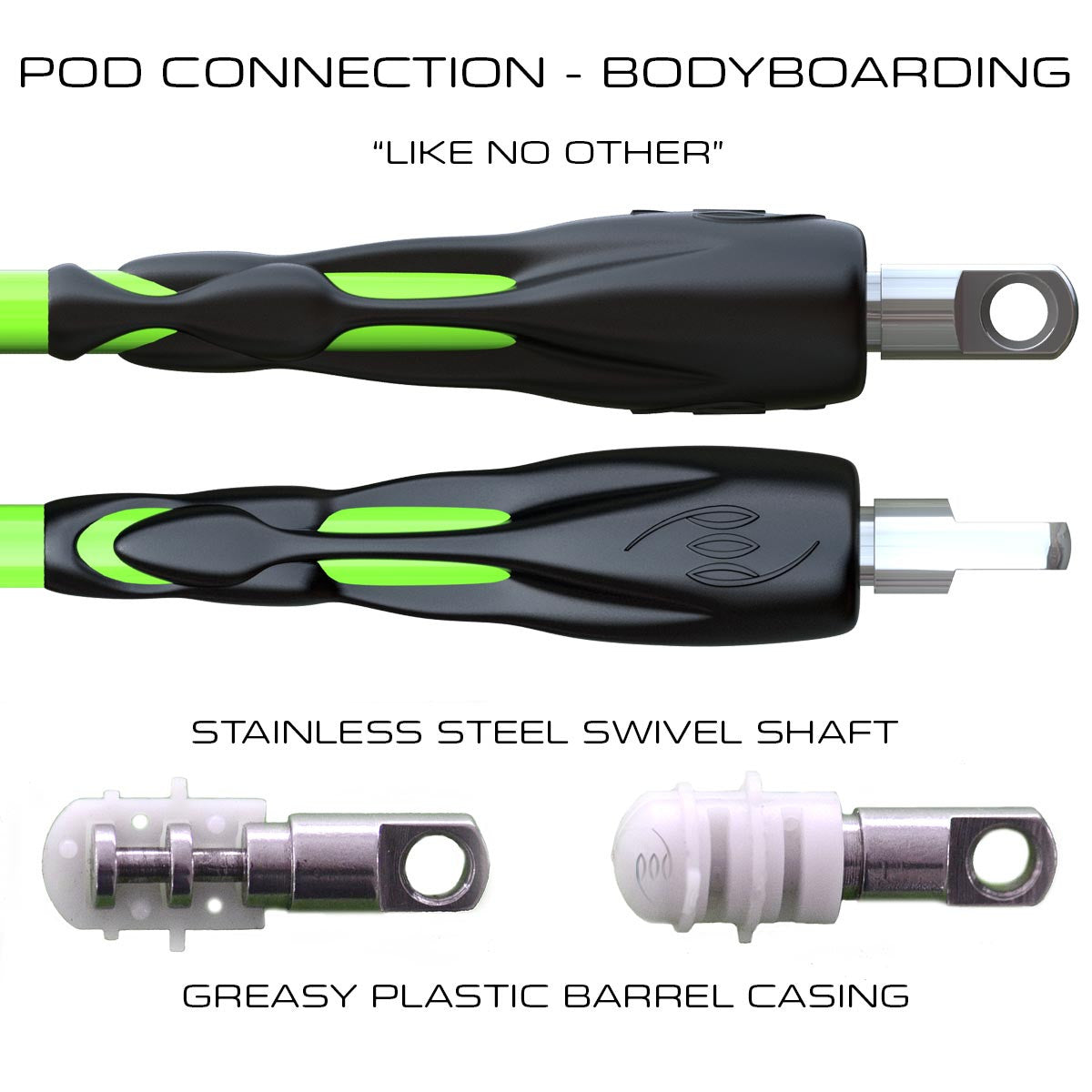
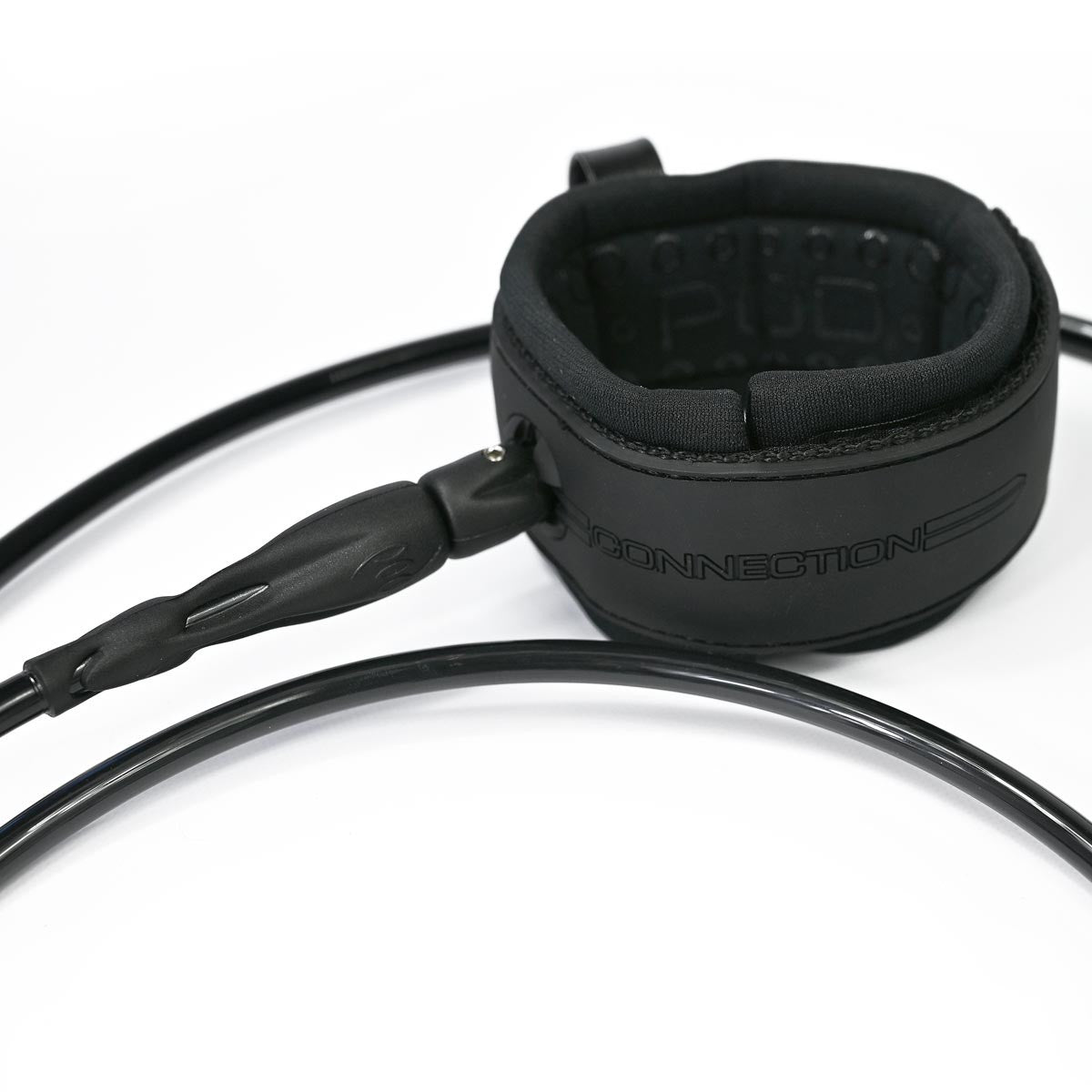
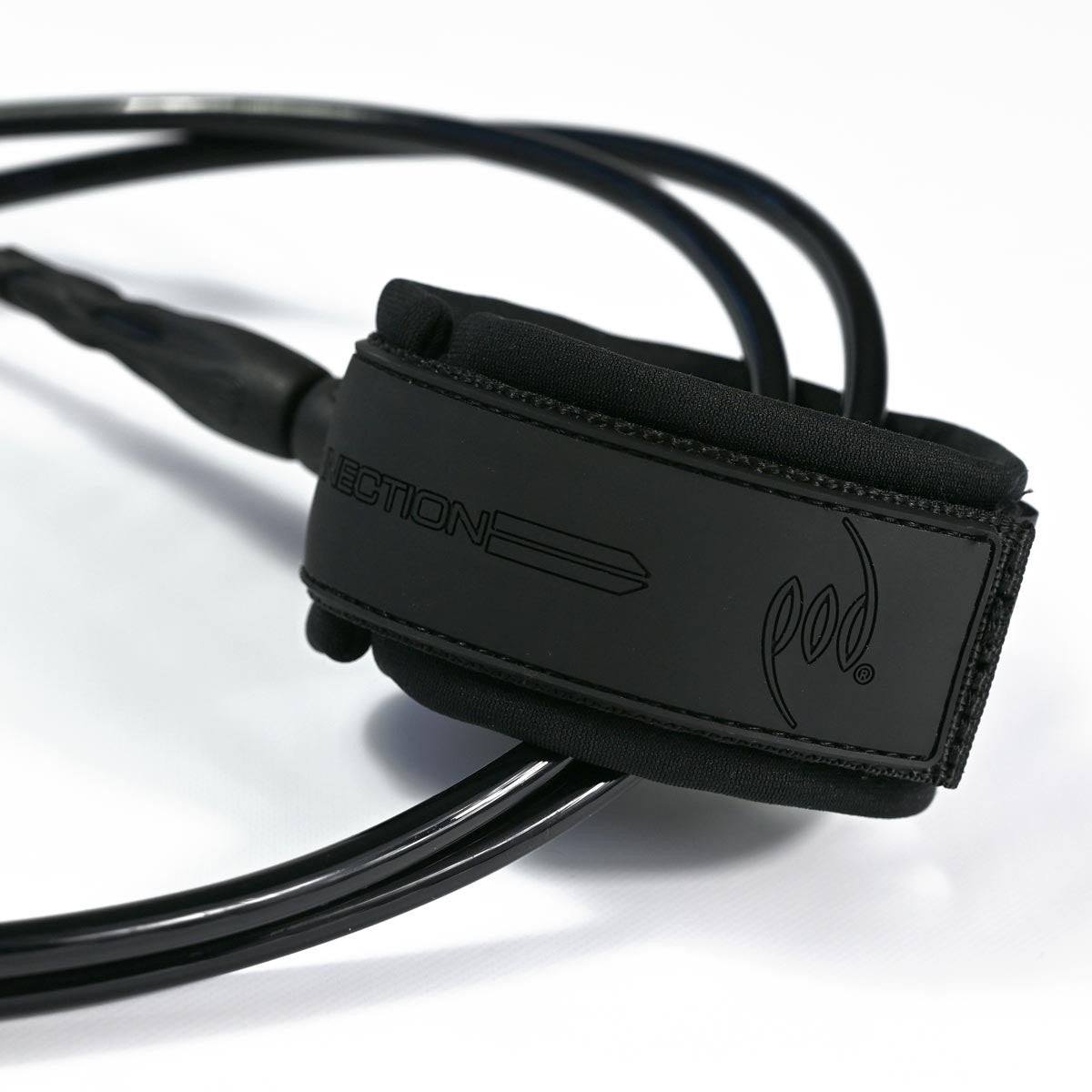
At the heart of every POD bodyboard bicep leash and surfboard leg rope is the Connection Series. Its organically shaped connectors are over-moulded onto friction-free swivels, so the urethane cord stretches in unison with the connector under load. That supports controlled recovery and reduces twist build-up. Conventional designs heat-bend the urethane, which forms an elbow kink and a common stress point. POD leashes keep a straight line after the coil, removing that weak point from high-load wipeouts and repeated tension. Read POD Connection: Why Organic Fusion Stops Leash-Twist Tangle.
Marine-Grade Hardware
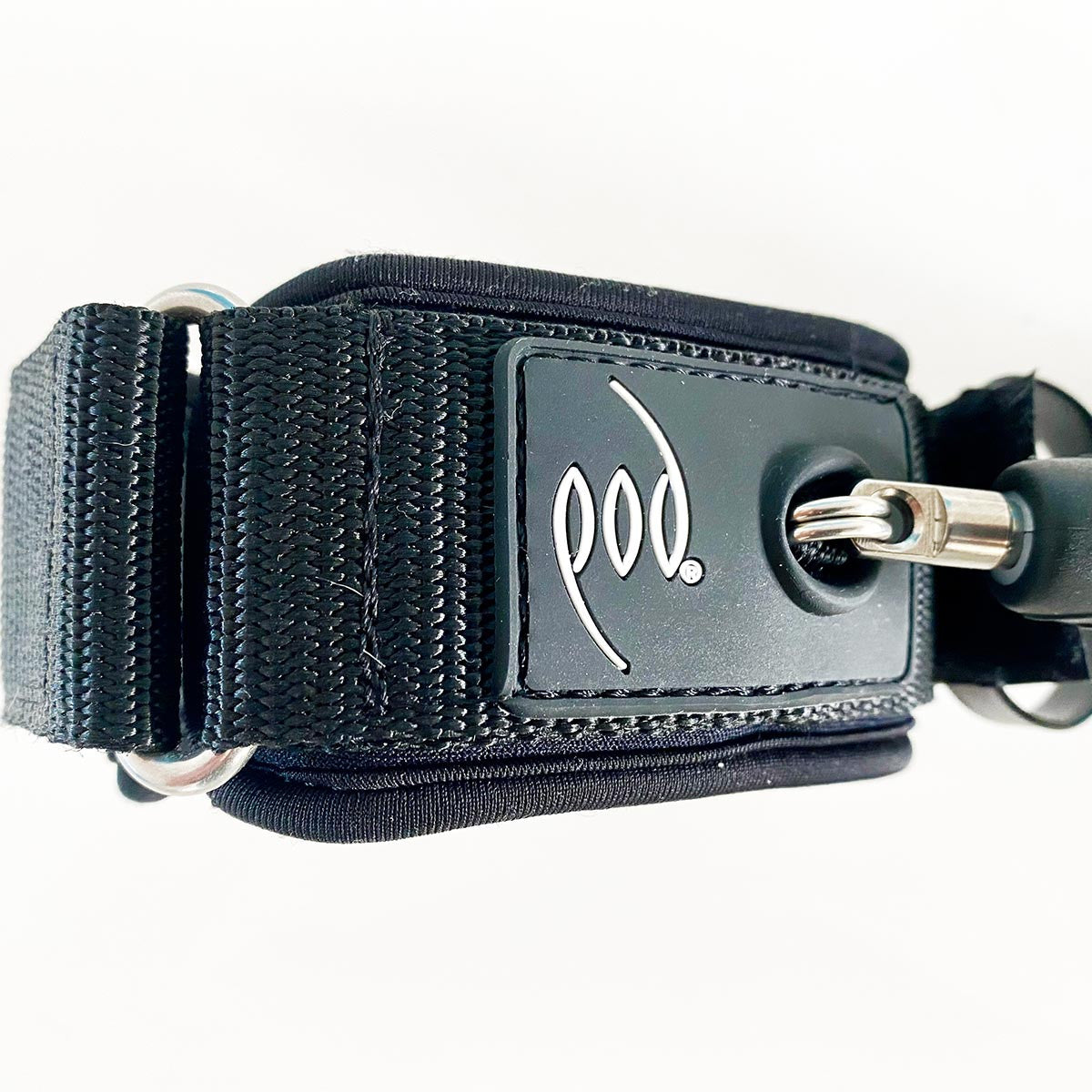
Every Connection leash uses 316 marine-grade stainless steel buckles, swivels and split rings, chosen for corrosion resistance and long-term strength in salt water. Hardware that holds up to salt, sand and sun isn't a premium feature. It's the minimum for gear used in the ocean.
Bodyboard Bicep Leashes
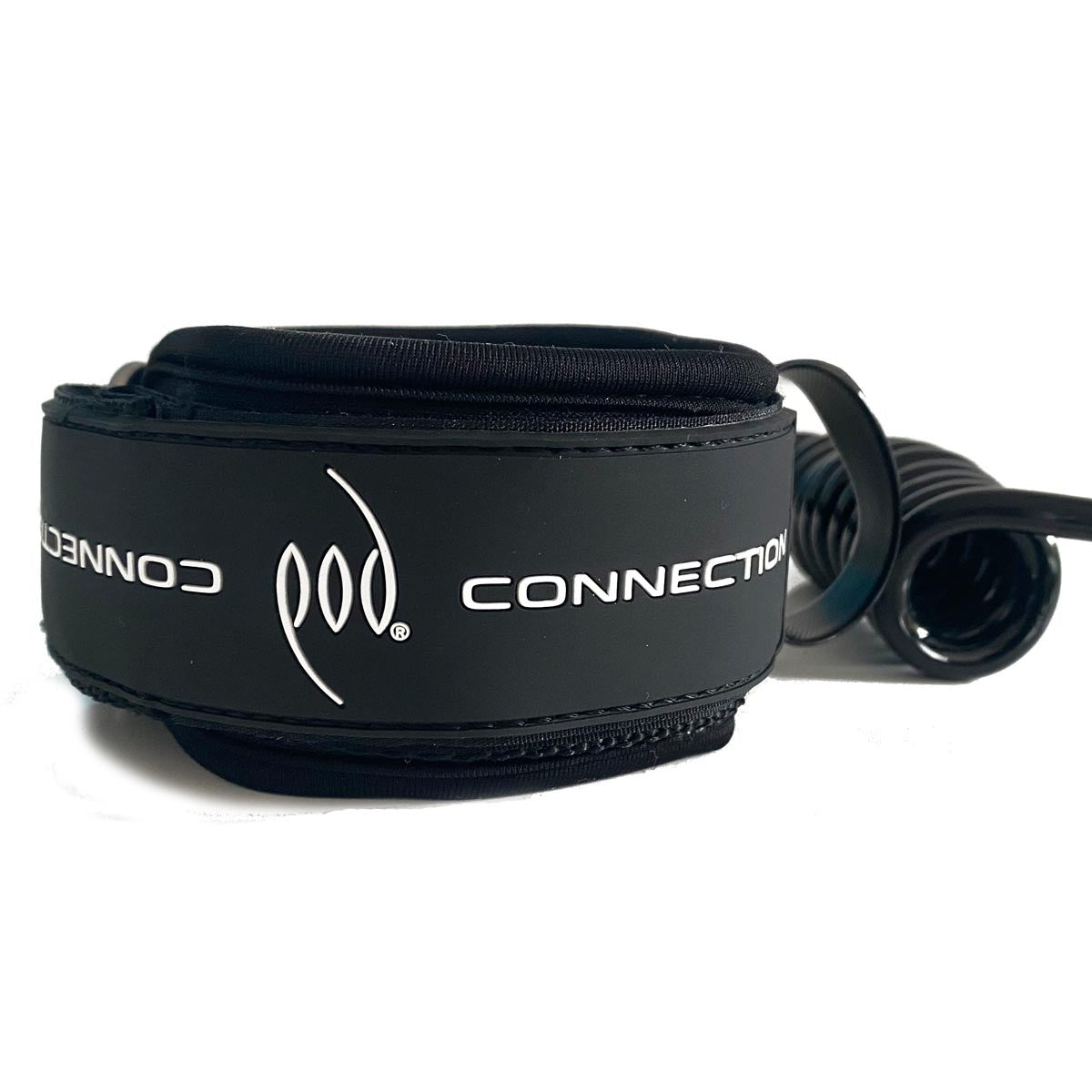
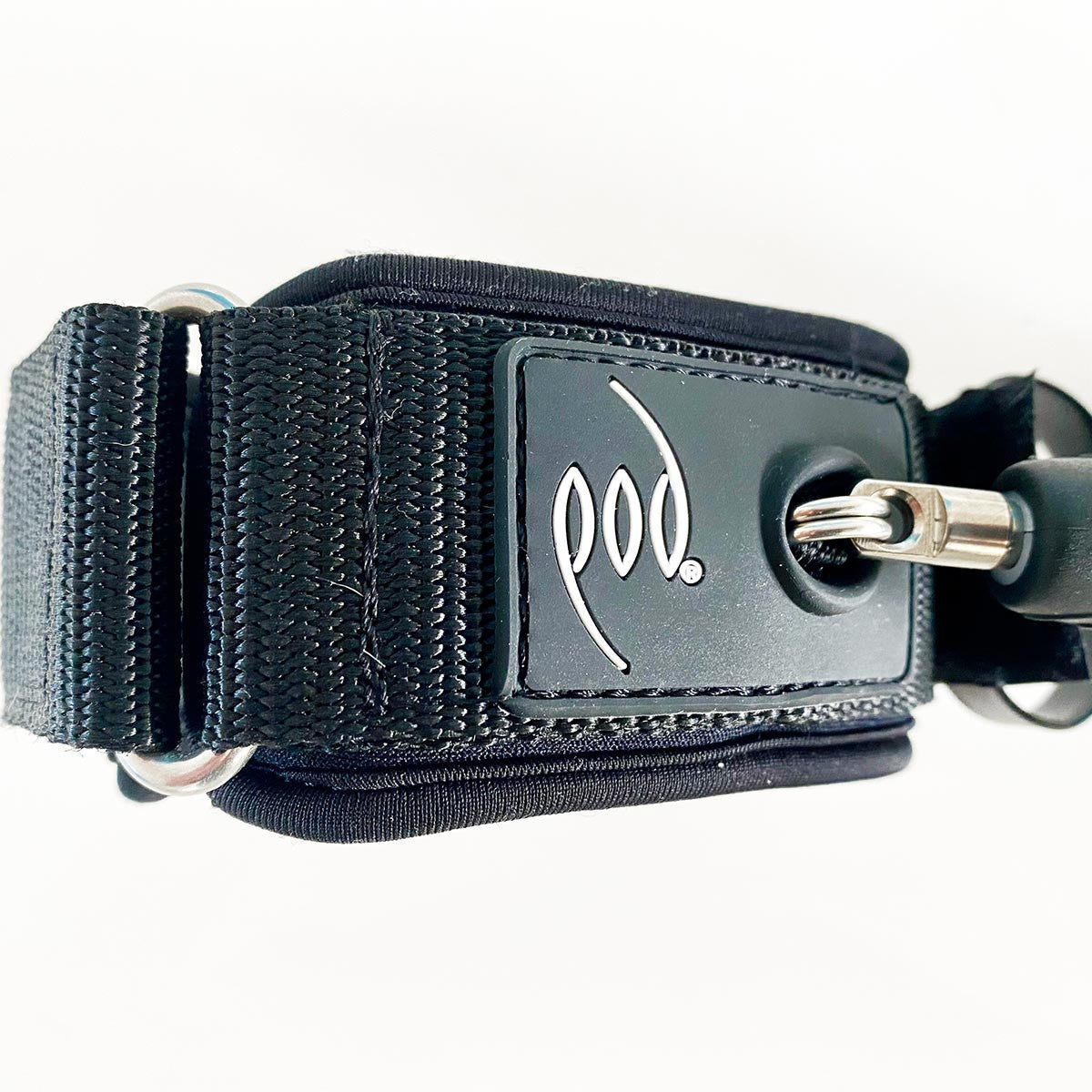
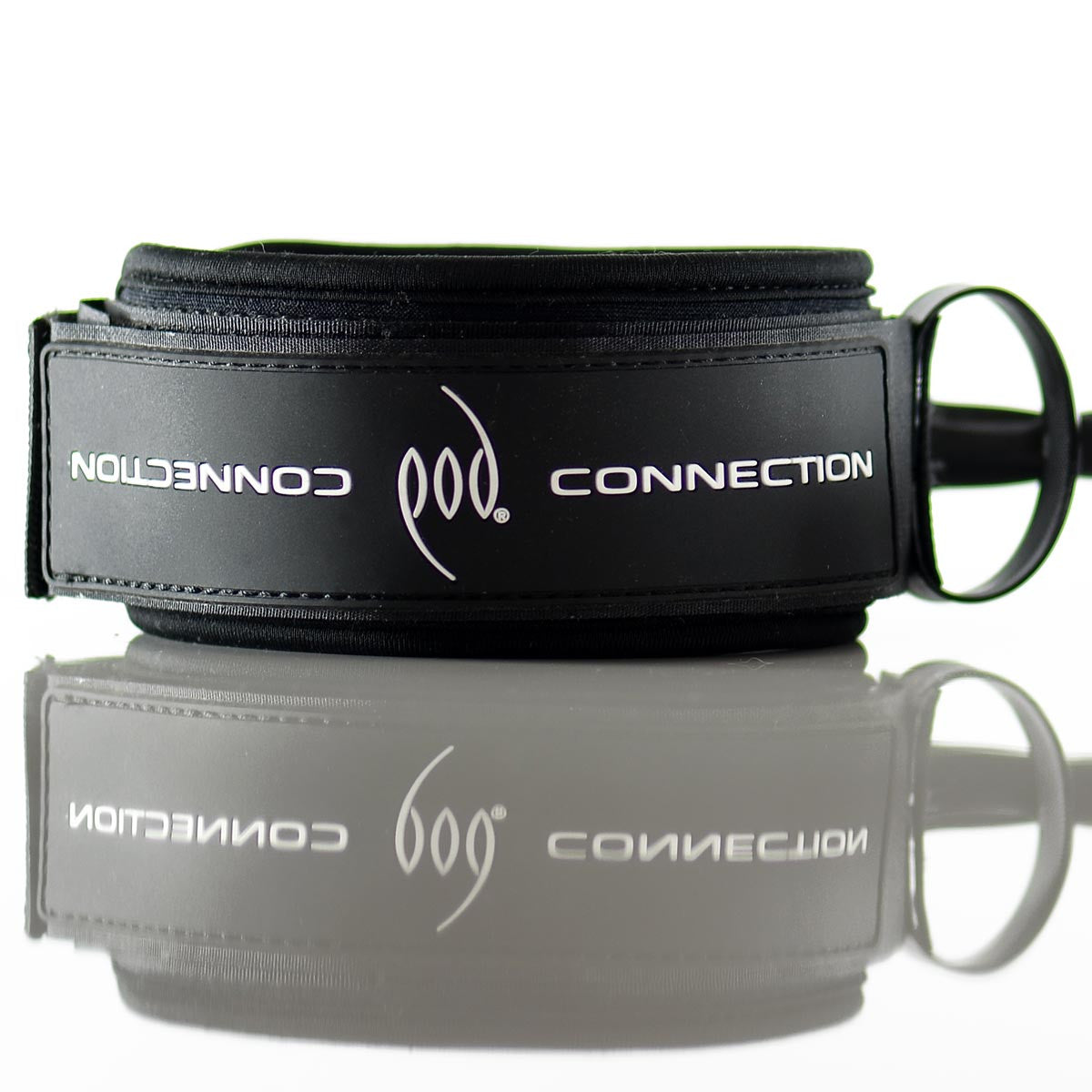
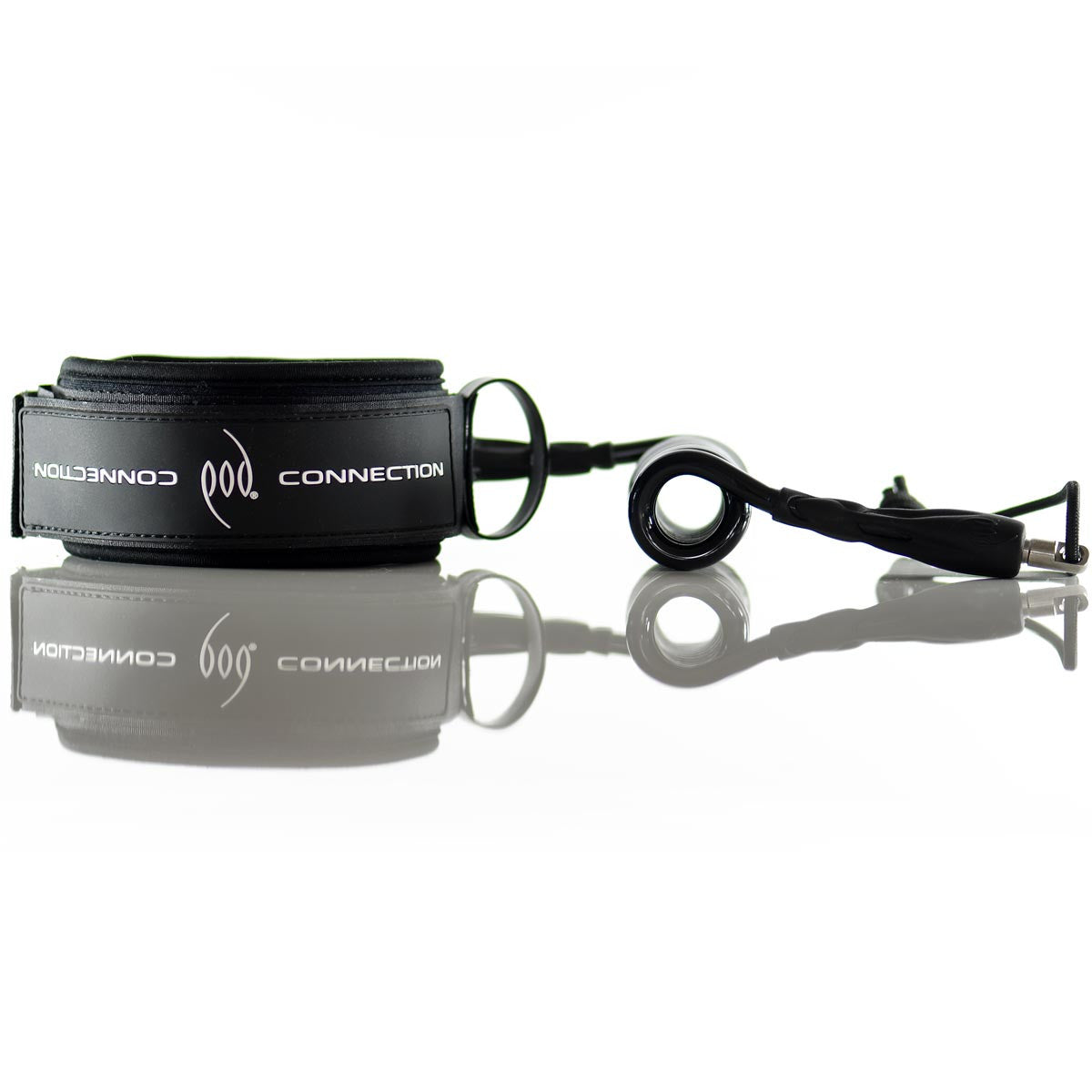
Four models across three cuff sizes. The Medium suits most riders in moderate surf. The Large suits larger riders and heavier conditions. The X-Large suits the biggest riders in the most demanding surf, where the load on the connection peaks. The Drop Knee Large shares the Large cuff and is set up for drop knee riding, where leg position and board control differ from prone bodyboarding. Every bicep leash has a double-padded, non-slip neoprene cuff and a quick-release D-loop.
Wrist Leash
The Classic Series wrist leash has moulded ends and suits bodyboarders who prefer a lower attachment point, or conditions where a bicep connection isn't practical. Not sure which suits you? Read Bicep vs Wrist Bodyboard Leash.
Surfboard Leg Ropes
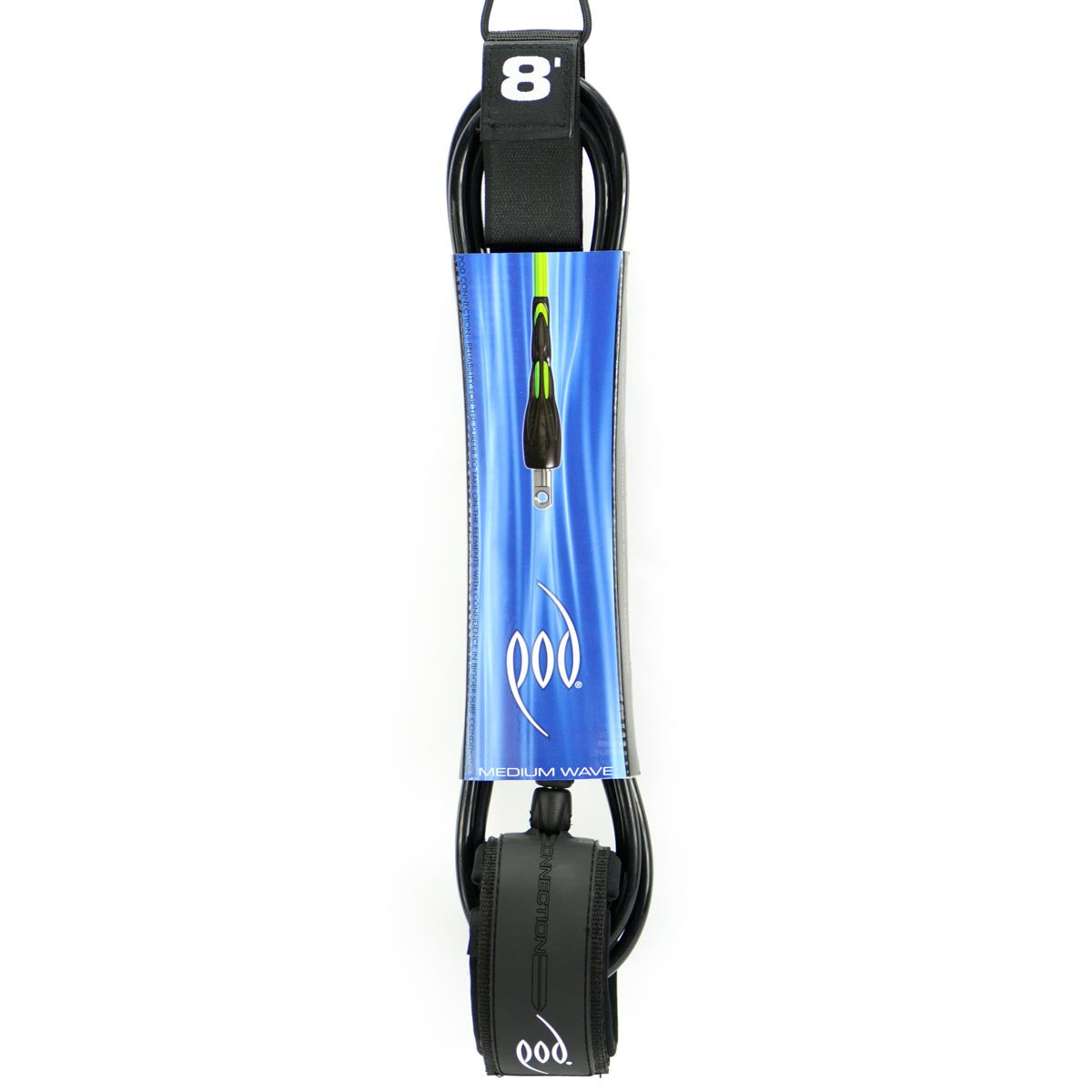
The 5ft, 6ft, 7ft and 8ft leg ropes cover shortboard, mid-length and longboard surfing. They share the same Connection Series construction and marine-grade hardware, with a 7mm urethane cord built for six-times stretch under load. In our own load testing, the connector system held 105kg of tensile force.
Bodyboard Plugs
POD bodyboard plugs give the leash cord a strong attachment point without cutting or damaging the deck or slick. Available in black, white, blue, red, yellow, lime and orange.
Do I need a leash?
In almost every surf, yes. A leash keeps your board close after a wipeout, so you're not swimming for it and it isn't washing through other surfers.
What length leash do I need?
As a rule, choose a leash about the same length as your board, or a little longer for bigger surf. The Surfboard Leash Size Guide goes through each board type.
Are surfboard leashes universal?
Any leg rope fits any surfboard with a standard leash plug, so choose by length and cord thickness rather than by board. Check how the length is measured. Every POD length is the cord alone, so a 6ft leash measures 6ft 9" in total with its hardware.
Is a thicker leash better?
Not always. A thicker cord is stronger but carries more drag, while a 6mm competition cord cuts drag but suits smaller waves. Every POD leg rope uses a 7mm urethane cord, strong enough for powerful surf without the drag of a big-wave leash.
Which foot does the leash go on?
Your back foot. Regular-footers ride with the left foot forward and wear the leash on the right ankle. Goofy-footers wear it on the left.
How do I attach a surfboard leash?
Take the leash cord off the rail saver and thread it through the plug at the tail of your board. Loop it under the stainless steel rod, pull it tight, then wrap it back into the Velcro and webbing rail saver so it sits snug. The rail saver stops the cord cutting into your rail, and the POD rail saver is 200mm long by 38mm wide to spread that load. Step-by-step diagrams are in the Surfboard Leash Size Guide.
Where does a bodyboard leash plug go?
Near the centre of the nose, just off the stringer on the side of your leash arm. The Bicep vs Wrist article explains how to fit it.
How often should I replace my leash?
Check it before every surf. Look along the cord for nicks or grazes from fins and reef, and check the swivels and cuff for wear. A new leash costs far less than a board lost on the reef.
Why do leashes tangle or snap?
Twist builds up when the cord can't rotate freely at the swivel, and snaps usually start at a stress point. We explain both in Why Surfboard Leashes Fail Under Load and Snap, and how stretch affects control in How Surfboard Leash Stretch Affects Control and Safety.