
POD Bodysurfing Handboards History - Successful 30 Years
Posted by POD Team on 16th Nov 2023
POD® Handboards Since 1993
Armed with a love for design and a passion for the water, Shane Vassallo spent years researching and developing handboards before introducing them in the late 1980s.
In 1993, POD Handboards Pty Ltd - now known as POD Ware Pty Ltd - was officially established. When conducting market research at the time, the typical reaction was that bodysurfing handboards, hand-planes, or hand-surfers were not popular and would not sell well in stores.
Australia's Oldest Bodysurfing Handboard Brand
Despite that feedback, Shane continued. He manufactured the POD® Handboard's distinctive shape and configuration in a robust, recyclable plastic moulding and continued to hand-finish the classic handcrafted cedarwood model.
It took twenty years, but the feedback was far from correct.
POD® Handboards earned their place on the beach. When people see them for the first time, they are curious and often ask: 'What is that thing? I cannot believe you can bodysurf across a wave!' or 'Which way do you strap it on?'
POD Handboard History (1988-2019) Overview
Well before 1988, Shane bodysurfed using the largest foot-size EVA thong. He began experimenting with various materials, shapes, and sizes over time. Using recycled surfboard cores and fins was a fast way to test. Once he found the right shape, he took his time shaping boards in Western Red Cedar and Australian Cedar. When he could no longer keep up with orders, he invested in his first steel mould, which he uses to produce the classic solid plastic board range to this day.
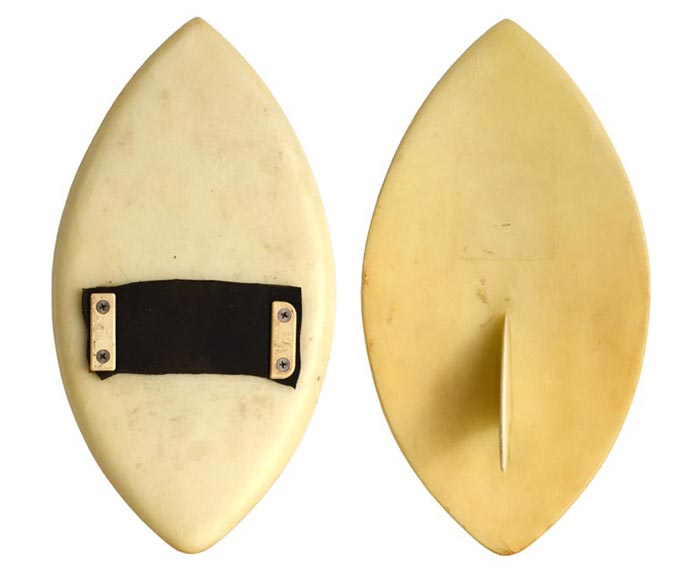
First Fibreglass Handboard - Circa 1988
Shane built the first prototypes from recycled surfboard cores and fins. He tested shape after shape until one held up consistently in bodysurfing conditions. Fibreglass was not a healthy option - shaping and glassing left shin rashes, which led him to start working in wood.
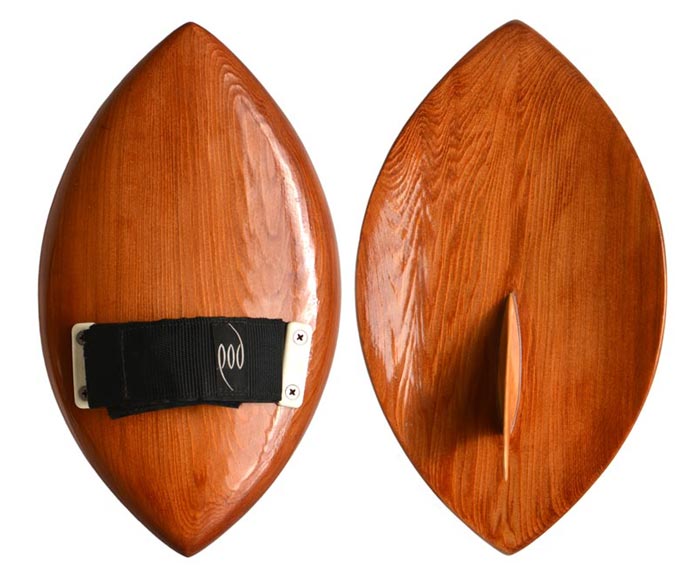
Handcrafted Cedar Handboards - Circa 1990
Wood is a pleasure to shape. Cedar is easy to work with and responds well to sanding. Much easier to seal with a marine-grade finish than fibreglass, and without the health risks. Shane also handmade a Silky Oak fin rebated into the board's concave bottom.
In 1994, Australian TV host Tim Bailey interviewed Shane Vassallo on Network Ten about his cedar POD handboards.
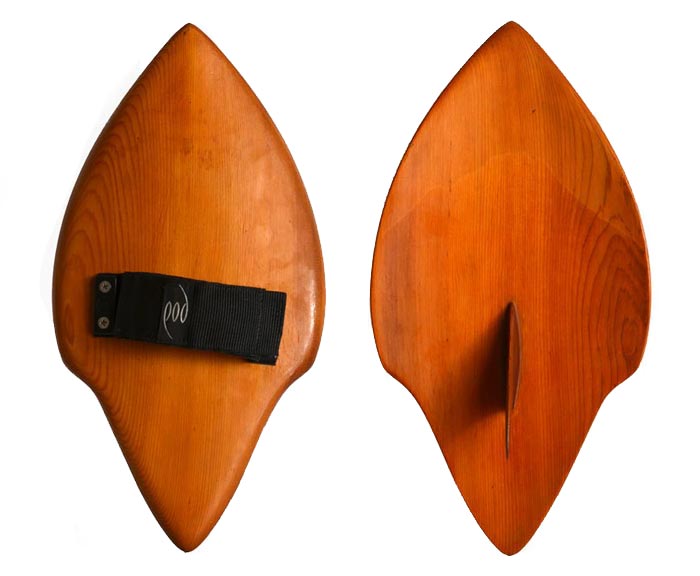
A Different Shape Direction - Circa 1991
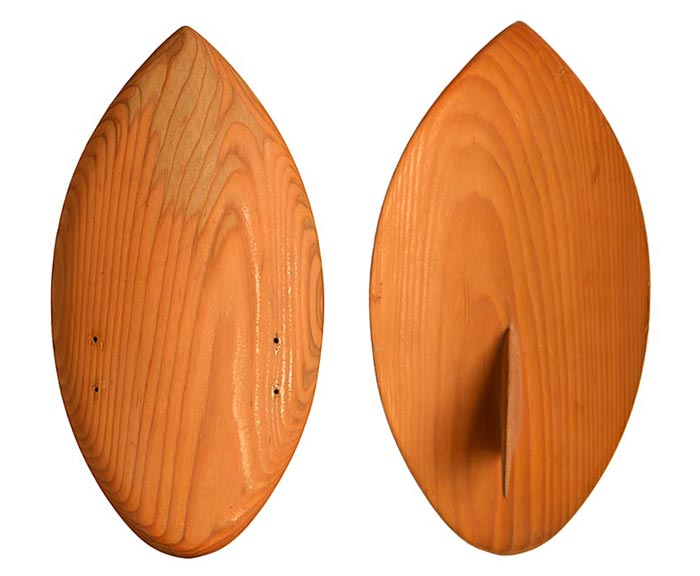
This shape was longer and broader than previous boards with an interesting tail section. However, there was significant water dispersion toward the face. This board included a handmade Jarrah fin made from recycled floorboards, rebated into the board's concave bottom.
Handboard Shape Refined with Fin - Circa 1994
The refined, distinctive shape and configuration proved to be the right direction. Shane realised the current keel fin provides better direction and control than the surfboard fin shape. He also tested a board without the keel fin - it did not have the same lift, direction, or control. The 3/4 keel fin has been shaped into every board since.
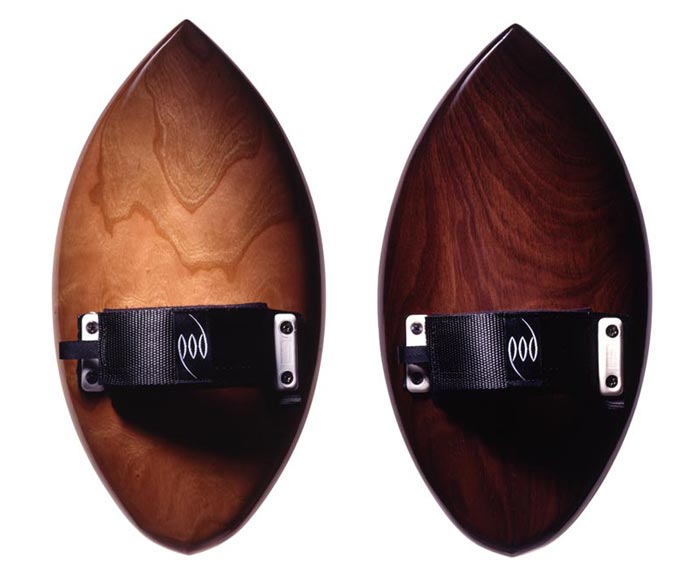
Signature Shape - Cherry Wood and American Walnut Handboard - Circa 1994
With a love of wood species and their different grain characteristics, densities, and colours, Shane made a limited range, all individually named and numbered. Cherry wood to the left and American Walnut to the right.
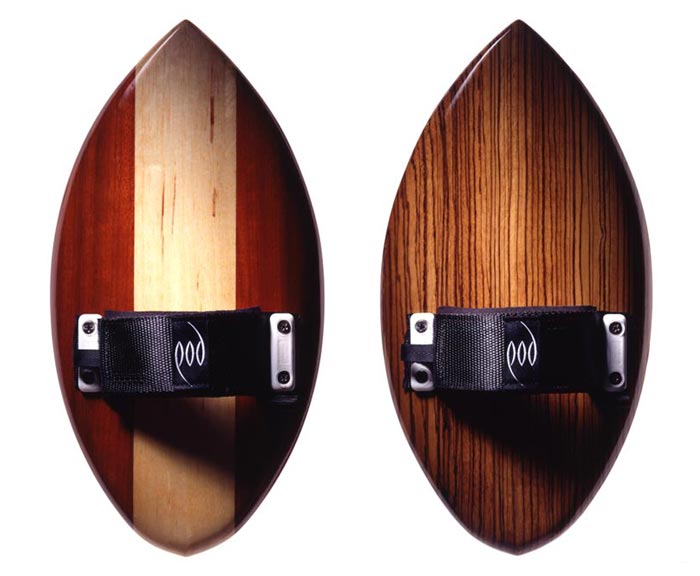
Paduk and Silver Ash and Zebrano Wooden Bodysurfing Handboard - Circa 1994
The Paduk and Silver Ash is the only board ever made, and it was also the first to be laminated. The Zebrano board, also known as Zebrawood, features impressive zebra stripes. Only four were made.
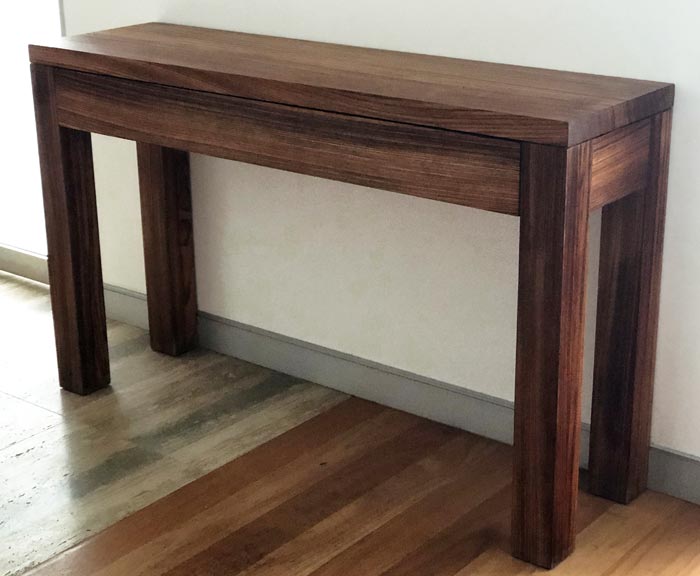
Zebrawood is Shane's favourite timber species. The zebra-stripe grain led him to handcraft an entry table and drawer in Zebrawood - 1400mm length x 400mm width x 850mm height.
First Full Length Keel Fin Bodysurfing Handboard - Circa 1994
Testing a full-length keel fin versus a 3/4 length keel fin. The 3/4 length is still shaped as it was today. The board on the left has no keel fin; when tested, it provided a very different bodysurfing experience.
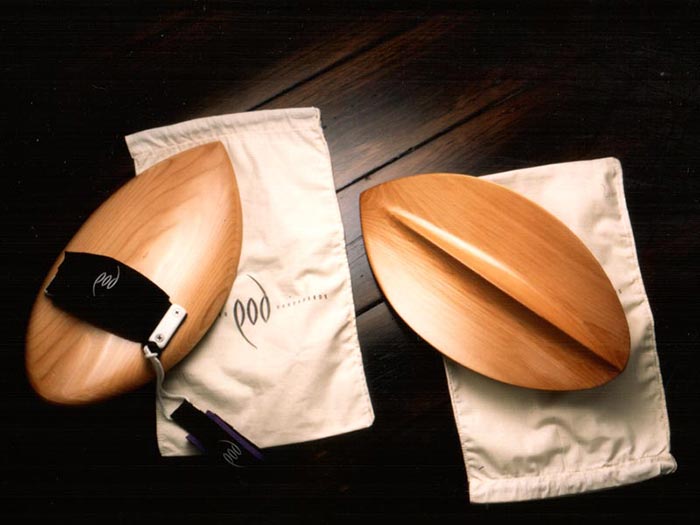
First Signature Model - Solid Plastic Bodysurfing POD Handboard with 3/4 Keel Fin - Circa 1995
The demand from the Australian bodysurfing community led Shane to the bank for a loan to build his first steel mould. With the support of his mother Naomi and his father Sam, they mortgaged the family home. That investment has held since 1995 - the classic solid plastic board range is still produced from that mould today.
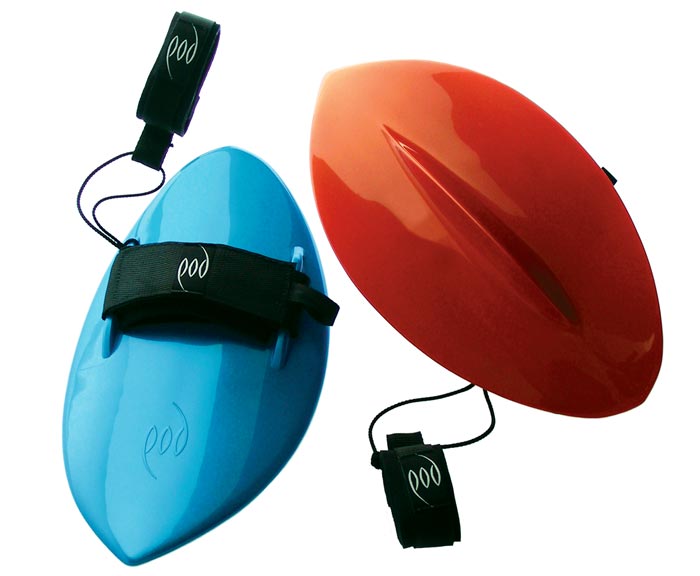
Hand Body Soul® Cotton Wood Bodysurfing Handboard - Circa 2018
A new direction for POD Ware Pty Ltd. The laminated cottonwood Hand Body Soul® Bodysurfing POD Handboard features a concave deck and a concave bottom, consistent with the original POD handboard geometry.
This model introduced the 316-grade stainless steel 50mm webbing hand-strap bridge design - a significant departure from the 25mm surfboard plug and thin hand strap used across the industry. The bodysurfer now has the choice of riding in the traditional long handboard position or the short handboard position by rotating the board 180 degrees and repositioning the 50mm hand strap and wrist strap. A first in bodysurfing.
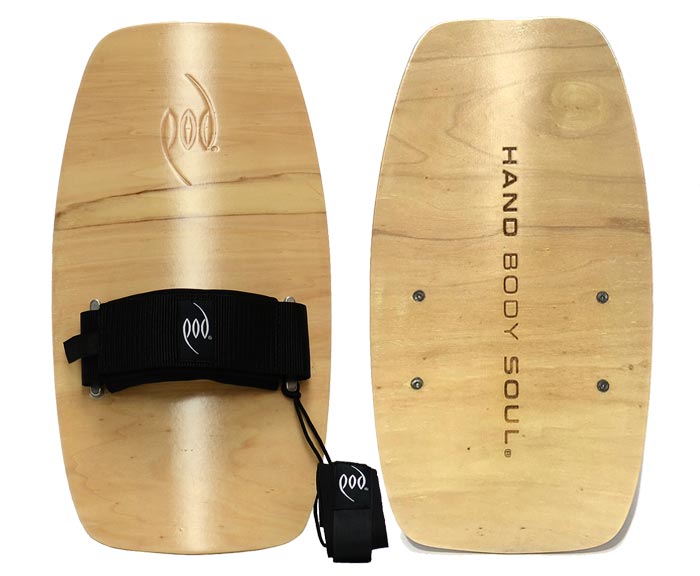
Cedar and Walnut Bodysurfing Handboards - Circa 2019
The Hand Body Soul® range expanded into three cedar and walnut sizes - EGO, WOO, and FLO. Each board is CAD-designed, precision CNC-machined, laser-etched, hand-finished, and hand-assembled. The ergonomic palm hold and support system introduced in the Cottonwood model carries over to all three sizes.
EGO POD Handboard - sits in the palm of the hand, just past the fingertips. The smallest board in the range.
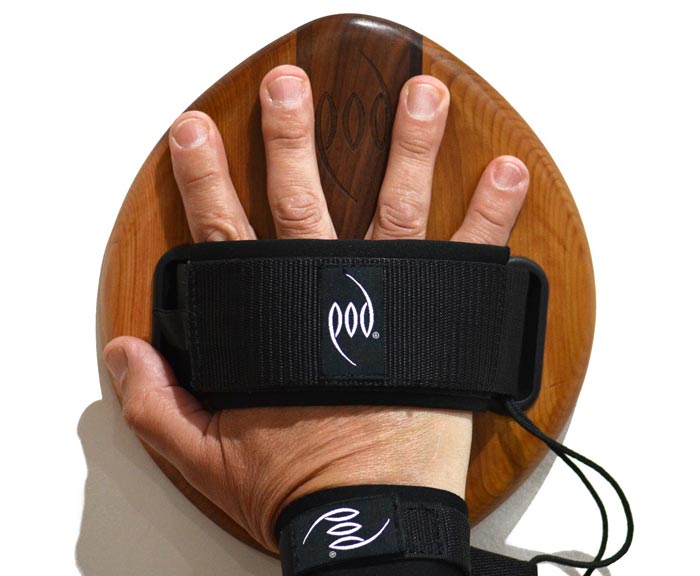
- EGO - Length 225mm / 9 inch x Width 200mm / 7.87 inches
- Volume - 485cm³ / 485ml / 0.1281 US liquid gallon
- Lifting force - up to 70kg / 154.3lb per handboard
- Weight - 250 to 280 grams (varies with grain density)
WOO POD Handboard - the mid-size board in the Hand Body Soul® range and the most widely used bodysurfing board in the range.
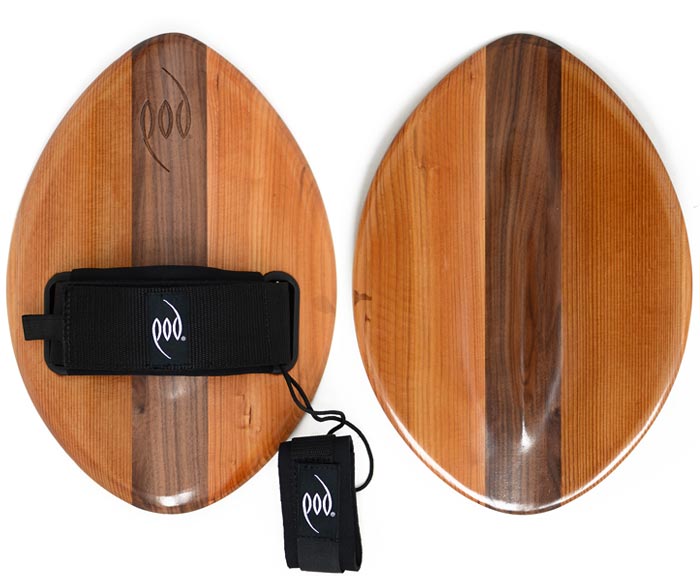
- WOO - Length 300mm / 12 inch x Width 210mm / 8.25 inches
- Volume - 705cm³ / 705ml / 0.1862 US liquid gallon
- Lifting force - up to 90kg / 198.4lb
- Weight - 380 to 410 grams (varies with grain density)
FLO POD Handboard - the largest board in the Hand Body Soul® range. Maximum surface area for lift and directional hold in powerful surf.
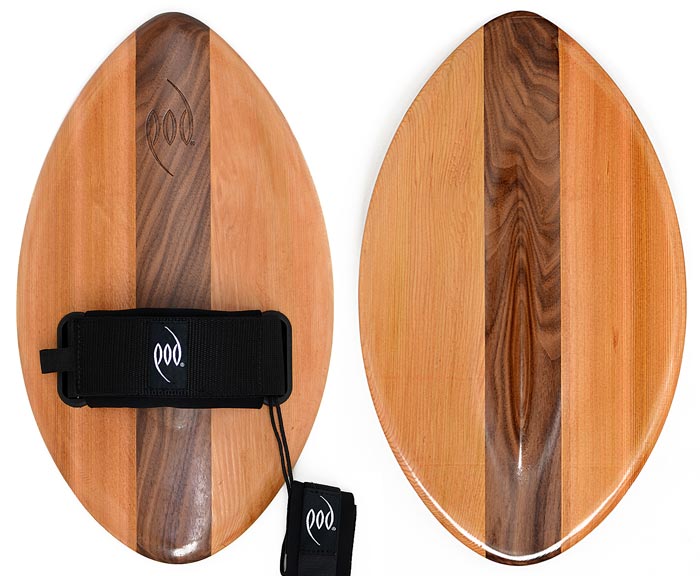
- FLO - Length 375mm / 15 inch x Width 218mm / 8.25 inches
- Volume - 953cm³ / 953ml / 0.2517 US liquid gallon
- Lifting force - up to 110kg / 242.5lb
- Weight - 460 to 480 grams (varies with grain density)
Let's Look at the Finer Details of the Cedar and Walnut Handboards
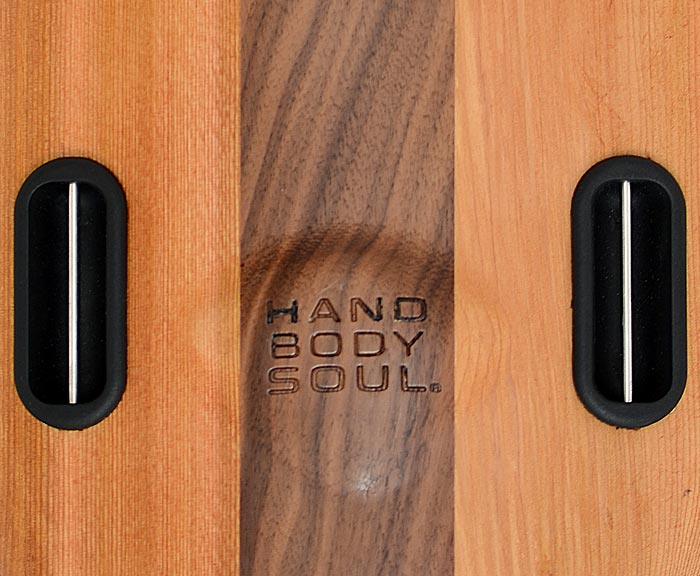
The ergonomic palm hold and support sit between the custom-built hand strap retainer inserts, which are compatible with a 50mm webbing strap. Unlike other handplanes that use a 25mm surfboard plug and a thin hand strap, the 50mm system holds the hand securely in position and relieves the arm muscles from the strain that flat-deck designs place on the wrist and forearm.
The Design Timeline - What Happened Between the Ranges
After the classic polypropylene model was established and the orders were flowing, Shane watched the handboard category from the outside for a long time. Brands entered. Most came and went within a season or two. Their shapes offered nothing that had not already been done - in many cases the configurations were so similar to each other that the differences were impossible to find. There was no design thinking worth responding to.
There was one exception. One brand stood apart. Brownfish handboards - handcrafted wooden boards - took their own direction. The shapes were genuinely different. Sadly, the founder later made a public statement that he could no longer survive alongside mass production in the category. That outcome says more about the market than it does about the boards. That kind of independent thinking deserves acknowledgement regardless of where it sits in the market.
Then came a wave of brands - in Australia and then worldwide - offering configurations that were hard to distinguish from one another. That pattern, rather than discouraging further development, did the opposite. It confirmed that the signature shape created decades earlier still had no meaningful competition. The question became how to apply that geometry properly across three sizes.
The EGO, WOO, and FLO followed the same naming logic as POD itself - three letters, clean and direct. The O ending was not accidental. In Australian vernacular, names are rounded off with O. Shaneo. It is a cultural shorthand that carries warmth without trying. And there was logic in the playfulness - three-letter words ending in O, all fitting within the POD family. The naming came from the same instinct as the shape: find what is honest and stay with it.
The WOW followed. Not because of the marketing phrase but because of the personal reaction after nearly three years of development - to finally hold a board in the signature shape, in a material formulated precisely for that geometry, and know that it was exactly right. That is what the name reflects.
For the full story of the materials, the greenwashing context, and why longevity is the honest measure of sustainability in handboard construction, read Truth About "Eco-Friendly" Bodysurfing Handboards.
WOW 13" Polyurethane Bodysurfing Handboard - Released 2025
The WOW 13" did not arrive at its size by chance. The EGO sits at 9 inches, the WOO at 12 inches, and the FLO at 15 inches. Customer feedback and sales data across the cedar walnut range identified the WOO as the most popular board - the size that suited the widest range of riders and conditions. One inch of additional length and scaled width over the WOO increases surface area and volume, meaningfully changing how the board sits in the water and how much lift it generates. That single inch, validated by real purchasing data over years of sales, became the starting point for the WOW.
In timber, gaining that surface area and volume comes with a weight cost. A cedar or walnut board at 13 inches carries more mass than a board at 12 inches. The polyurethane construction resolves that trade-off entirely. At 330 to 350 grams, the WOW is approximately 25% lighter than the equivalent wood board at the same geometry, meaning the additional surface area and volume come without the added weight. More lift. No penalty.
The flex rebound is the third dimension that no previous POD handboard has had. The polypropylene classic does not flex under load. The cedar and walnut boards do not flex under load. The WOW polyurethane formulation introduces controlled flex rebound for the first time in the range - the board flexes under the forces of the wave and returns to its original shape. That is a new physical behaviour that earlier technologies and materials simply could not deliver, regardless of how the board was shaped.
Getting there took nearly three years. Eighteen months to find a manufacturer willing to attempt a polyurethane formulation to specific handboard requirements. Another ten to twelve months trialling and refining the weight, density, and rigidity profile until the compound matched exactly what the signature shape needed. This is a world first in handboard construction - a polyurethane formulation developed specifically for the mechanical demands of bodysurfing.
The WOW name followed the same logic as EGO, WOO, and FLO - three letters, ending in O. But for Shane, the WOW factor was not a marketing phrase. It was the personal response to finally holding a board in the signature shape, in a material formulated precisely for that geometry, knowing that what the earlier technology could not produce had now been made. That is what the name reflects.
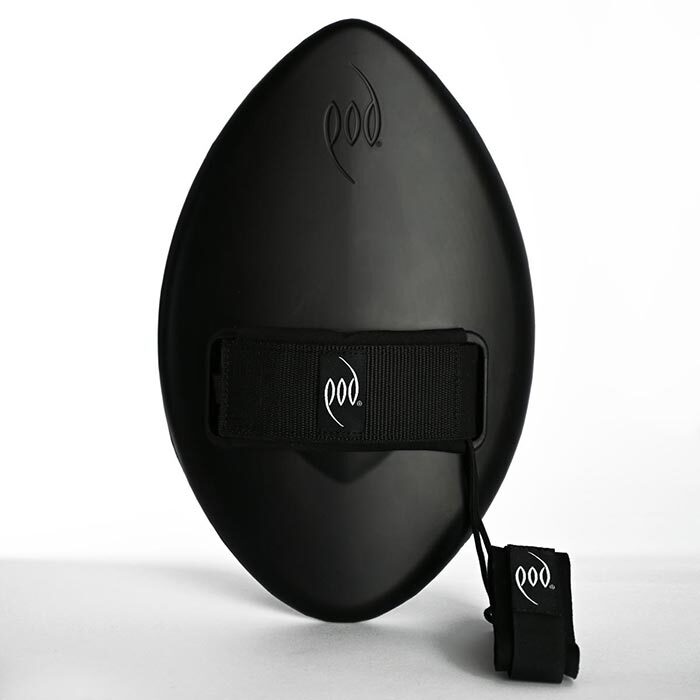
For full product details, visit the POD WOW 13" Handboard page.
Off the Shelf - Photos, Covers and Advertising
A small collection from the POD archive. The Gowings Department Store front cover, workshop photographs, the first postcard shoot, and early advertising.
Front Cover of Gowings Summer Journal 1997 - 1998

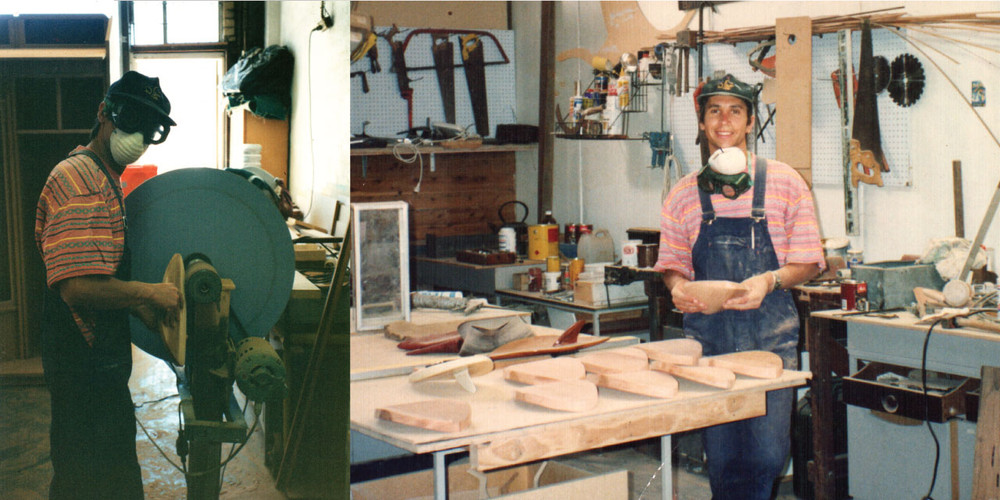
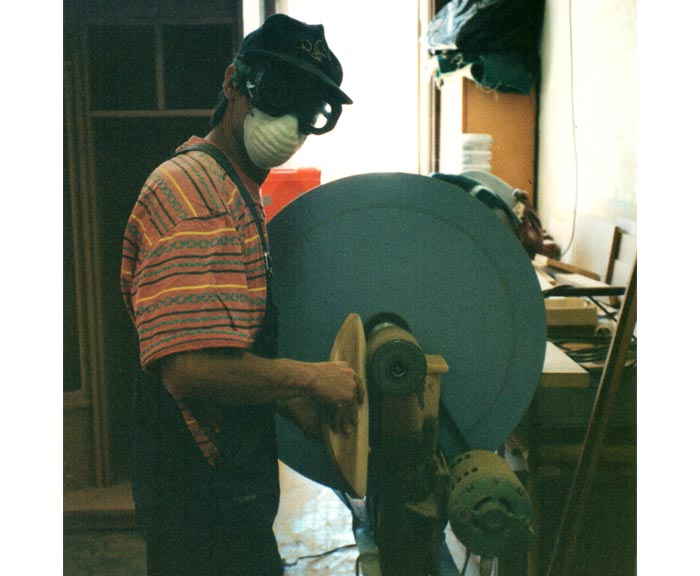
Shane Shaping a POD Handboard on the Drum Sander
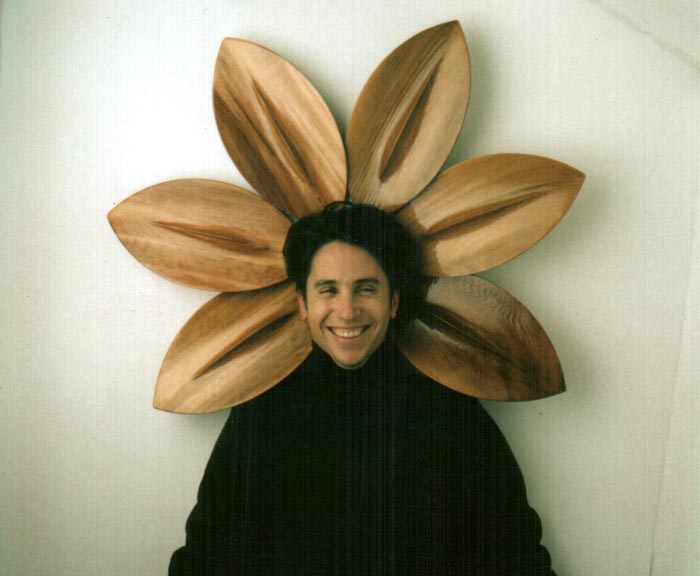
Shane at the Postcard Photo Shoot
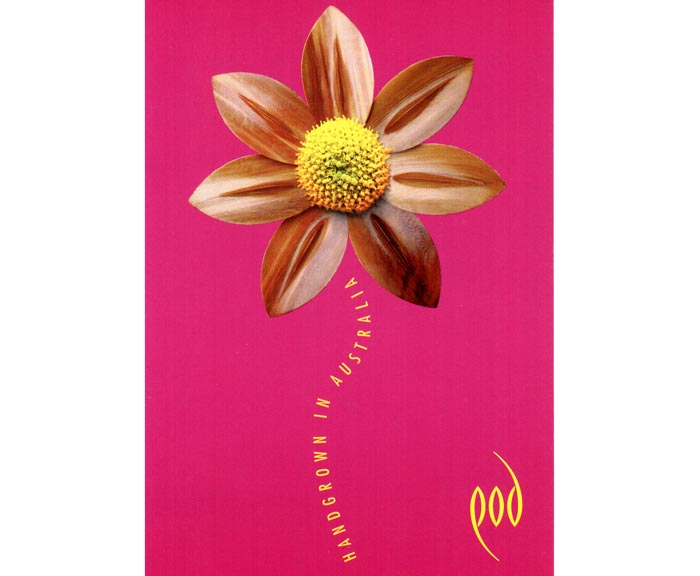
First POD Handboards Postcard
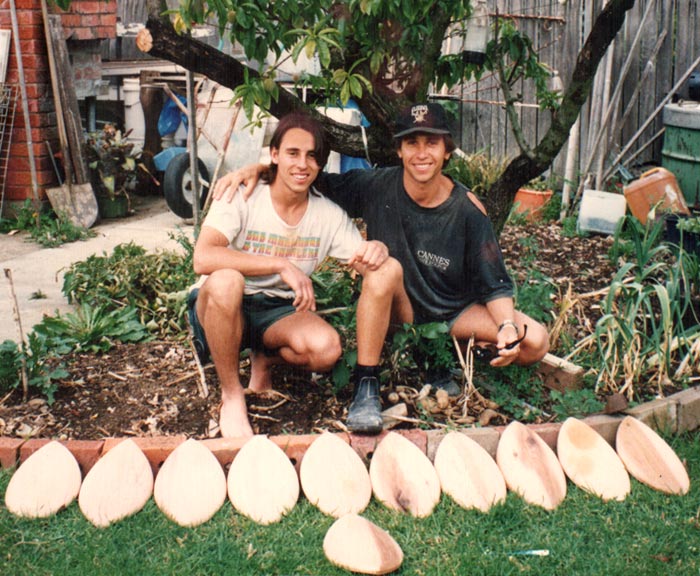
Brother Damian with Shane's First Handboards
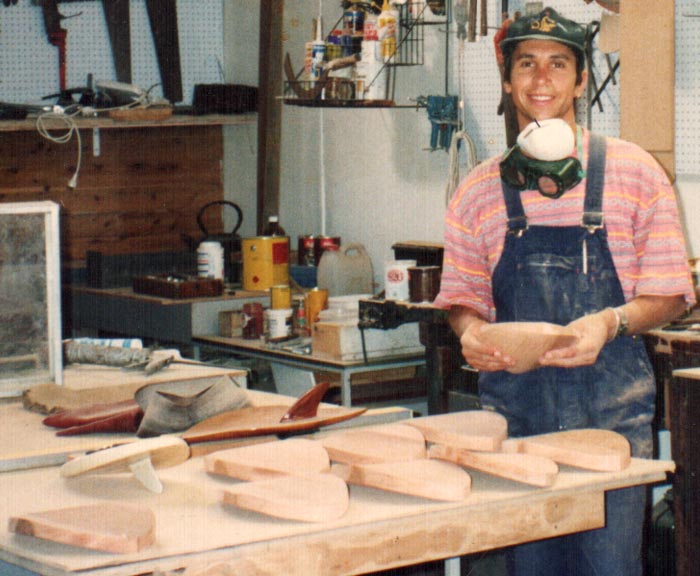
Shane at the Workshop
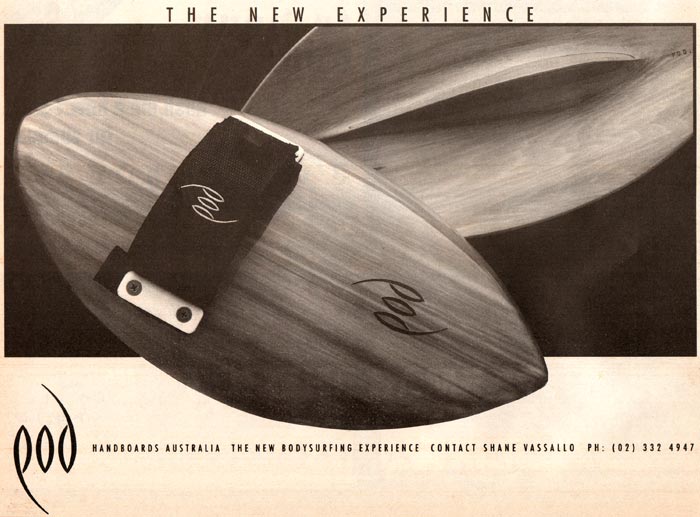
First Timber Handboard Advertising - Tracks Magazine 1995
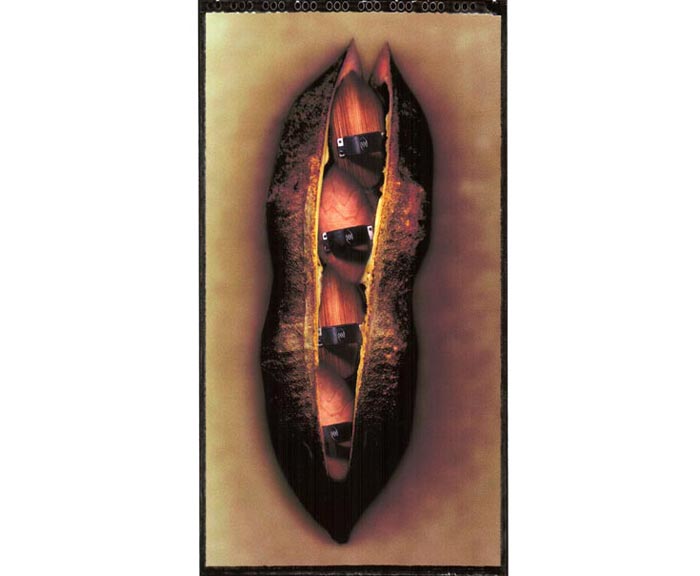
Wood POD Handboards in a Seed POD
Still Shaping. Still in the Water.
Over 35 years since the first fibreglass prototype was tested in the surf, the shape, the concave, and the keel fin principle that emerged from that early work are still present in every board made today. The materials have evolved - from fibreglass to cedar to polypropylene to cottonwood to cedar walnut to polyurethane - but the underlying geometry has held.
Other brands have entered the handboard category over the years. That is a good thing. Competition sharpens thinking and pushes design forward. POD has no interest in being the only handboard brand. It has always been more interested in being the honest one.
The full POD handboard range - from the classic solid plastic Original Classic through to the Hand Body Soul® cedar walnut boards and the WOW 13" polyurethane - is available at podware.com.au/bodysurfing-handboards.