The Longest and Most Flexible Fin in the PF Series - Body Surfing, Bodyboarding and Swimming
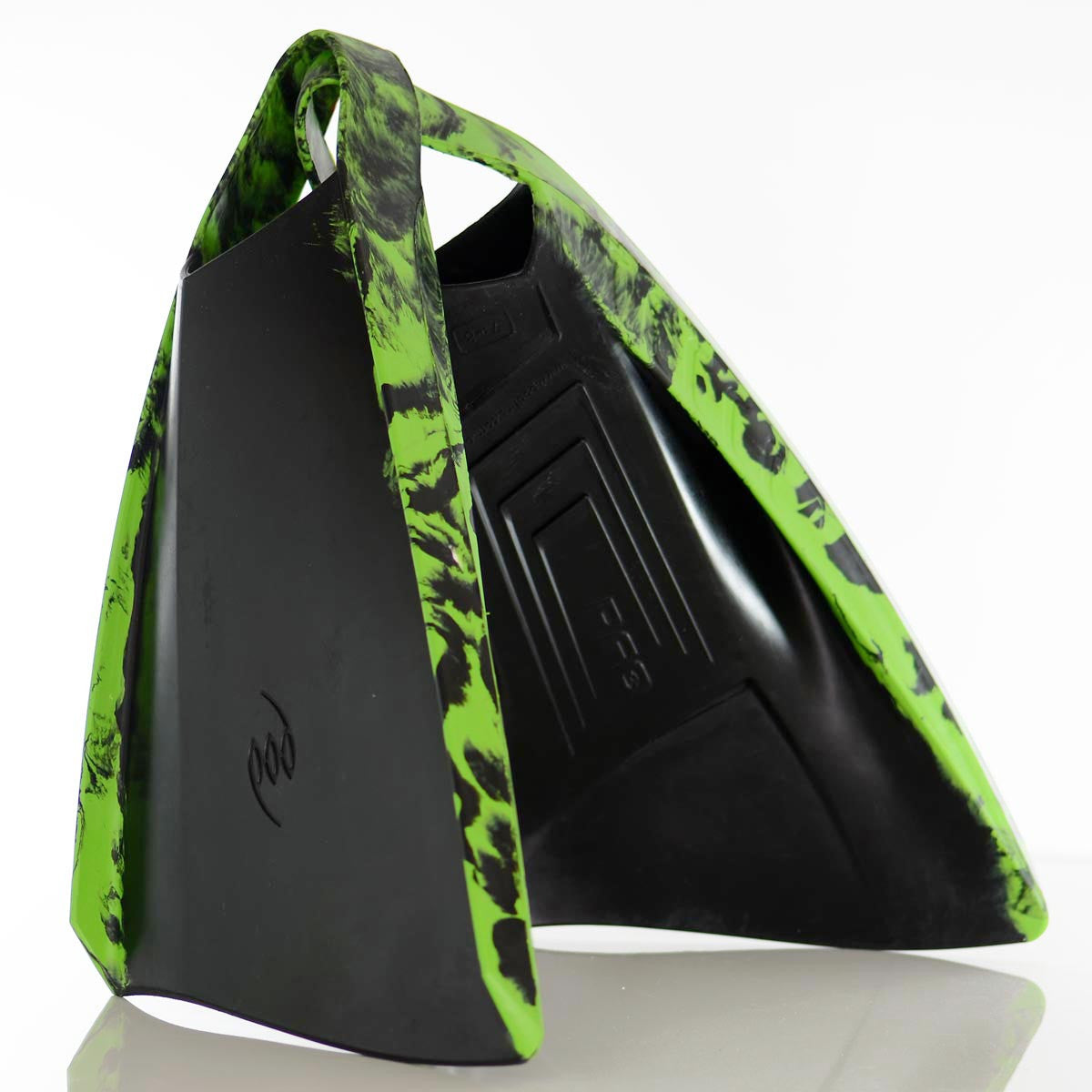
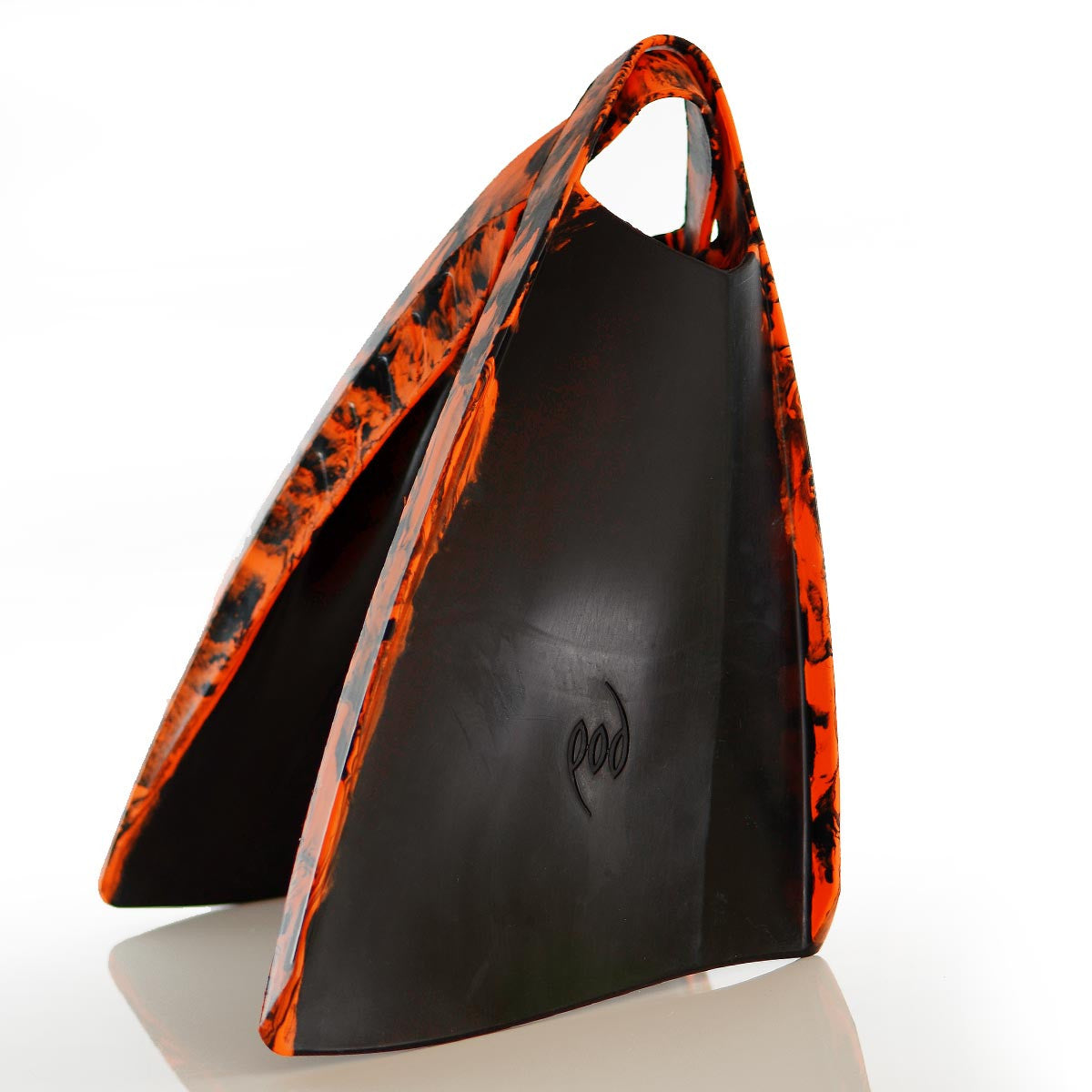
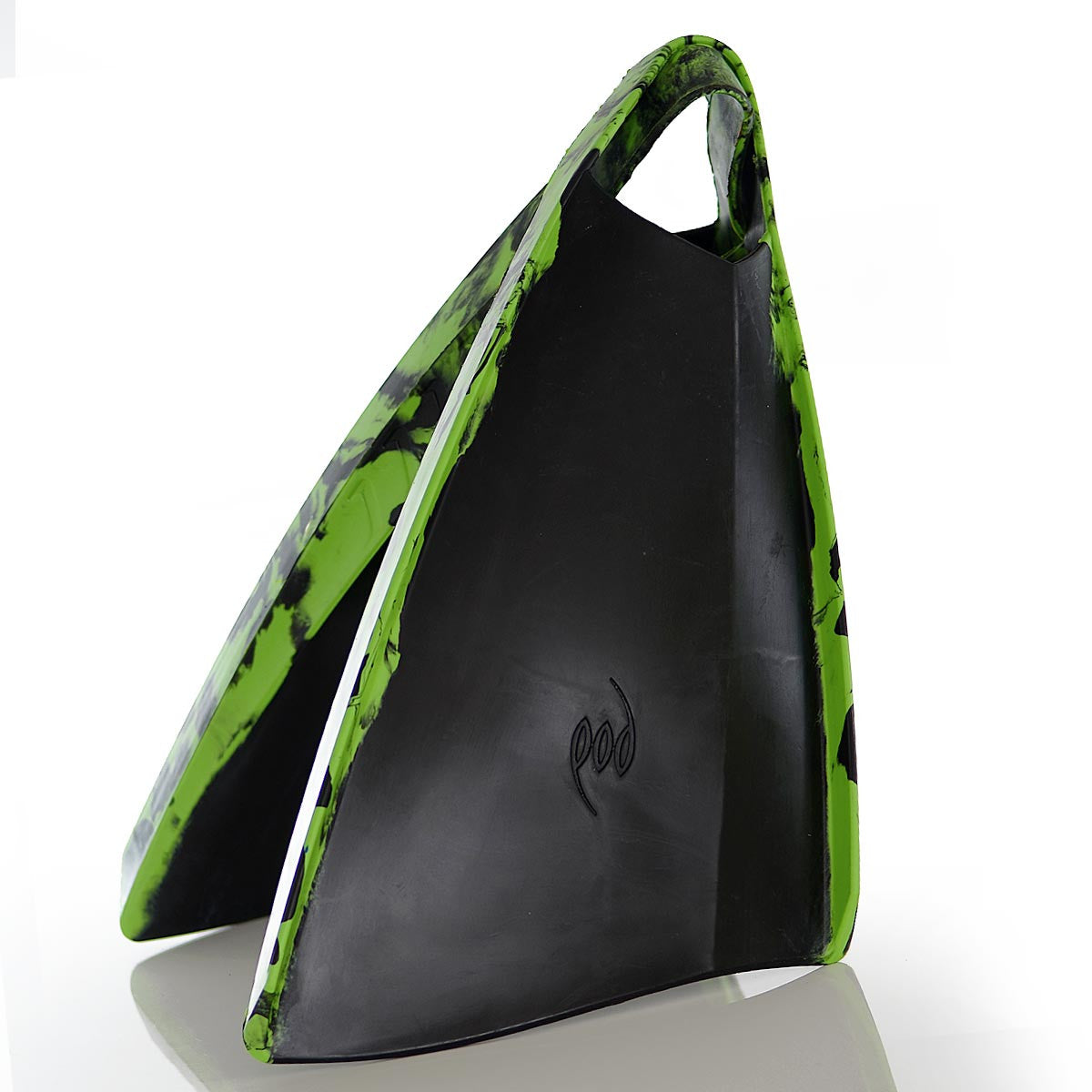
The PF3 Evolution carries the longest blade in the POD PF Series, and it flexes more than either the PF1 or the PF2. Its asymmetric blade and foot pocket follow the foot's shape and keep the load centred over it, not out at the toe edge. That lets the blade flex in line with the kick instead of twisting the foot sideways.
Like the PF2, the PF3 carries vertical rails out to the blade edge. On a wave, those rails hold into the face and keep your legs from sliding down it. The PF2 pairs its rails with a symmetric blade. The PF3 pairs them with an asymmetric blade made for a left or right foot, so the two fins in a pair are not interchangeable.
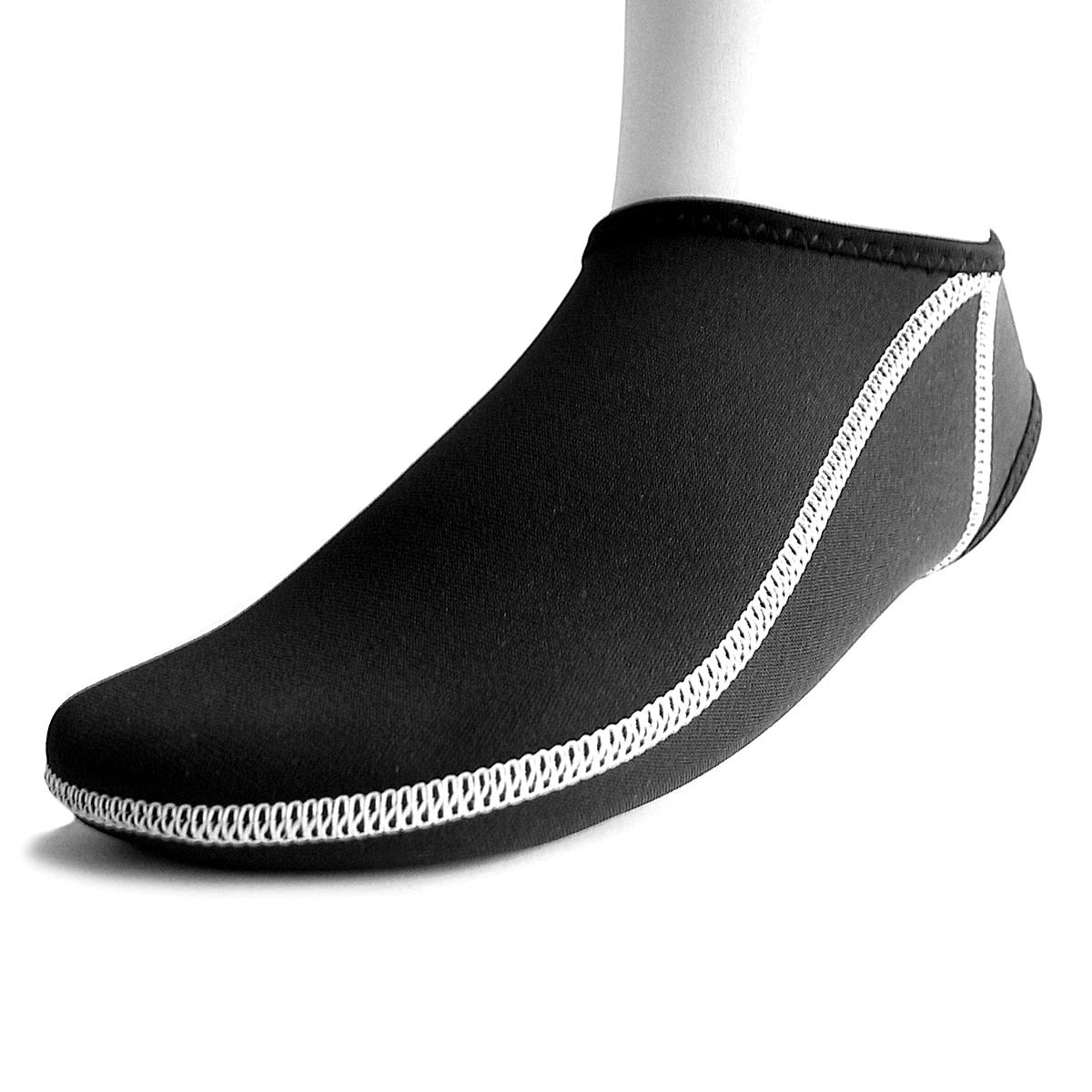
The asymmetric foot pocket follows the foot's natural contour instead of stretching evenly on both sides. It can feel different from the PF1 or PF2, even in the right size. If you want a firmer connection, POD 3mm Neoprene Fin Socks close up the fit.
Riders who want the fin to answer every change in direction and timing choose the PF3 for that response. It comes in sizes Small/Medium through Large.
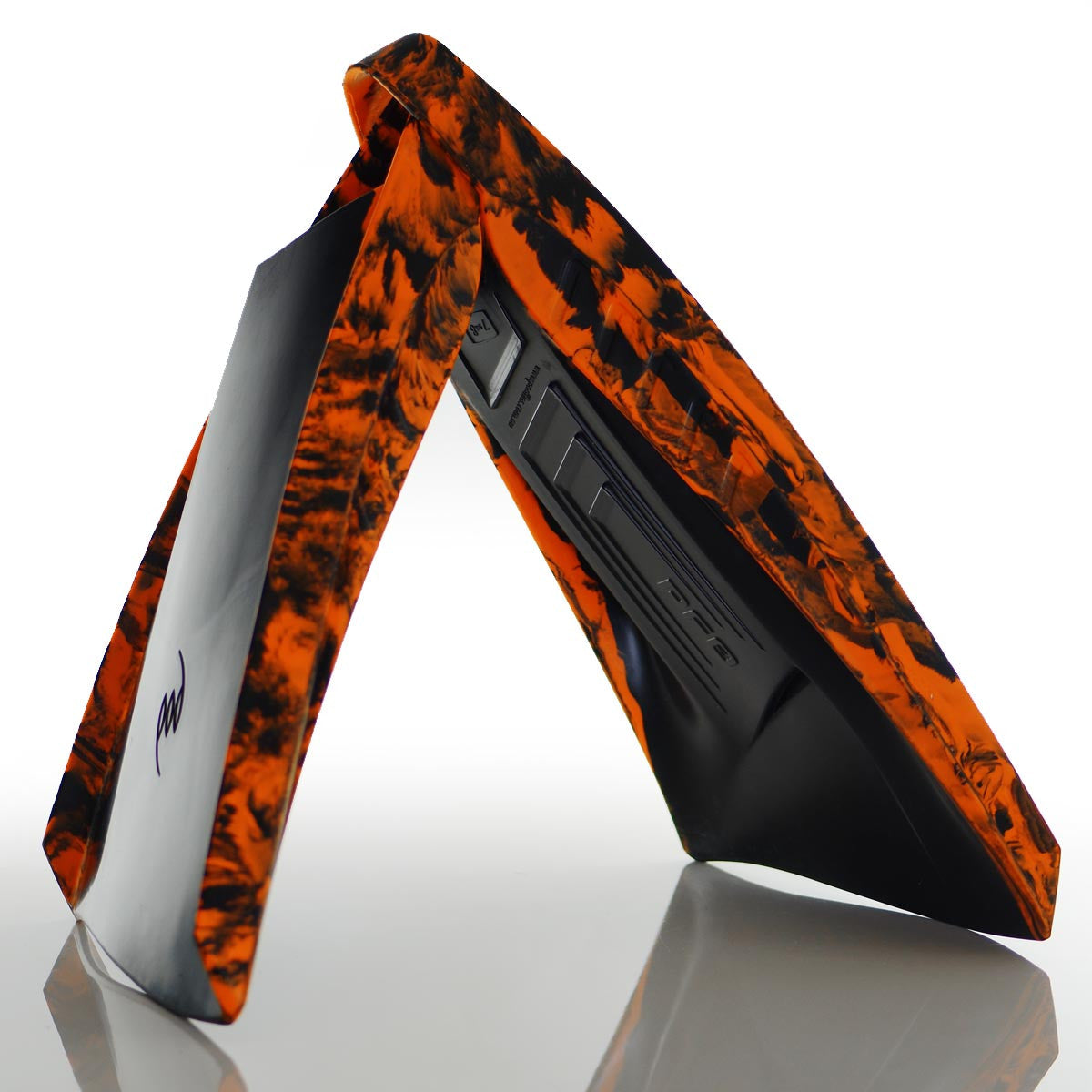
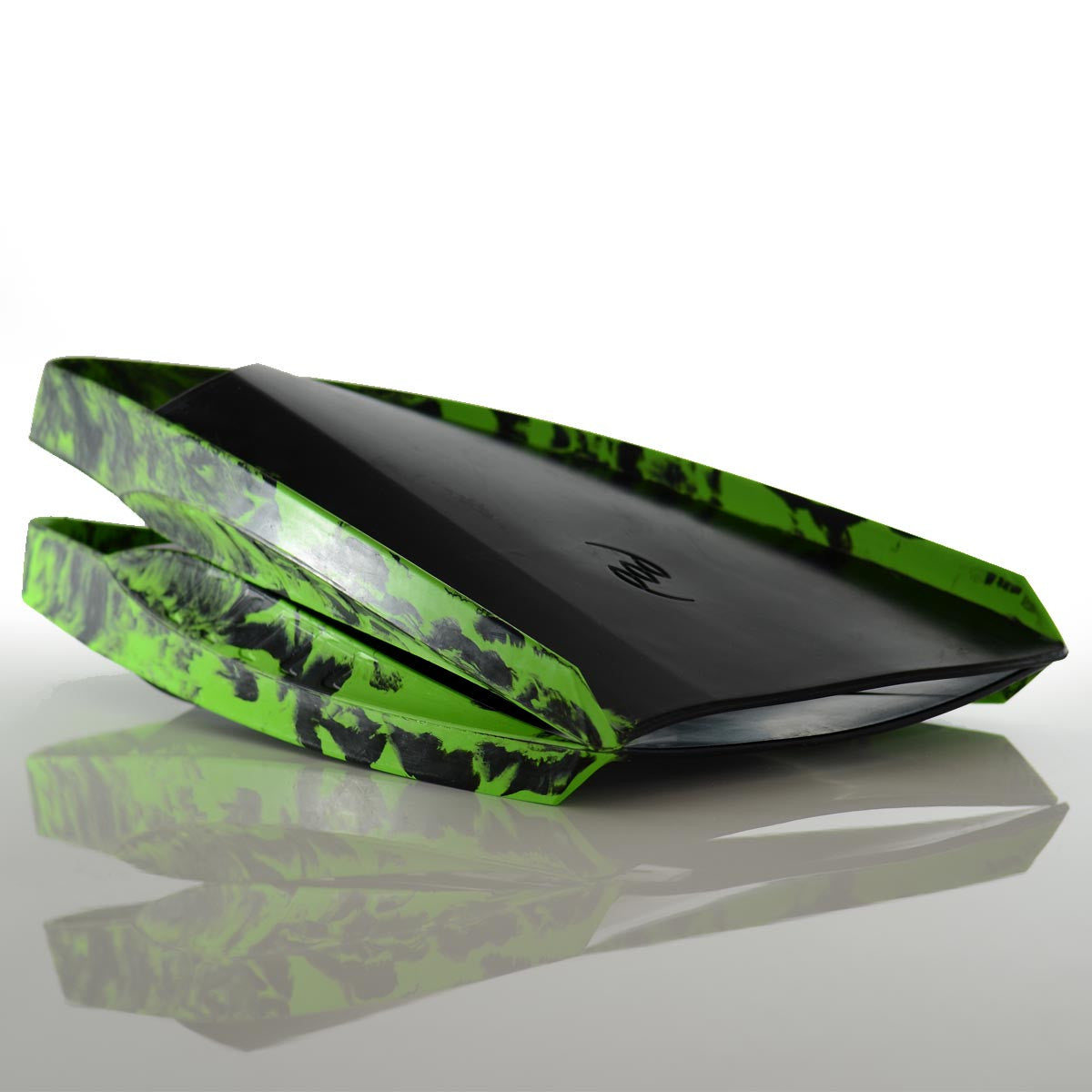
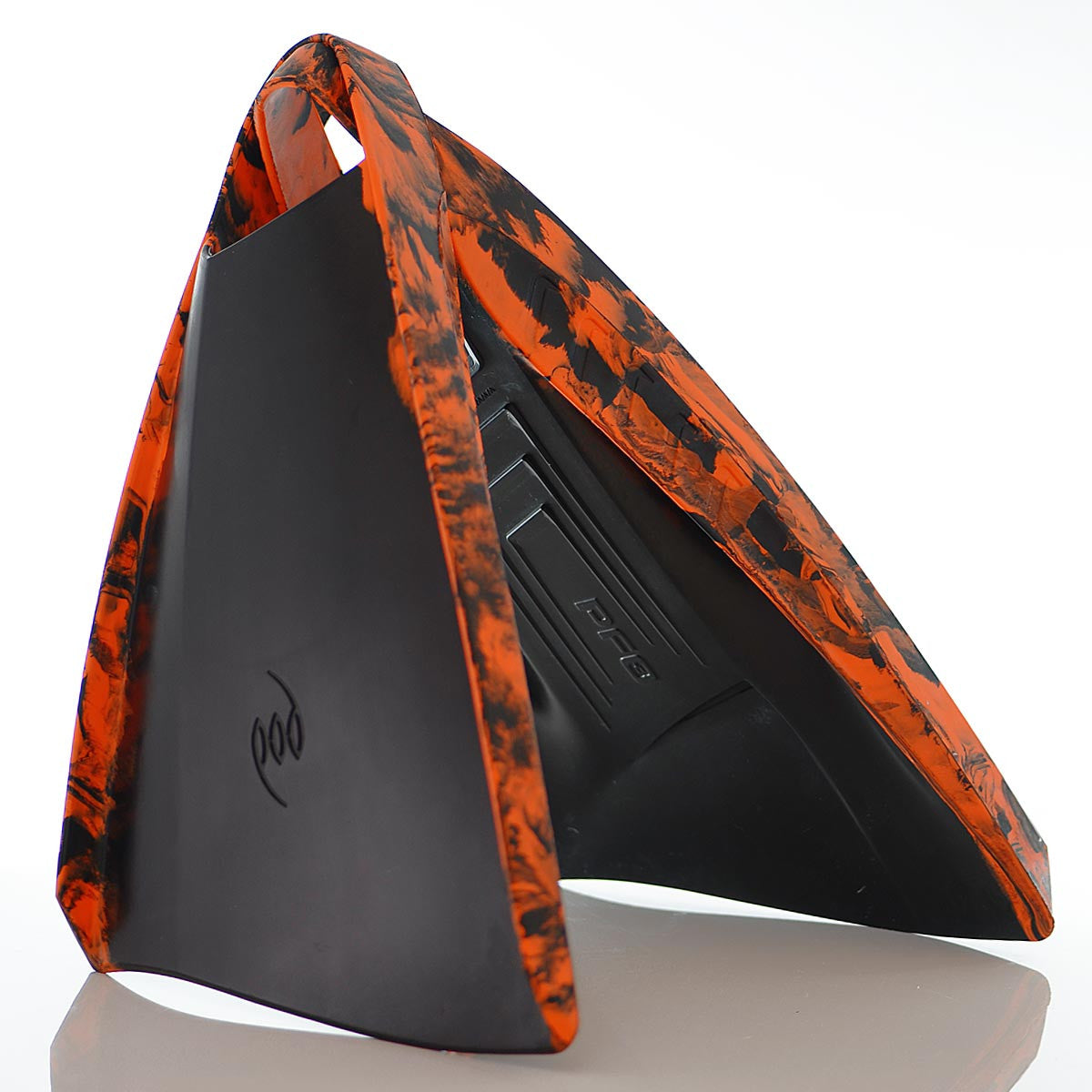
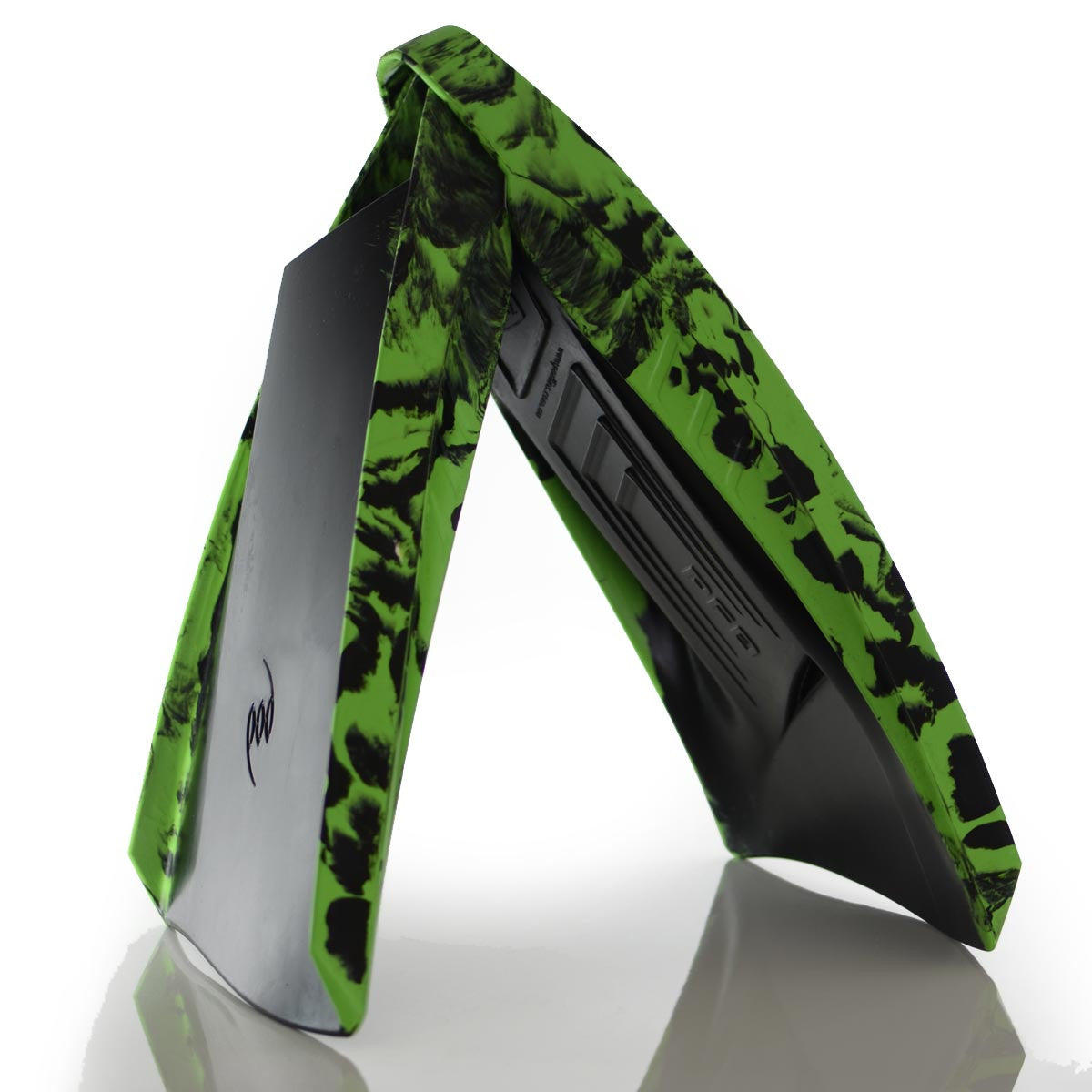
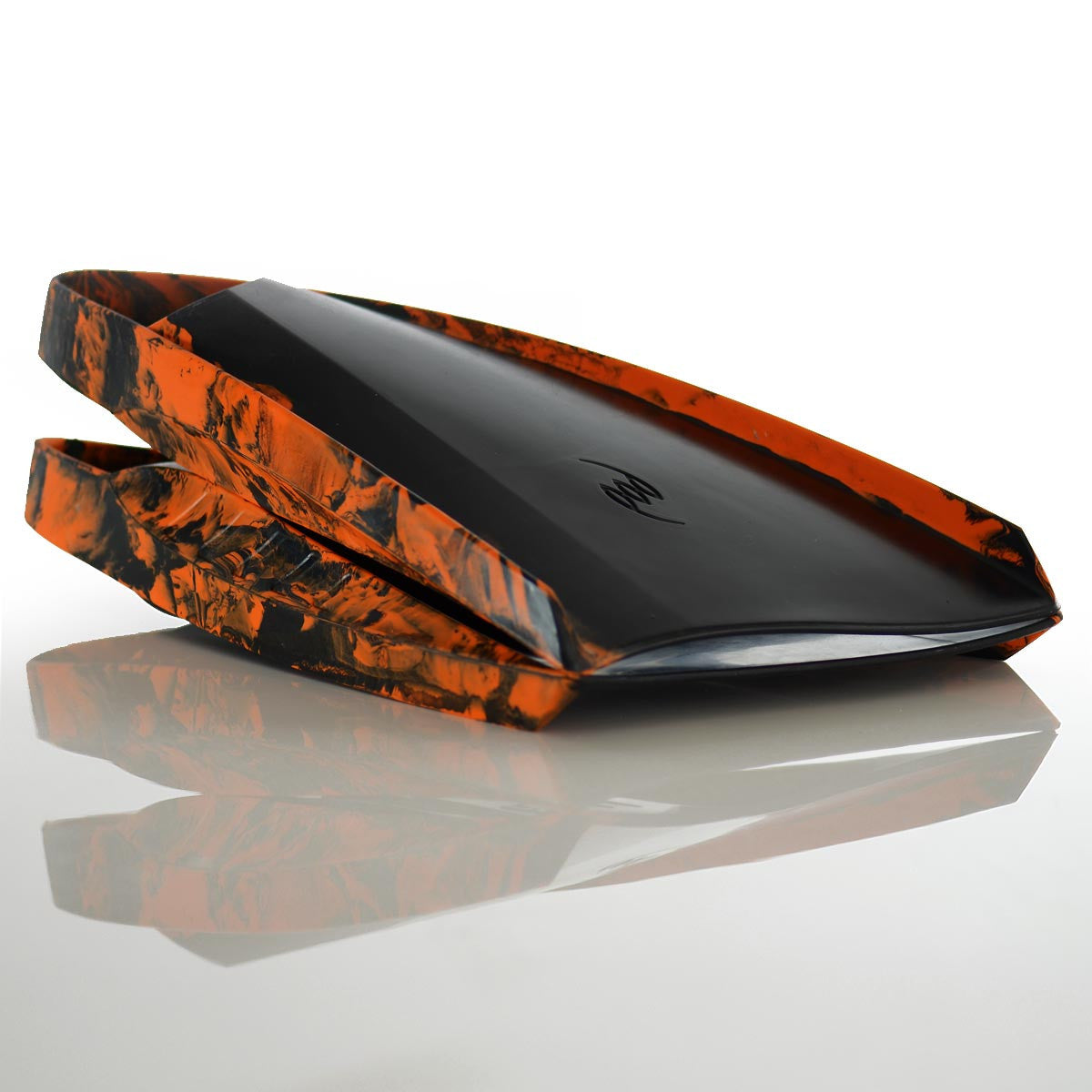
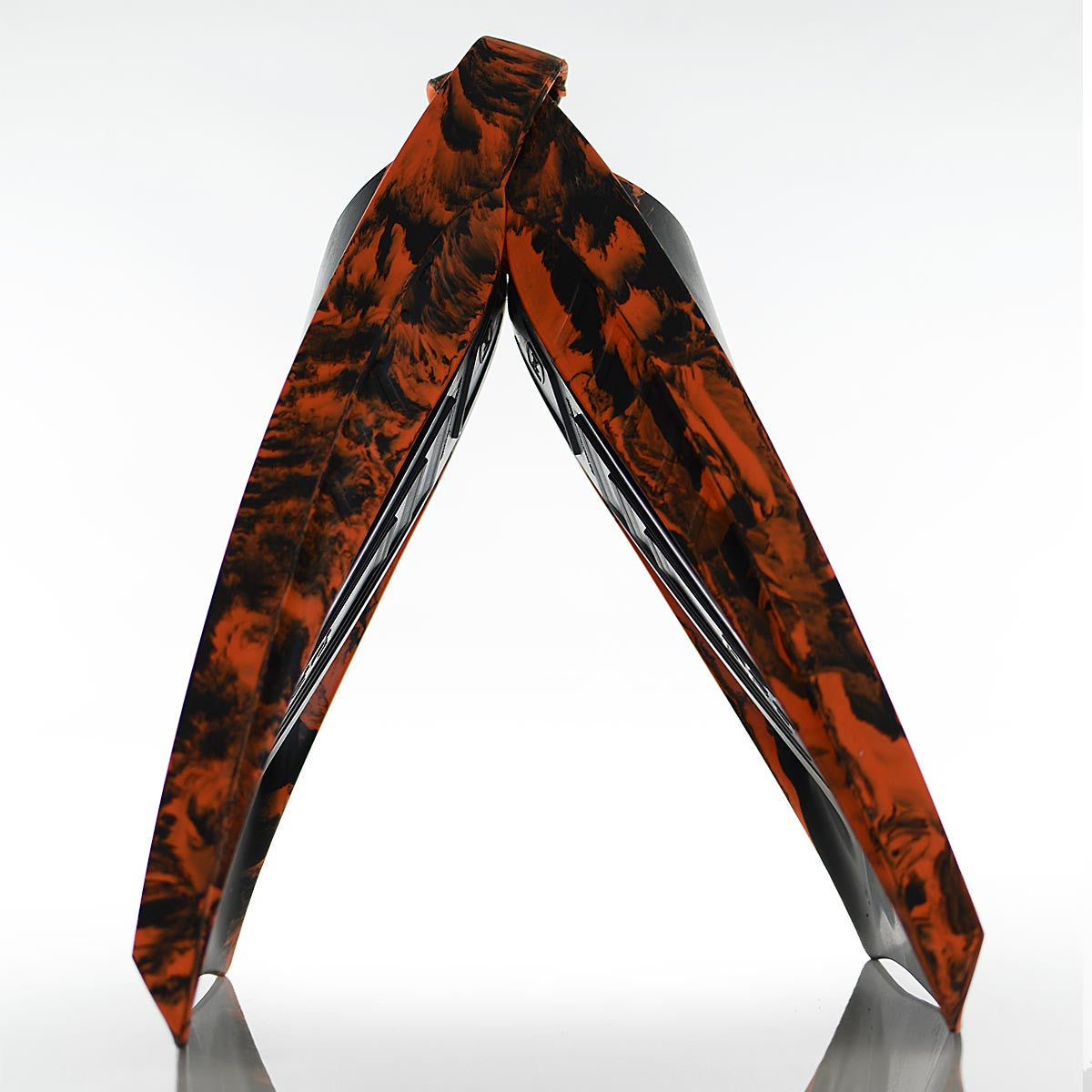
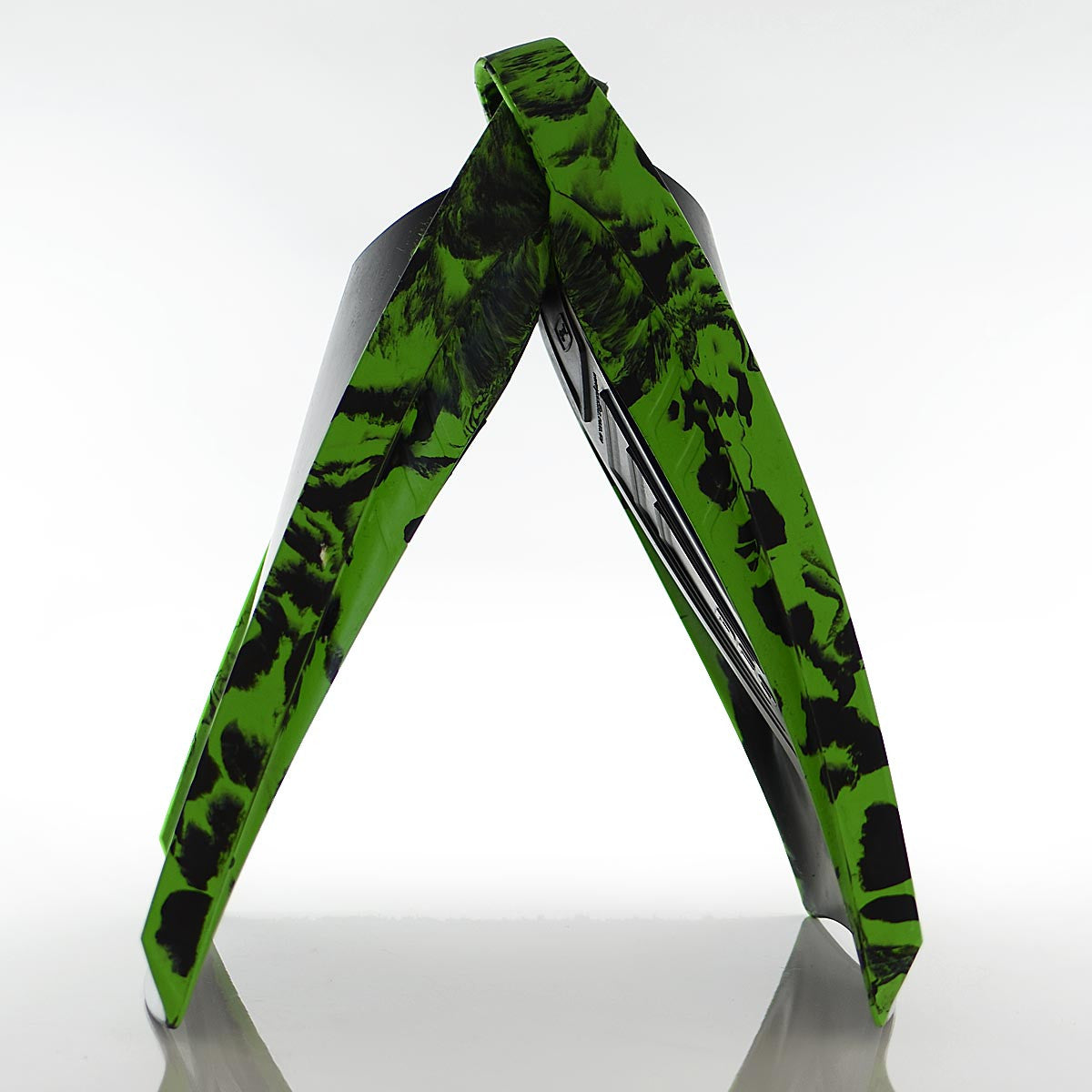
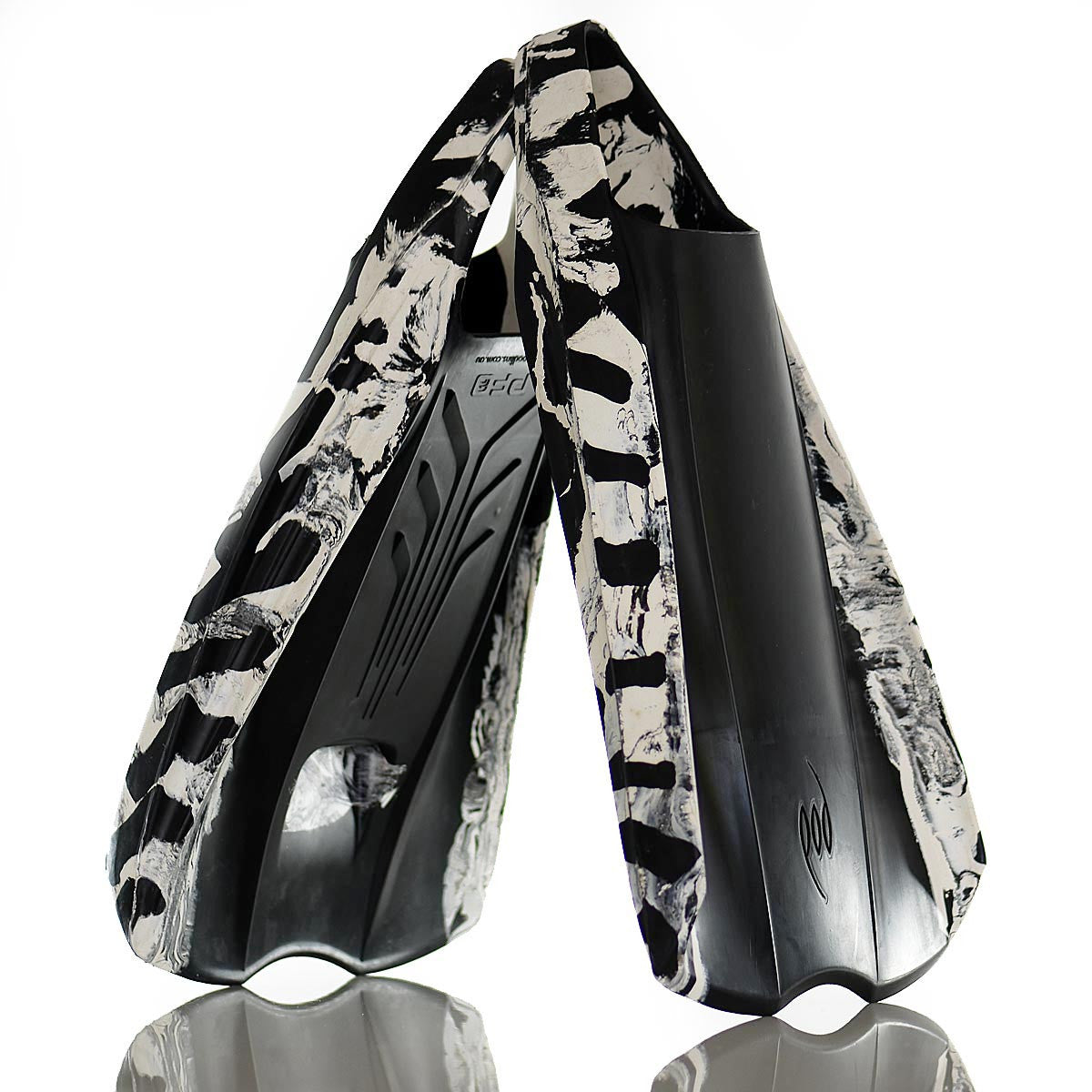
POD developed variegated colour straps and rails with our natural rubber fin factory in Malaysia, and the colour placement technique was a world first. The patterns take their cue from ocean life, so every pair is different.
How the PF3 Moves Water
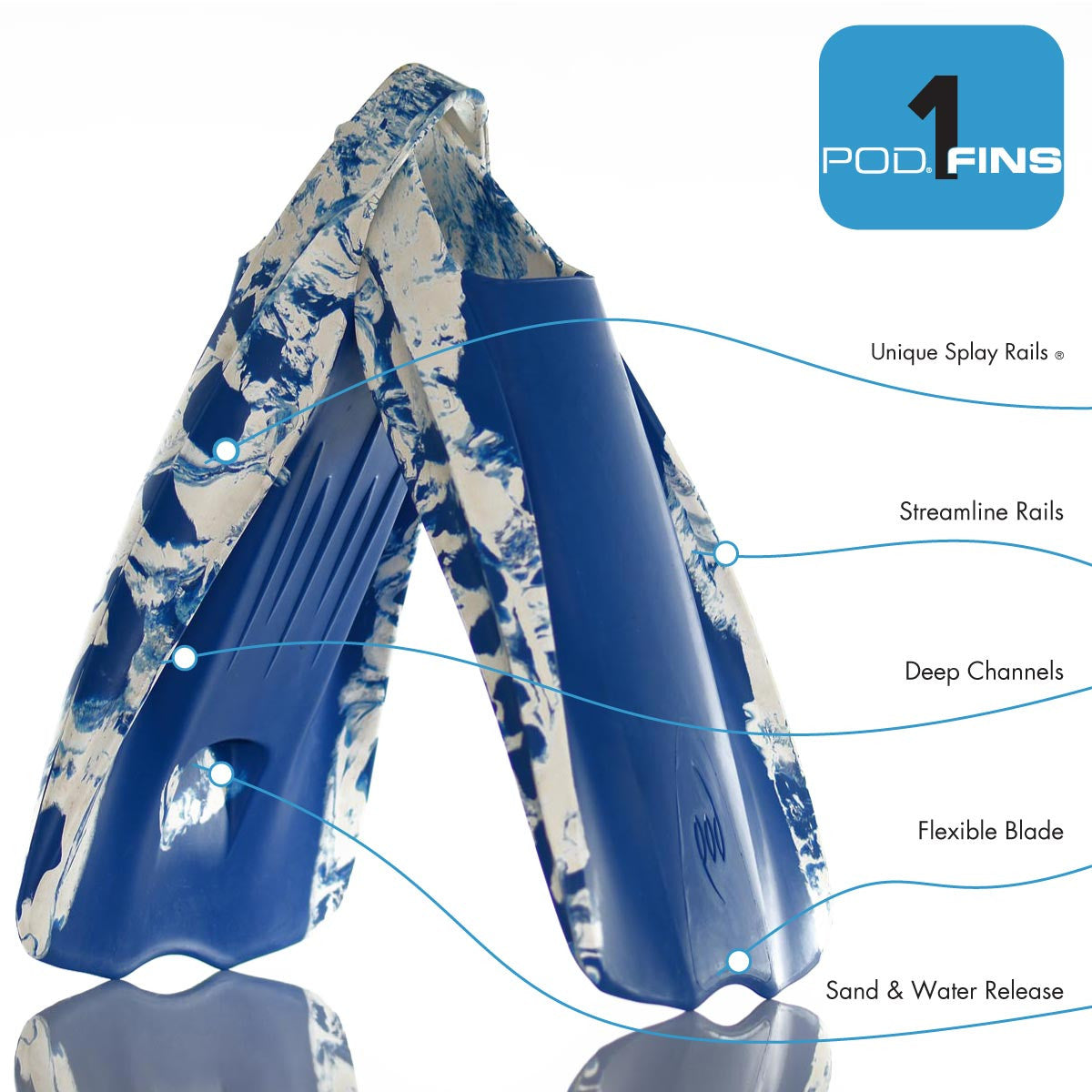
The PF3 carries the longest blade in the series, so each kick meets more water than on the PF1 or PF2. Every surface is shaped to hold that water and guide it off the blade edge, with each part working as one system.
-
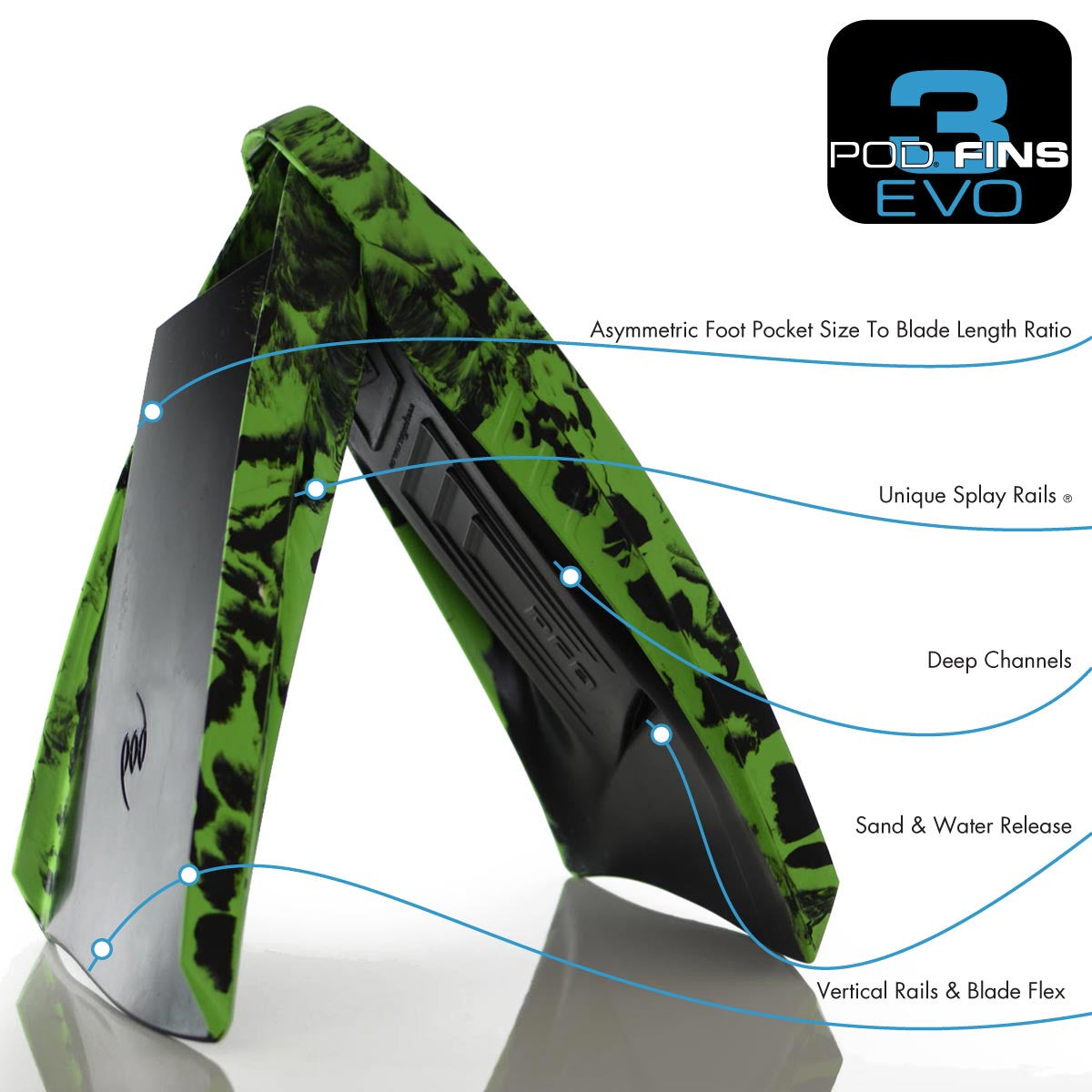
Vertical rails: On top, the vertical rails hold water against the long blade and direct it down to the edge as the blade flexes through your kick
-
Splay Rails®: Along each side, the Splay Rails push water outwards and along the fin instead of letting it spill off the sides
-
Deep channels: Under the fin, a deep channel runs beside each Splay Rail along the outer sole. On the back kick, they catch water like a cupped hand, then carry it out along the underside and away past the blade.
-
Blade flex: The two vertical rails are set at different lengths to follow the asymmetric blade. That leaves the blade wall between them free to give and flex across its width, not only down the centre, releasing the water off the edge in a streamlined flow.
-
Sand and water release: A drain opening at the end of the foot pocket flushes water and sand straight out, rather than trapping sand at the toe end the way holes under the sole do
The flow holds on the kick down, on the kick back and while you tread water.
Foot Pocket to Blade Length - Finding the Balance
A blade that reaches well past the foot works as a longer lever, and each kick sends more load back through the foot and up the leg. Dive fins manage long blades because they flex freely. A surf fin needs more structure, so you have to balance length against flex.
The PF3 has the longest blade of the three and the most flex. With rails of equal length, only the centre of a blade can give. On the PF3, the rails end at different points, so the blade flexes through the wall between them. Hold both rails and bend the blade up and down, and you can feel it.
That flex lets the extra length work without the load of a stiff, over-long blade, and the asymmetric foot pocket is sized to the blade so the load stays centred over your foot. The balance sits behind the comfort riders mention, alongside the soft natural rubber, and every other PF3 feature works within it.
Where the PF3 Works Well
-
Bodysurfing: The load sits over the centre of the foot, so direction and timing hold through fast, moving water
-
Bodyboarding: Vertical rails hold into the wave face while the asymmetric blade flexes with each kick
-
Swimming and open water: The long blade moves more water on each kick, with more give than the PF2 across a long swim
-
Ocean photography and lifesaving: The fin keeps its shape and response under repeated load in changing conditions
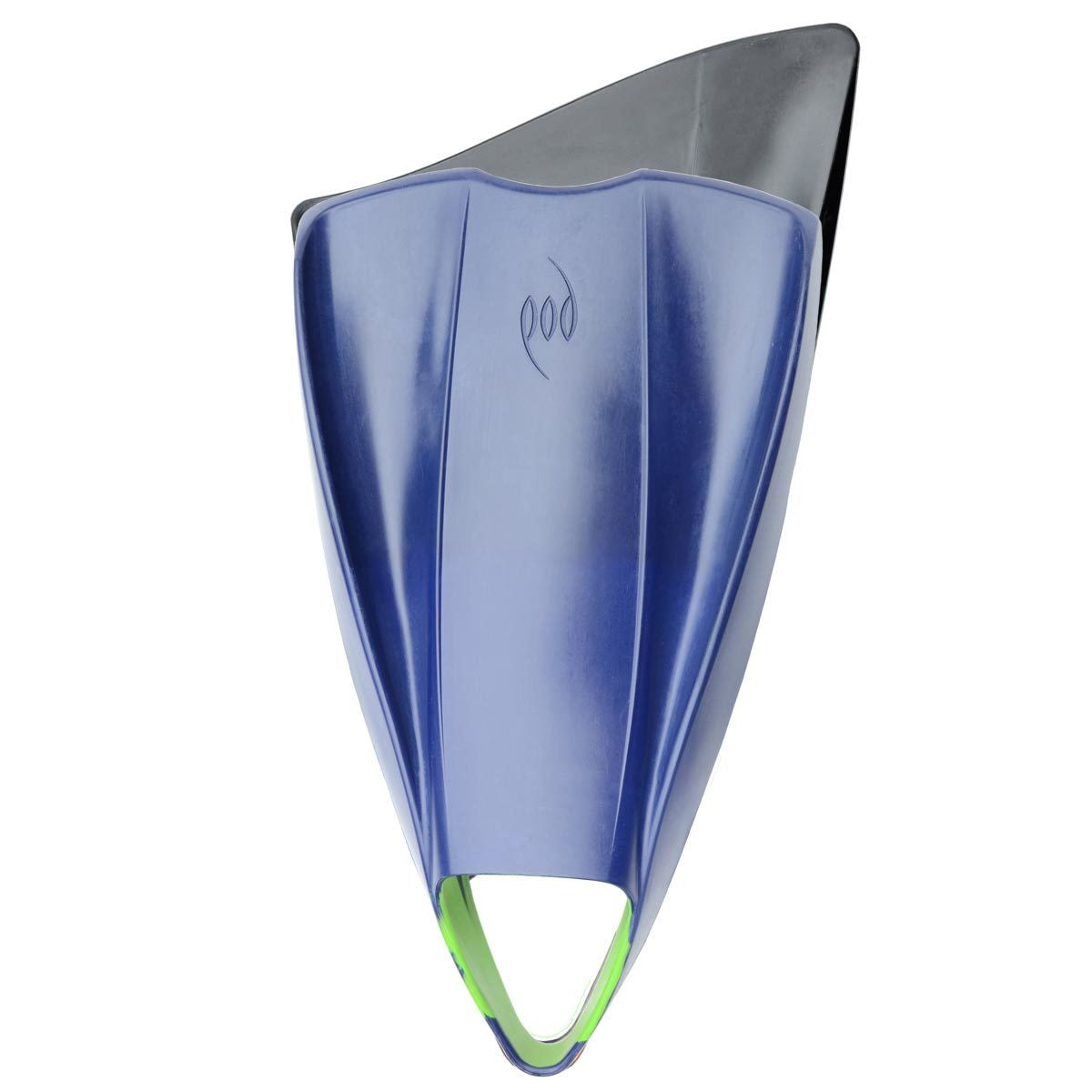
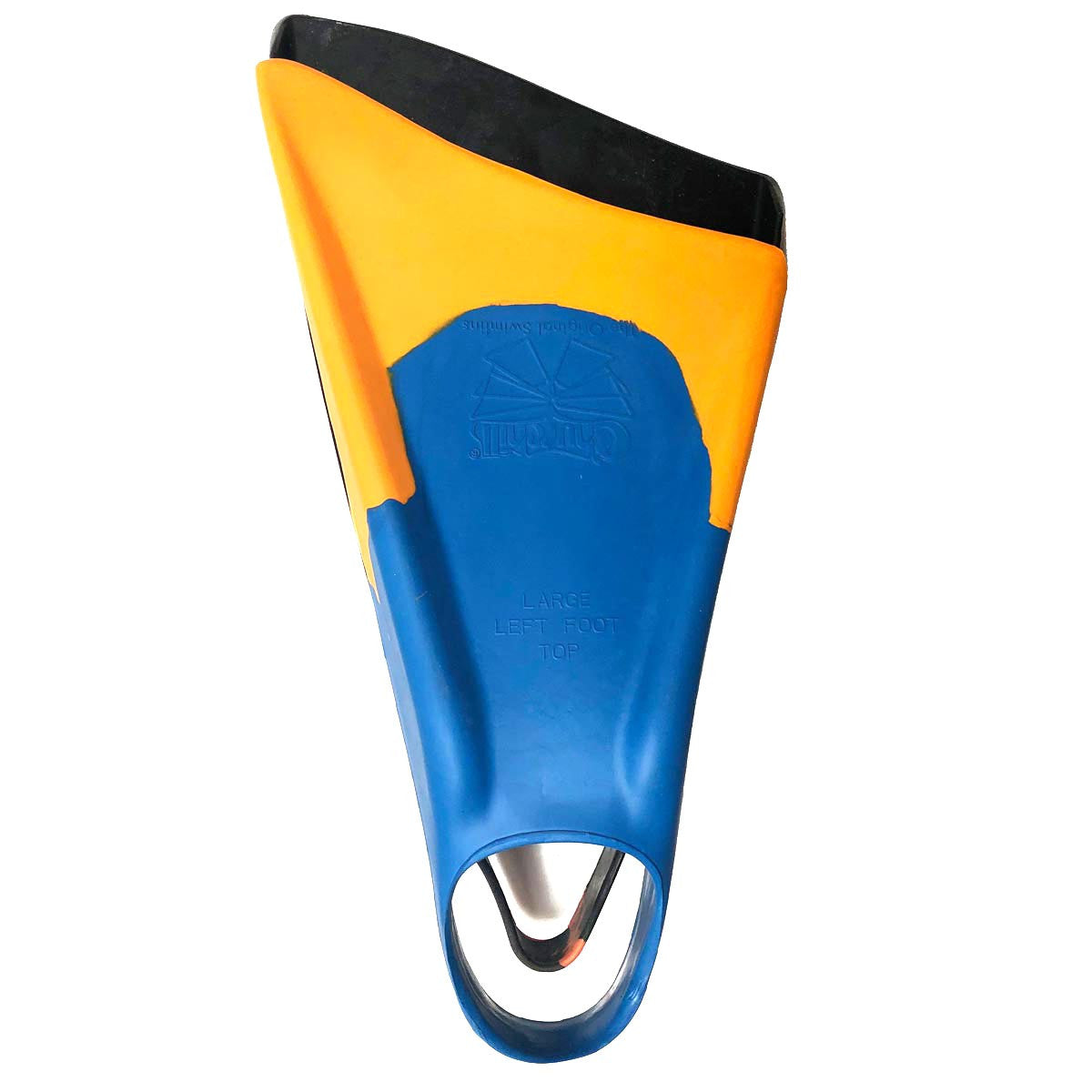
Swim Fin Comparisons
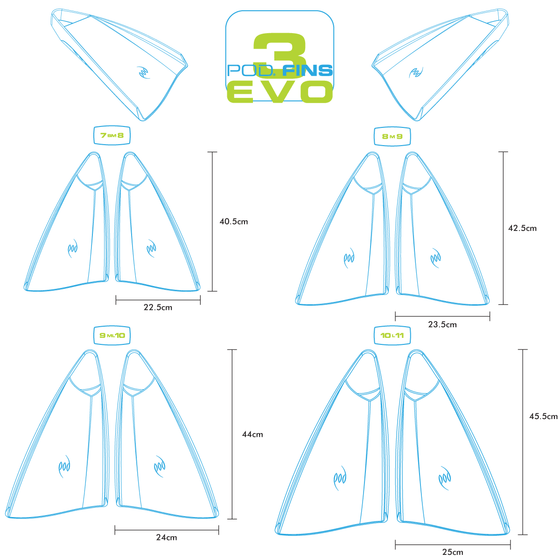
PF3 Size Comparisons
Blade length grows across the sizes, adding surface area as the fin scales up.
POD PF3 Swim Fin Features
- Natural buoyant rubber compounds, manufactured in Malaysia
- The longest blade in the PF Series, with the most flex of all three models
- Asymmetric geometry centres the load over the foot rather than the toe edge
- Vertical rails run to the blade edge and hold into the wave face, so your legs stay up
- Vertical rails set at different lengths let the blade flex across its width, not only down the centre
- Asymmetric foot pocket follows the natural contour of the foot for a close connection under load
- Splay Rails® push water outwards and along the fin, guiding the direction of each kick
- Deep channels beside the Splay Rails® catch water on the back kick and carry it out along the underside
- Cross-laminated construction, with overlapping layers of varying hardness for durability
- Soft rubber-lined extended foot pocket for a secure, comfortable fit
- Drain opening at the end of the foot pocket flushes out water and sand
- Variegated colour straps and rails inspired by ocean life, with every pair uniquely patterned
Swim Fins and Shoe Size
Shoe size is not a reliable guide for swim fins. Rubber stretch, foot pocket shape and brand sizing all vary. The PF3's asymmetric pocket stretches differently from a symmetric one, so check the POD Fit Finder before you choose a size.
Find out how fit affects movement and control.
POD PF3 Swim Fin Sizing
For the most accurate fit, use the POD Fit Finder or the measurements below to match your foot and ankle dimensions.
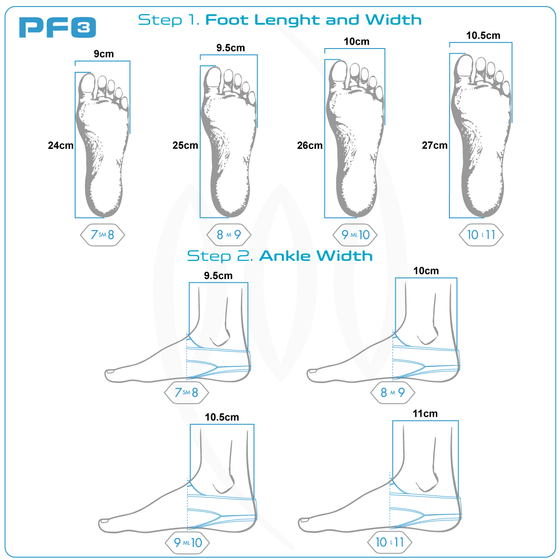
Step 1 - Foot Length and Width
-
Small/Medium: 7-8 - Length 24 cm, Width 9 cm
-
Medium: 8-9 - Length 25 cm, Width 9.5 cm
-
Medium/Large: 9-10 - Length 26 cm, Width 10 cm
-
Large: 10-11 - Length 27 cm, Width 10.5 cm
- Measurements are maximum sizes before stretch.
- Natural rubber stretch allowance up to 5 mm for a snug fit
Step 2 - Ankle Width for Strap Fit
-
Small/Medium: 7-8 - Width 9.5 cm
-
Medium: 8-9 - Width 10 cm
-
Medium/Large: 9-10 - Width 10.5 cm
-
Large: 10-11 - Width 11 cm
- Measurements are before stretch.
- Strap stretch allowance of 10-15 mm for a secure, non-slip fit
- View the PF3 foot and ankle size chart
Complete Your PF3 Fit and Ocean Setup
The right size is the first step. The PF3 works under heavier load in bigger surf, so a secure fit matters even more.
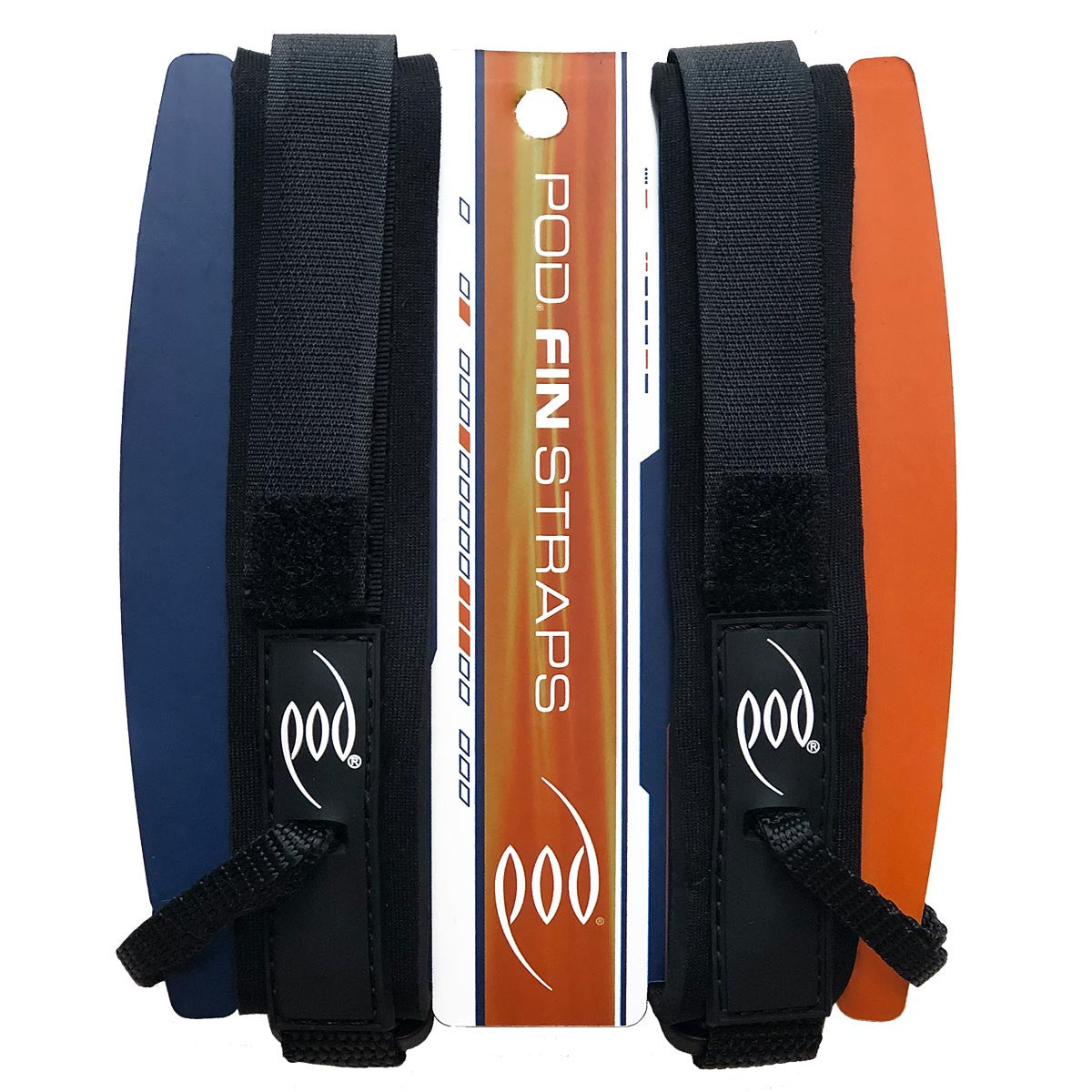
If you take your PF3 fins into surf, shore break or moving water, POD Deluxe Fin Straps keep them tethered to your ankle through entry, exit and turbulent water.
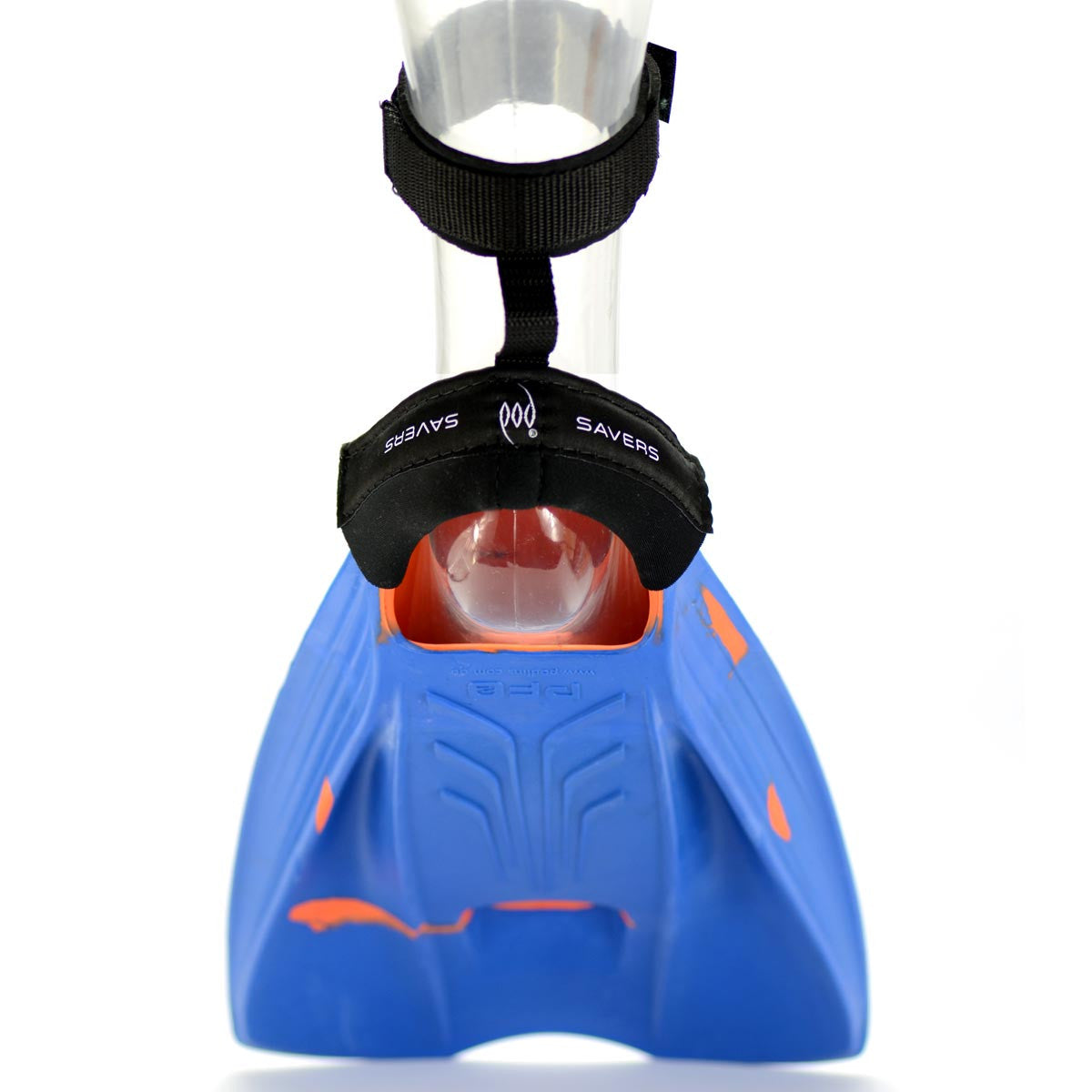
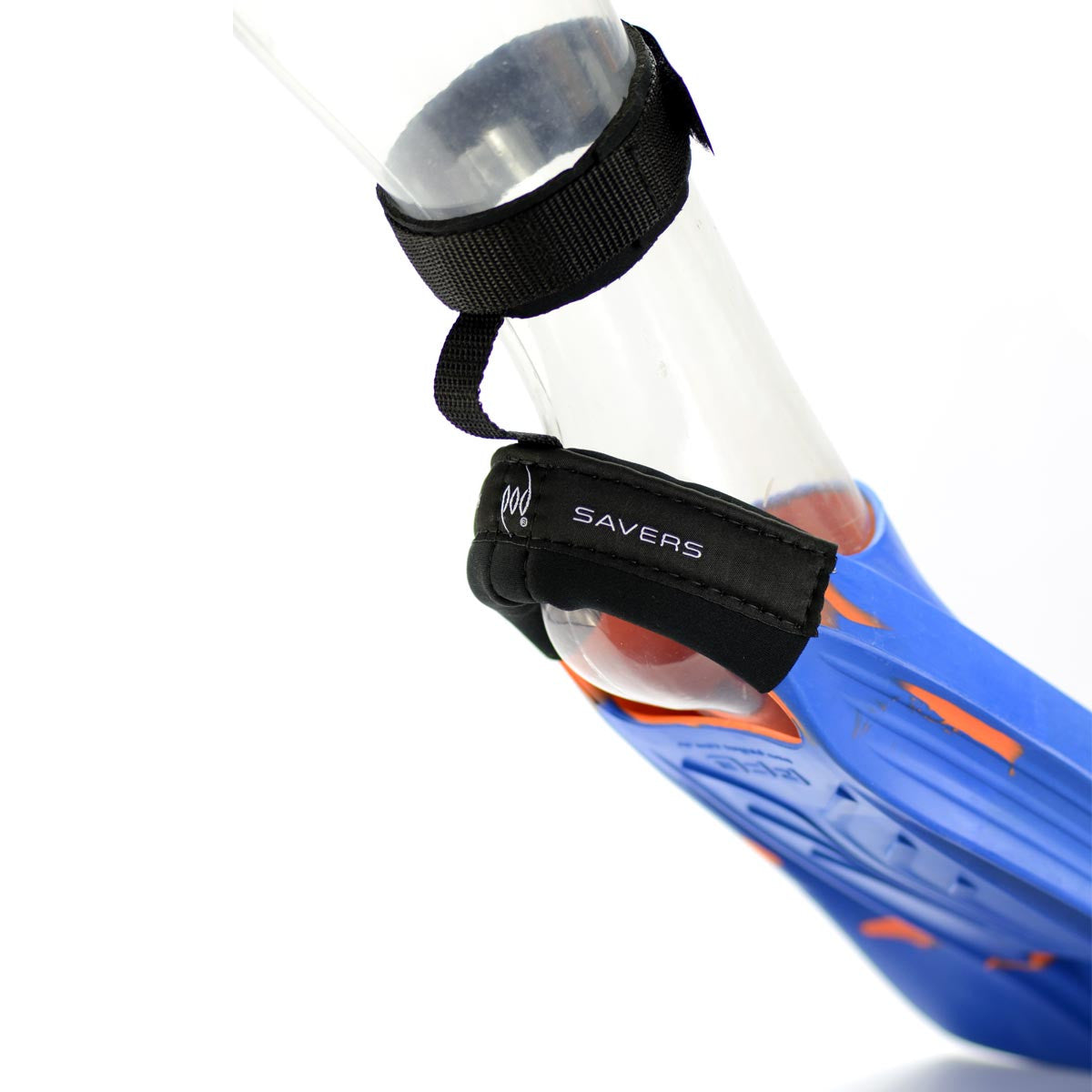
Over a long session, pressure can build through the heel and strap. POD Swim Fin Savers and Heel Protectors cover the heel, reduce rubbing, and hold the strap in place.
If your foot sits loose in the pocket, or moves slightly under load, POD 3mm Neoprene Fin Socks tighten the fit, add grip inside the pocket, and keep your feet warm in colder water. The POD Fit Finder also shows when socks, heel pads or fin savers are worth adding, based on your foot dimensions and how you plan to use the fins.
Built to Last
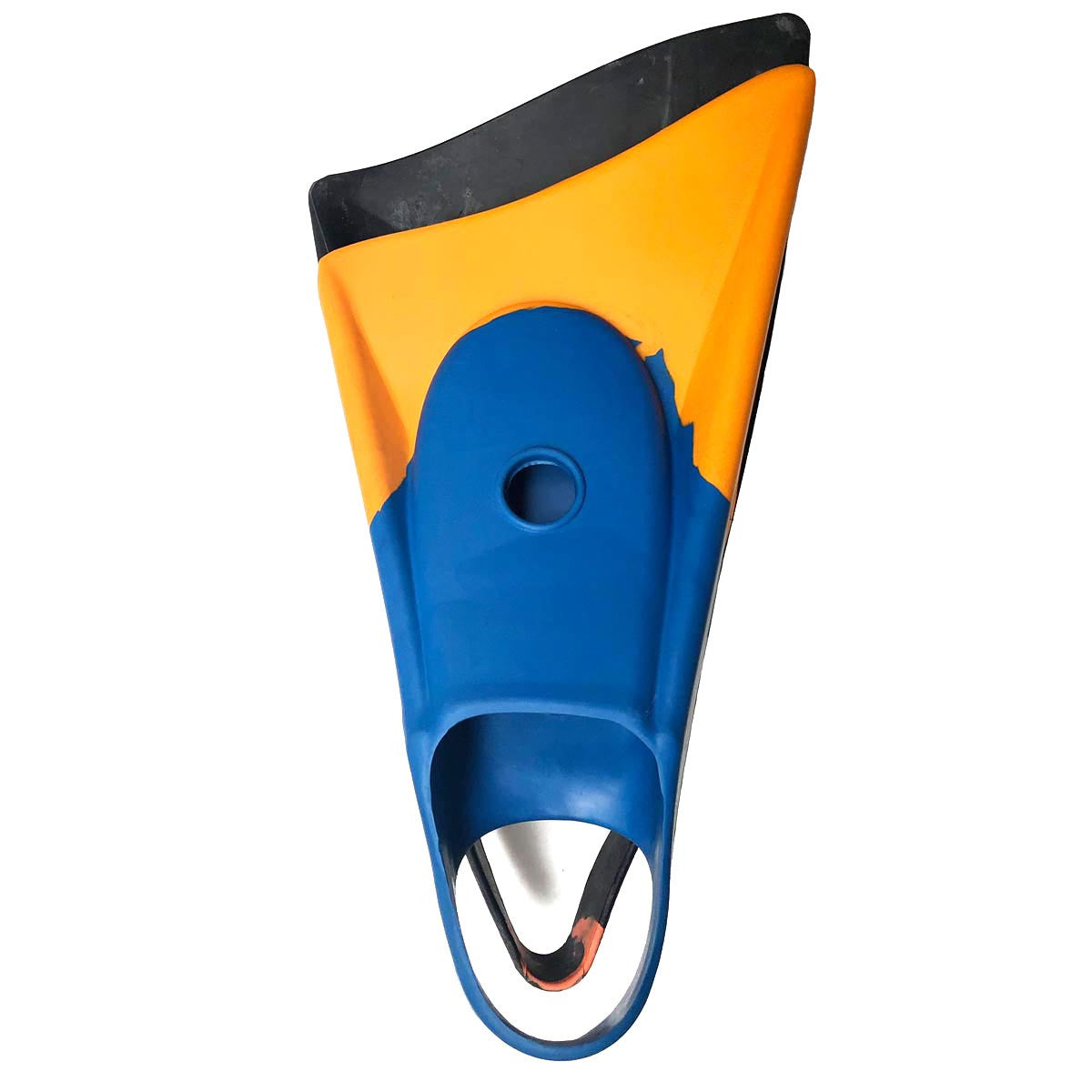
Natural Malaysian rubber holds its properties through years of saltwater, chlorine and UV light. A customer recently shared a pair of PF3 fins that are more than ten years old and still in use. The material is doing what we chose it to do.
See the ten-year-old PF3s on Instagram
Natural Rubber - What to Expect on Arrival
POD moulds every PF3 from natural Malaysian rubber. A light white powder or waxy residue on the surface is normal. It is not a defect, and you do not need to remove it before use.
Mould release agents from manufacturing and natural compounds in the rubber cause it, and you will find the same residue on other natural rubber products. It shows up more on darker rubber.
-
Note on colour: Shows more clearly on black rubber due to contrast
-
If it dries out: A wash in hot water dissolves a powdery surface if one develops over time
Rubber Memory
Natural rubber holds the shape it was moulded into. If a fin bends out of shape from storage or heat, hot water helps it relax back towards its original form.
Care and Use
POD natural rubber swim fins suit swimming, bodysurfing, bodyboarding, lifesaving and ocean photography.
Walk backwards when wearing fins. It preserves the blade and extends the fins' lifespan.