

Ear Health for Surfers and Swimmers – The Complete Guide
Posted by Shane & The POD Design Team on 14th Feb 2026
The Silence of the Shore
The Definitive Guide to Ear Health for Surfers, Swimmers and Serious Water People
There is a sound that defines a life in the water.
For surfers, it’s the low-frequency rumble of a distant set before it crests the horizon, a vibration you feel in your chest before you see the whitewater. For swimmers, it’s the metronomic splash of a clean catch and high-elbow recovery in a quiet morning lane. For bodysurfers and bodyboarders, it’s the hollow, percussive echo of a wave pitching over shallow sand.
Most of us assume we’ll hear that sound forever. We view the ocean as a permanent sanctuary, a place where the noise of the world is replaced by the raw music of the elements.
But for an entire generation of water people, that soundtrack has faded into a dull, muffled silence. This isn't because they stopped surfing or swimming; it’s because they ignored something small, invisible, and cumulative.
Their ears.
This is the story of why ear protection isn’t a comfort accessory or a winter-only habit. It’s preventative health care for anyone who plans to stay in the water for life. To truly "hear the ocean for life," we have to understand the toll the water takes and how to mitigate it without losing our connection to the environment.
Part 1. The Anatomy of the Problem
Why the Human Ear Was Never Built for Modern Water Sports
The human ear canal is an elegant piece of biological engineering. It is a slightly curved, narrow corridor designed to funnel sound waves toward the eardrum while maintaining a very specific internal climate. It self-cleans through a process called "epithelial migration" (in which skin and wax slowly move outward) and protects the sensitive tympanic membrane (the eardrum) from debris.
What it was not designed for is the modern water athlete's lifestyle:
- Repeated Thermal Shock: Exposure to cold water followed by biting wind.
- High-Velocity Impact: Duck dives, heavy wipeouts, and the pressure of a 6-foot wave hitting the side of the head.
- Extended Immersion: Two-hour winter sessions in 12°C water or 5,000-meter sets in a chlorinated pool.
- The "Chemical Cocktail": Chlorine, salt, sand, and the stagnant, bacteria-rich moisture of a damp gear bag.
Every time you submerge, three things happen simultaneously:
- Thermal Stress: Cold water and wind chill trigger a defensive "vasoconstriction" response inside the ear canal.
- Moisture Trapping: Due to surface tension, water can "lock" itself deep inside the canal, refusing to drain even after you’ve showered.
- Bacterial Opportunity: Trapped moisture can increase the likelihood of irritation or infection for some people.
These effects don’t feel dramatic at first. They are the definition of "cumulative." These effects can build gradually over time, especially for people who spend long hours in the water.
Part 2. Exostosis (Surfer’s Ear)
The Body’s Defence That Becomes the Problem
Surfer’s ear isn’t an infection. It isn’t caused by a virus or bacteria. It is your body, perhaps trying too hard to protect itself.
When cold water and wind repeatedly hit the ear canal, the periosteum (the layer of tissue covering the bone) becomes irritated. To shield the eardrum from this thermal trauma, the body responds by growing new bone around the canal opening. This process is called Exostosis.
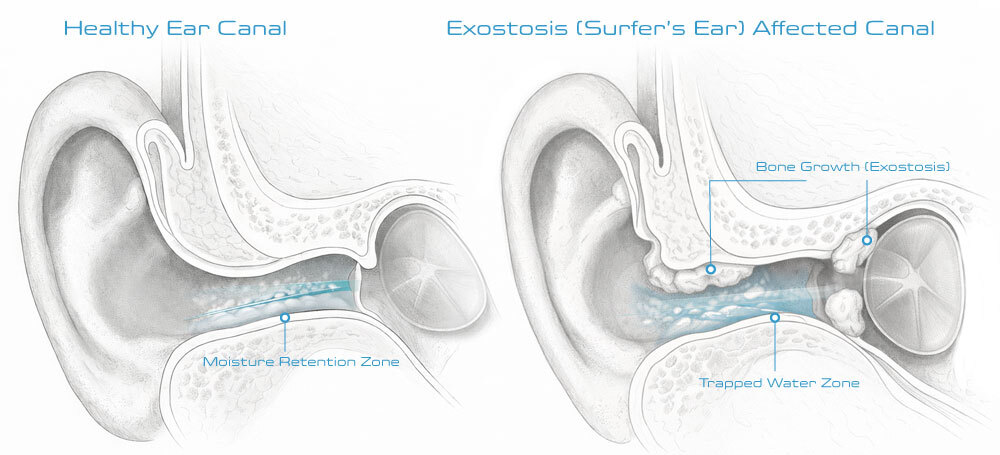
The goal is simple: create a physical shield to block the wind and cold. But the result is a slow-motion closing of the door. Over a decade or two, these bony growths can narrow the ear canal by 70%, 80%, or even 90%.
As the canal narrows, a "trap" is created:
- Poor Drainage: Water that gets in can no longer get out.
- Wax Impaction: Natural wax becomes lodged against the bone, causing temporary deafness.
- The Infection Loop: Trapped water can contribute to recurring irritation or discomfort for some people, particularly with repeated exposure.
Veteran water people refer to the surgical correction as “The Drill.” It is exactly what it sounds like: a surgeon must peel back the skin of the ear canal and use a high-speed drill to shave away the excess bone. The recovery is slow, the pain is significant, and it keeps you out of the water for months, missing entire seasons of swell or competition.
Almost everyone who has had the surgery says the same thing: “I wish I’d worn ear protection earlier.”
Part 3. Otitis Externa (Swimmer’s Ear)
The Infection Cycle Pool and Ocean Athletes Know Too Well
While surfers battle bone growth, swimmers often face a different enemy: Swimmer’s Ear. Otitis Externa is an infection of the outer ear canal caused by trapped moisture breaking down the skin’s natural protective barrier (the "acid mantle"). Chlorine in pools strips away the ear's natural oils, while salt in the ocean can cause micro-abrasions. Once that skin is compromised, bacteria or fungi take hold.
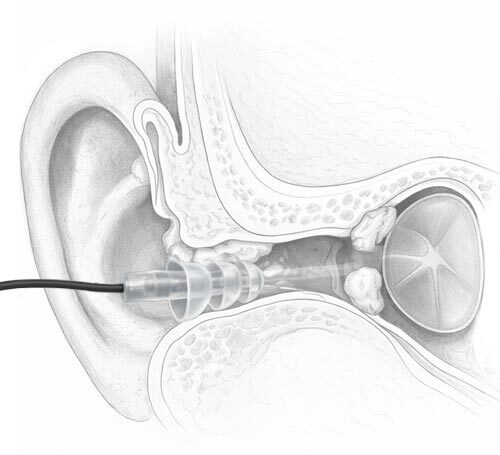
Progressive bone growth (exostosis) narrows the ear canal, increasing the risk of water retention and infection.
The symptoms are a nightmare for any athlete:
- Pain and Tenderness: Even touching the earlobe can feel like an electric shock.
- Discharge and Swelling: The canal can completely shut down.
- The "Muffled" session: A permanent feeling of being underwater, even when you’re on dry land.
When the skin barrier is compromised, some people experience recurring irritation or discomfort. If you are training for an Ironman or a swim meet, even a single week of "time out of the water" can derail months of progress. Keeping the ear canal dry is not just about comfort; it's about maintaining your training schedule.
Part 4. Early Solutions and Why They Failed
From Blu-Tack to Total Isolation
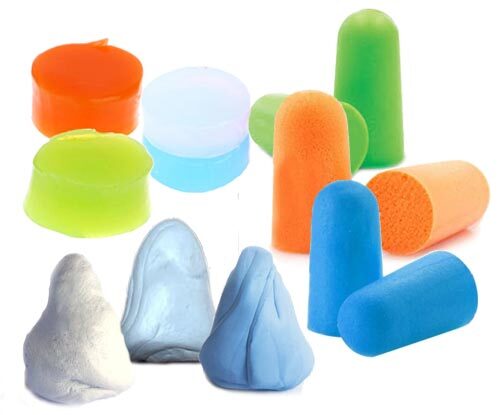
For decades, surfers and swimmers were left to their own devices. We used whatever was in the garage or the medicine cabinet:
- Surf Wax or Blu-Tack: Messy, unreliable, and often left residue that actually caused infections.
- Generic Foam Plugs: Designed for construction sites, these block 100% of sound.
- Silicone Putty: Often fell out during a duck dive or a flip turn.
The major flaw with these early solutions was the lack of total sound isolation. In the ocean, being deaf is dangerous. You need to hear the "whump" of an approaching set, the warning cry of another surfer, or the whistle of a lifeguard. Because the old plugs felt like wearing a blindfold on your ears, most people simply abandoned them.
Part 5. The Rise of “High-Tech” Modular Earplugs
And the Hidden Cost of Complexity
In recent years, the market has moved toward "Technology." Modular systems appeared, promising acoustic mesh filters and interchangeable parts. On paper, they looked like the ultimate solution. In the real world, the salt, the sand, and the impact zone exposed three critical weaknesses:
- The Salt Clog: Fine-mesh filters allow sound to pass through until the saltwater evaporates. Salt is a crystal. Those crystals quickly clog the microscopic mesh, turning "natural sound" into a muffled, useless distortion.
- Failure Points: Every removable part is a liability. Filters pop out in the surf; "wings" tear off; thin silicone cords snap under the tension of a wipeout.
- The “Tech Tax”: Many modular earplugs retail for AUD $60–$80. You are paying for complexity, but you aren't getting durability.
Part 6. A Different Philosophy
The POD® EarSeal Pro Triple-Flange
At POD®, our philosophy is simple: Simple systems survive longer. With over 35 years in the water, we know that the ocean destroys anything with "moving parts" or "delicate filters." We engineered the Pro EarSeal Triple-Flange to be a definitive, one-piece solution for the ocean athlete. We focused on three non-negotiables: Seal, Security, and Simplicity.
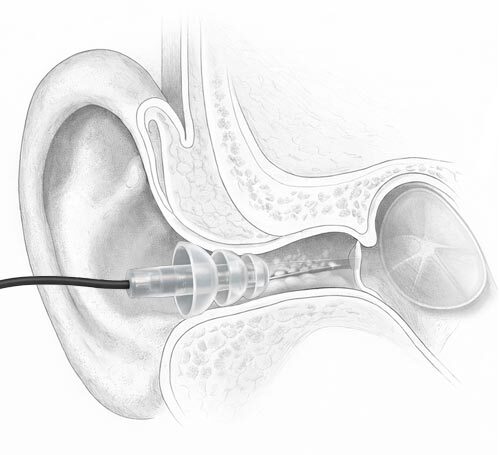
Triple-flange geometry creates a stable, multi-point seal without blocking environmental sound.
Part 7. The Triple-Flange “Sweet Spot”
A single-flange plug acts like a stopper in a bottle; it’s either in or out. A triple-flange plug acts like a dynamic seal. Our tapered design creates three sequential barriers:
- Flange 1: Blocks the majority of incoming water and debris.
- Flange 2: Stabilises the fit and provides the secondary seal.
- Flange 3: Creates the final, reliable waterproof "lock" deep in the canal.
We use high-performance TPR (Thermoplastic Rubber). This material is ultra-soft and responsive; it reacts to your body heat, subtly contouring to your ear canal rather than forcing your ear to adapt to the plug. This is how we achieve a "sweet spot" that feels light and unobtrusive even during a four-hour session.
Part 8. Sound Awareness Without Fragility
The biggest fear people in water have is: “Will earplugs block all sound?” Instead of relying on fragile mesh filters that will eventually clog with salt, the EarSeal Pro uses Material-Engineered Acoustic Shaping. By controlling the density and thickness of the TPR, we can dampen the "roar" of the wind while allowing environmental sound frequencies to pass through.
You remain situationally aware. You can hear your friends, the sets, and the boat engines all without a filter that can fail you.
Part 9. The Reinforced 90 cm Bungee System
Losing a $30+ earplug in the first 10 minutes of a session is a quick way to ruin your day. The Pro model features a 90 cm adjustable bungee made with a durable Nylon outer and a TPE inner core.
Unlike thin silicone cords that stretch and snap under load, this bungee is designed for the impact zone. The adjustable toggle allows you to customise the fit so the cord sits securely around your neck. If a plug is dislodged during a turbulent wipeout, it doesn't disappear into the deep; it stays right there with you.
Part 10. Hygiene by Design
The Iconic POD® Silicone Pouch (Pro Edition)
What happens after the session is just as important as what happens in the water. Most earplug cases are sealed plastic boxes that trap moisture. Moisture, darkness, and earwax equal a bacterial disaster.
The POD Pro Silicone Pouch is engineered as a ventilated drying system in true POD fashion:
- Signature Translucent POD Blue Silicone: Durable, flexible, and easy to find in a bag.
- High-Contrast White Carabiner: Provides a secure, visible attachment point to clip your pouch to gear bags, backpacks, or keys, ensuring your protection is always within reach.
- Magnetic Self-Closing Entry: No zippers to corrode, no clips to break.
- Diamond-Array Vertical Oval Ventilation: These ports promote airflow and fast drying. Your EarSeals dry naturally in the pouch, keeping them hygienic and ready for your next dawn patrol.
Part 11. Real-World Comparison
Typical Modular / “High-Tech” Earplugs
- Multiple small parts that loosen, clog, or fail over time
- Mesh-dependent sound filters that block once salt crystals form
- Thin silicone cords that stretch, snap, or tear under impact
- Sealed plastic cases that trap moisture and encourage bacteria
- Typical retail pricing of AUD $60–$80
POD® EarSeal Pro – Triple-Flange System
- Robust one-piece construction with no removable components
- Material-engineered acoustic balance that does not rely on mesh
- Reinforced TPR body with impact-zone-ready bungee retention
- Ventilated magnetic silicone pouch designed for hygienic drying
- Accessible pricing of AUD $25–$40
Part 12. The 30-Second Pro-Care Ritual
Professional protection doesn’t have to be high-maintenance. To maximise the lifespan of your gear and your ear health, follow this simple ritual:
- Rinse: Hit them with fresh water after every session to remove salt/chlorine.
- Inspect: Check the toggle and bungee for any sand.
- Air-Dry: Pop them in the Diamond-Array ventilated pouch.
- Avoid Heat: Don't leave them on your car's dashboard.
Part 13. Frequently Asked Questions
Will these affect my balance?
No. Some people find that cold water in the ears can feel disorienting. Ear protection may help reduce that sensation for certain users.
Are they suitable for most water sports?
Yes. They are designed specifically for swimming, bodysurfing, bodyboarding, surfing, and all surface-water sports. Note: Not for deep-sea scuba diving.
What about small ear canals?
The tapered triple-flange fits the vast majority of adult ears. For those who prefer an even softer, pure silicone fit, the POD® Dual-Flange is an excellent alternative.
Hear the Ocean for Life
The silence doesn’t arrive all at once. It creeps in quietly, one cold session at a time.
The POD® Pro EarSeal Triple-Flange exists so you never have to learn the lesson the hard way. No gimmicks. No tech tax. Just decades of experience distilled into a simple, dependable system.
Protect your ears. Stay in the water longer. And make sure the ocean can still speak to you for the rest of your life.
Trust Experience. POD Protection.
Get Pro Ear Plug Protection: Explore the POD® EarSeal Pro Triple-Flange.