
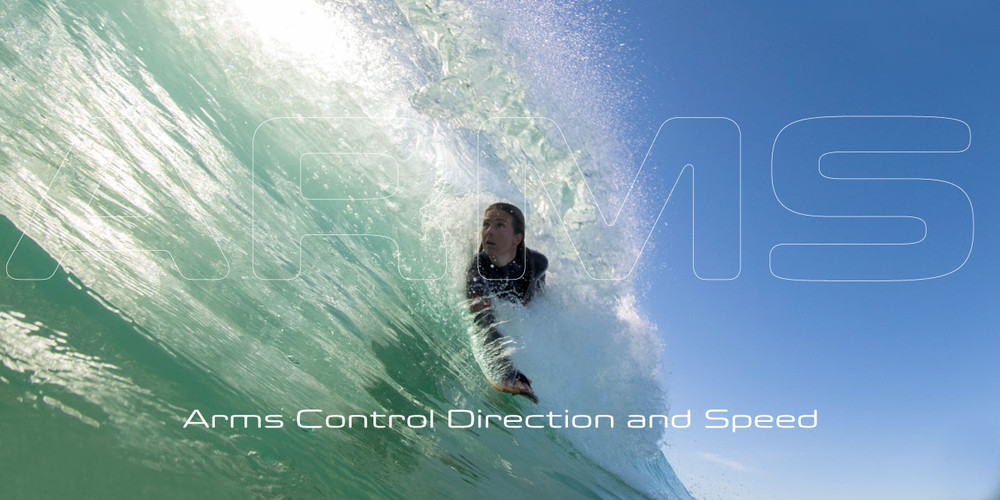
How Your Arms Control Direction and Speed in Bodysurfing
Posted by POD Collective on 17th Jun 2026
Most people think of bodysurfing speed in terms of the wave, the fins, or the handboard. But your arms play a much bigger role than many riders realise.
They do more than sit in the water. They help guide direction, control balance, manage pressure and keep the body connected to the wave. When arm position is working well, a ride feels cleaner, faster and more controlled. When it is not, even a good section can feel unstable, heavy or disconnected.
That is why your arms are not a minor detail in bodysurfing. They are part of the control system.
Body position is the foundation on which arm control works. If you have not yet read Why Body Position Changes Speed in Bodysurfing, it explains how drag, lift, and alignment shape the base that your arms then refine and direct. Trim builds on that further - read How Trim Controls Speed on a Wave to understand how constant small adjustments keep the body connected as conditions change.
The Common Misunderstanding
Most explanations focus only on the leading arm. That makes sense at first because it usually meets the water first, guides the line and in handboarding, carries the board itself.
But that is only part of the picture.
The trailing arm matters too. It helps balance the body, control unwanted rotation, support direction changes and refine how the rider moves through the section. In pure bodysurfing, it can also become far more expressive and dynamic than many people realise.
The real point is not that one arm matters and the other does not. It is that both arms work together, and the way they work together changes the lift, speed, direction and flow.
The Leading Arm Guides the Line
The leading arm is usually the first arm riders become conscious of, because it plays such a strong role in setting the line. It helps guide entry, meet the wave's face, and establish direction.
When positioned well, the leading arm helps the rider feel settled and connected. It acts as a control surface, helping manage angle and pressure while keeping the body moving cleanly across the wave.
Depth and extension also matter. How deep the leading arm sits in the water and how far it extends affect both drag and lift. Too shallow, and it loses connection with the face. Too deep and it increases resistance and pulls the body out of trim. The right depth is one where the arm meets enough water to guide direction without creating unnecessary drag.
That is one reason a good leading arm position can make a ride feel faster. It reduces wasted movement, helps hold a cleaner path and gives the body a more stable front edge to work from.
In handboarding, this role becomes even more obvious. The leading arm not only guides the line, but it also carries the board or handplane that refines the leading surface.
The Trailing Arm Does More Than Balance
The common misunderstanding is that the trailing arm is just a passive arm that follows the body. In reality, it does much more than that.
It helps stabilise the body, reduce unwanted twists and support cleaner alignment through the wave. It can also help the rider make subtle directional corrections, especially when the line starts to feel unstable or over-rotated.
When used well, the trailing arm becomes part of the balancing system that keeps the whole body connected. It may not always carry direct forward load like the leading arm, but it still plays a major role in how the rider holds shape, balance and control.
It is easy to focus only on the front arm, but arm control goes beyond it. The trailing arm helps hold the whole ride together.
Both Arms Work Together
The best way to understand arm use in bodysurfing is not to isolate one arm from the other, but to see how both are working together with the rest of the body.
The leading arm usually sets direction and helps position the body for lift. The trailing arm helps support balance, control rotation and keep the body aligned with the wave.
Together, they help the rider stay cleaner through the water. They reduce wasted movement, improve line hold and make speed easier to maintain.
Two bodysurfers can ride the same wave and look completely different.
One looks comfortable, smooth and naturally connected. The other looks loose, reactive or overworked.
Very often, the difference comes down to how the rider uses their arms in conjunction with the rest of the body.
Control, Balance and Variation
Control is not identical for every rider. Body shape, strength, buoyancy and confidence all influence how the arms work with the rest of the body.
Extending both arms forward increases surface area and support, but it also shifts balance. Too much forward load can tip the body out of position if the rest of the body does not stabilise and trim.
On steeper walls, some riders prefer to lead with the wall-side arm, while others stay with their dominant hand. Both approaches can work, provided the leading arm presents a clean line to the face and the trailing arm controls roll and stabilises the body.
In more advanced positions, riders lengthen the body and reduce drag to the point where they plane across the wave with minimal contact. This is not about body type alone. It comes down to how effectively the rider connects length, trim and control.
Direction and Speed Are Closely Linked
In bodysurfing, direction and speed are not separate ideas. The better you hold a clean line, the easier it is to keep speed. The more unstable or inefficient your line becomes, the more speed bleeds away.
Your arms play a major role in this because they help guide the body and keep it aligned with the section.
A well-positioned leading arm helps hold the line. A well-used trailing arm helps stop the body from drifting, over-rotating or losing balance.
Together, they help the rider move with the wave rather than across it in a disconnected way.
That is why arm control affects more than turning. It affects speed itself.
When Both Arms Lead
There are moments in bodysurfing when both arms come forward. Bringing both arms forward is not just for style. It is a real control position.
When both hands are forward, the leading surface area increases. This improved surface area supports lift, helps the rider lock into the face more precisely, and improves stability. In some situations, especially at speed, both arms forward can make the whole body feel more balanced and more supported by the wave.
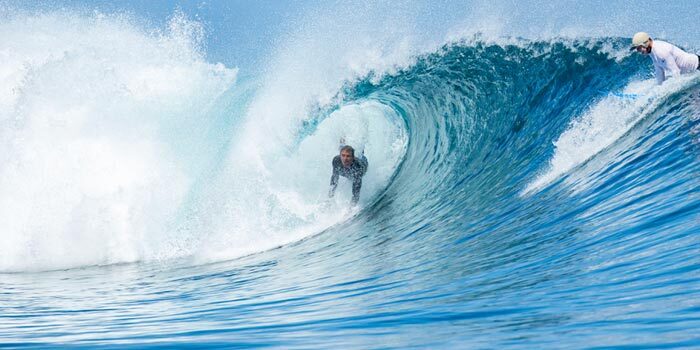
Hand size matters here, too. The hands themselves are surfaces. Two hands forward naturally give the rider more usable surface area than one. That can be valuable in sections where the rider wants more control, more support and a stronger connection to the face of the wave.
Two hands forward is one of the clearest examples of how the human body itself becomes part of the working surface in bodysurfing.
Barrel Riding Changes Everything
Inside the barrel, everything tightens. Speed increases, space reduces, and the line has to be precise.
In these moments, many riders bring both arms forward. Bringing both arms forward increases surface area, improves stability and helps lock the body into the pocket.
It is a practical response to the wave's speed and compression, not just a visual flourish.
If speed is maintained, the rider may then return to a single leading arm, using the trailing arm for balance and fine control. As the section changes, they can shift again, moving between both arms and a single lead. This constant adjustment is what keeps the ride alive.
That is why arm use in the barrel is not fixed. It is adaptive. The rider changes arm position in response to speed, space, and the demands of the section.
Switching Sides and Free Bodysurfing Flow
In pure bodysurfing without a board, some riders become comfortable leading with either side. They can switch from left to right-hand lead as the section changes, using both arms fluidly to manage direction, balance and expression.
This gives the ride a very different quality. The trailing arm is no longer just supporting the line. It can become part of the transition itself, helping the rider roll, recover and reset as the wave changes.
In more expressive bodysurfing, riders use the trailing arm for style, body roll or rotation before returning to a stronger leading position. These movements are not separate from function. They are part of how the rider stays connected and responsive.
That is one reason pure bodysurfing looks so fluid when done well. The arms do not stay locked into a single role. They are part of a moving relationship between the body, the wave, and control.
Where Handboarding Changes the Pattern
Once a handboard comes into play, the movement pattern changes.
The board creates a more committed front side. It makes the leading arm more stable and gives it a stronger control role, but it also changes how freely full transitions and rotations can happen.
That does not make the trailing arm less important - far from it. The trailing arm still helps balance the body, stabilise the line and support directional control. But the board makes the leading side more defined, altering how the entire arm system behaves.
Handboarding becomes powerful here because the board takes on the natural role of the leading hand, providing more surface area, greater consistency, supporting lift, and improving directional efficiency.
Two hands forward can naturally increase usable surface area. A handboard takes that principle further by creating a larger and more reliable leading surface, helping the rider lift, hold, and control speed more easily.
For a deeper understanding of how handboard design interacts with the leading surface and arm position, read The Invisible Cushion - Why Handboards Fail vs Physics-First.
The Board Rewards Good Arm Awareness
A good handboard does not replace arm awareness. It rewards it.
If the rider understands how to use the leading arm, stabilise with the trailing arm and shift between the two when needed, the board becomes more effective. It refines what the body already does well.
If the rider uses their arms poorly, the board cannot solve everything. It may help, but it cannot replace body awareness, timing and control.
The board is part of the bigger system. It works best when the rider gives it something intelligent to work with.
What This Means in the Water
If you want to understand how your arms affect speed and direction, pay attention to what they are doing during the ride.
- Is your leading arm guiding a clean line, or is it overreaching?
- Is your trailing arm helping to balance the body, or is it drifting aimlessly?
- Are both arms working together or fighting each other?
- In fast sections, do you need both arms forward for more control?
- In tighter sections, are you adapting arm position as the wave changes?
These observations can reveal a lot. The better your arm awareness becomes, the cleaner your direction and speed control usually become, too.
Two Arms. One System. One Line.
Your arms are not just along for the ride. They help shape it.
The leading arm guides the line. The trailing arm helps balance and support it. In certain situations, both arms come forward to increase surface area, support lift, and improve stability. In pure bodysurfing, riders may also switch sides fluidly as the section changes.
That is why arm use affects more than style or posture. It affects lift, direction, line, speed, and how well the whole body stays connected to the wave.
Speed still comes from body + trim + control + surface.
When the arms work together, the whole ride follows.