
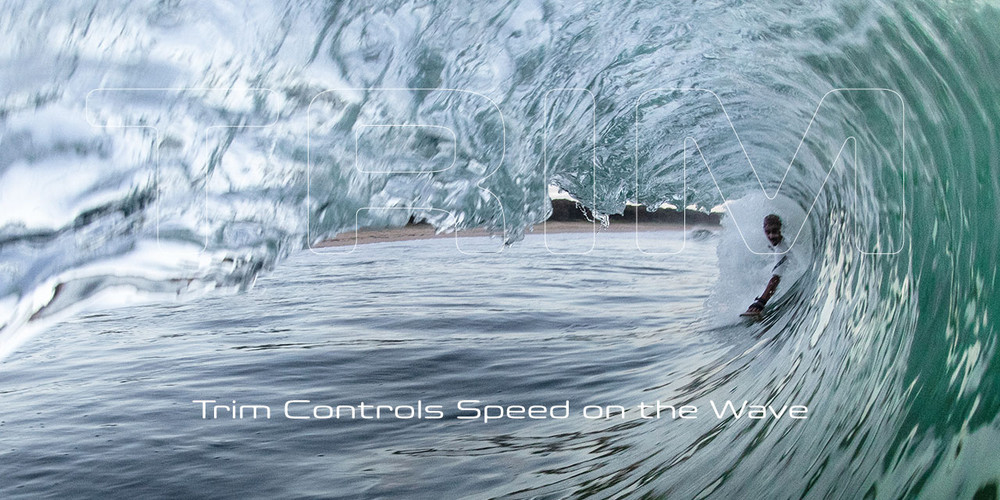
How Trim Controls Speed on a Wave
Posted by POD Collective on 20th May 2026
Most bodysurfers have felt it. You take off clean, the wave has energy, the line looks good, and for a moment, everything feels light and fast. Then the speed drops away. The board feels flatter, the body feels heavier, and the connection starts to fade.
Sometimes one small adjustment brings it all back.
That adjustment is trim.
Trim, or how you position your body on the wave, plays a major role in whether you hold speed, lose speed, or recover it. It is not a fixed position. It is something you constantly adjust in motion as the wave beneath you changes.
Body position is one part of the larger speed system. If you have not yet read Why Body Position Changes Speed in Bodysurfing, it explains how drag, lift, and body alignment influence speed before trim begins to refine and control it.
What Trim Really Means
In simple terms, trim is how your body meets the water while the wave is carrying you forward. It affects how much drag you create, how cleanly you hold a line, and how well you stay connected to the wave's energy.
If your trim is off, even a good wave can feel slow. If your trim is right, even an average section can feel faster, cleaner and more alive.
That is why trim matters so much. It helps decide whether you lose speed or carry it forward.
Trim Controls Whether You Hold Speed or Lose It
Bodysurfing speed is not just about wave power. It is also about how efficiently your body and equipment are working with that power.
If you trim too far forward, you can push too much of the leading edge into the water. That usually creates more drag, making the line feel heavier.
If you trim too far back, you can lose clean connection with the section and start to stall or fall behind the wave's energy.
When trim is right, the body feels more settled, the line feels cleaner, and speed becomes easier to hold.
Trim also controls lift. When your angle and pressure are correct, the water supports more of your body and helps lift you higher in the wave. If your trim is off, that support drops away. You sink deeper into the water, drag increases, and maintaining speed becomes harder.
Small Adjustments Make a Big Difference
Trim changes through very small movements rather than big, dramatic ones. That is why experienced bodysurfers look so smooth in the water. They are constantly making fine adjustments that keep them connected to the wave.
Those adjustments can come from:
- head position
- chest height
- rib pressure
- hip angle
- leg bend
Each of these can subtly change how the body sits in the water and how the wave carries you forward.
When the trim is right, you feel it. The body settles, the line stops pulling against you, and speed holds without effort. When it is off, the wave still moves beneath you, but the connection feels loose, heavier, and harder to hold.
Head, Chest and Hips All Play a Role
Lift your head too much, and you may change the whole-body angle, increasing drag or making the line harder to hold. Drop it too far, and you may lose vision, timing, or useful control.
Chest position matters too. A small change in chest pressure can shift how much of the front of the body is engaging with the water. That can change lift, resistance and the feeling of speed.
Hip angle and leg position also matter because they influence how the rest of the body follows through the wave. A cleaner, better-balanced line usually creates a more efficient trim position than a body that feels flat, disconnected or overextended.
Trim Is Constant, Not Fixed
One of the biggest mistakes is thinking trim is a position you find once and then hold forever. It does not work that way.
The wave is always changing. The section steepens, softens, races, backs off or stands up differently under your body. Good trim is not static. It is responsive.
You may need to shift slightly forward to stay engaged. You may need to draw back a touch to stop the front from pushing too deeply. You may need to adjust chest pressure or leg bend to keep the line alive.
That is why trim feels so subtle in good bodysurfing. The best riders don't hold one perfect posture. They constantly adapt.
Why Two Riders Can Feel So Different on the Same Wave
Two bodysurfers can ride the same wave and look completely different. One holds a clean line, carries speed and looks naturally connected. The other feels late, flat or overworked.
The difference is not always the wave itself. Often, it comes down to how each rider trims their body through the section.
Timing matters. Awareness matters. Sensitivity matters. Trim sits right in the middle of all three.
How Trim Relates to Body Position
Body position and trim work closely together, but they are not the same thing.
Body position is the broader shape you present to the water. Trim is how you adjust that position on the wave in real time.
You can think of body position as the base, and trim as the ongoing adjustment that keeps that base working efficiently.
That is why both matter. A clean body position helps reduce drag, and good trim helps you keep speed and control as conditions change.
Where the Handboard Fits In
A handboard can help refine the leading surface and make clean trim easier to hold, but it does not replace trim itself.
If your trim is off, the board cannot solve everything for you. If your trim is working well, the board can help stabilise that connection and make it easier to hold and repeat speed.
The board is part of the bigger picture. It helps, but trim still determines how well you carry speed across the wave.
For a deeper understanding of how handboard design interacts with trim and body position, read The Invisible Cushion - Why Handboards Fail vs Physics-First.
What This Means in the Water
If you want to improve speed, pay attention to the moments where it drops away. Ask yourself what changed.
- Did you shift too flat into the water?
- Did your head or chest move too far forward?
- Did you lose the clean line you had a moment earlier?
- Did the section change, and you failed to adjust to it?
These are trim questions. The answers are usually in the feeling, not the thinking.
Trim Controls Speed Because It Controls the Connection
Trim controls speed because it determines how your body stays connected to the moving wave. It affects drag, glide, line and timing all at once.
That is why trim is not a minor detail. It is one of the key ways speed is held, adjusted and recovered during a ride.
One Adjustment. Speed Returns.
A single factor does not determine a bodysurfer's speed. It comes from how the whole system works together. Trim is one of the clearest parts of that system because it determines how well you carry speed from one moment to the next.
Speed still comes from body + trim + control + surface. The wave changes. Trim follows.