
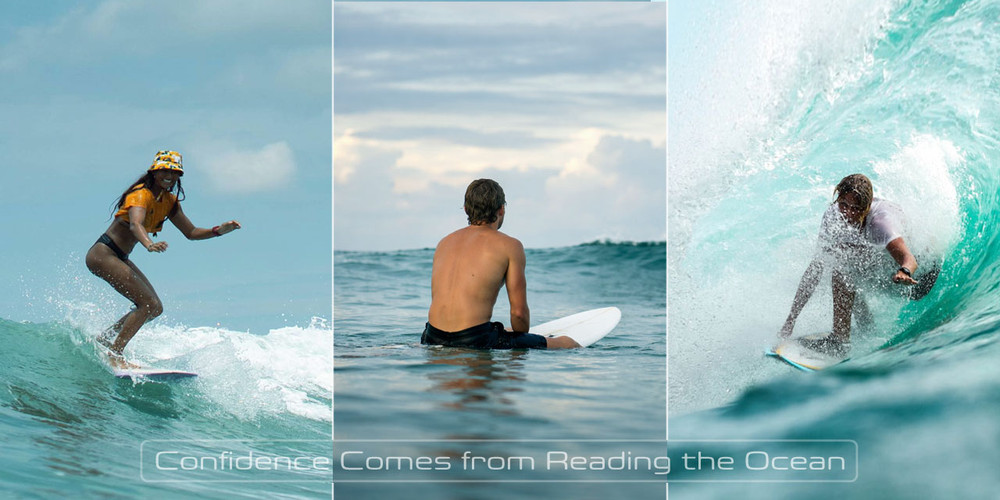
How to Surf – Building Real Confidence in the Water
Posted by Team Collective on 19th Mar 2026
A Practical Guide to Progressing with Confidence
Surfing isn’t about standing up once and calling it done. It’s about learning how the ocean moves, how your body responds, and how equipment supports or limits your progression. Confidence in surfing isn’t claimed. It’s built, session by session, through understanding and experience.
This guide is written for people who want to approach surfing as a skill developed over time, not a checklist of tricks or milestones. Whether you’re stepping into the water for the first time or returning after time away, the fundamentals matter more than hype, shortcuts, or trends. Focus on building a strong foundation. Progress lasts longer when it’s rooted in core skills.
Surfing isn’t about controlling the ocean. It’s about reading it and moving with it.
You don’t force waves to work. You match their timing, speed, and direction. At first, nothing feels predictable. Then patterns begin to appear.
Confidence doesn’t come from standing up once. It comes from understanding what the ocean is doing before you even paddle.
Understanding the Ocean Comes First
Before technique, before equipment, surfing begins with observation.
Spending time watching the water reveals patterns that no instruction manual can teach. You begin to notice where waves break consistently, where they don’t, and how currents move along the beach. Channels form where water flows back out to sea, while certain sections offer softer, more forgiving waves that suit learning and progression.
Good surfers aren’t just good riders. They’re good readers of the ocean. They choose conditions that suit their ability, not their ambition. Matching your ability to the conditions builds confidence faster and removes unnecessary pressure.
Choosing the Right Setup (Without Overthinking It)
Progression becomes easier when equipment supports learning rather than fighting it.
For beginners and developing surfers, stability and paddle power matter far more than speed or aggressive turning. A board that catches waves easily allows focus to shift toward timing, balance, and positioning instead of fatigue management.
Accessories don’t create skill, but they remove unnecessary friction. A reliable leash keeps your board close and reduces stress in the lineup. A well-fitted rash guard prevents chafing and excessive sun exposure, allowing longer, more comfortable sessions. Using wax suited to conditions improves grip and control without conscious effort.
Good equipment doesn’t make you better overnight. It removes the friction that slows you down.
None of these elements delivers instant improvement. What they do provide is consistency, and it’s from that consistency that confidence begins. Small, consistent improvements are what build lasting progress.
The Paddling Masterclass - Efficiency Over Effort
Paddling is where most sessions are won or lost. If energy is gone before a set arrives, confidence fades quickly. The goal isn’t brute strength. It’s efficiency, moving the most water with the least wasted effort.
Finding the right position on the board comes first. When the weight is centred correctly, the board sits flat on the water. Too far back and the tail drags. Too far forward and the nose digs. Most surfers find their balance when the nose sits just above the surface, allowing the board to plane smoothly.
Effective paddling happens beneath the surface. Reaching forward comfortably, entering the water quietly, and pulling with controlled resistance creates momentum without splash or strain. Finishing each stroke low and relaxed conserves energy and keeps the movement repeatable.
A slight lift through the chest improves visibility and reduces drag, while keeping the feet together prevents unnecessary resistance. When a wave approaches, paddling shifts from steady to committed. A short burst of speed, often supported by a few strong kicks, helps match the wave’s energy. Just as important is continuing to paddle until the ocean takes control of the board.
Standing Up Is a Result, Not the Goal
The pop-up often gets more attention than it deserves. In reality, it’s a consequence of everything that happens beforehand.
Strong take-offs come from correct positioning, matching the wave’s speed, and committing early. Practising on land builds familiarity, but timing in the water is what creates consistency. Rushing rarely helps. Stability almost always outperforms speed.
Progress Comes from Repetition, Not Rush
Surfing rewards patience.
Riding smaller waves cleanly builds more skill than chasing larger ones too early. Learning to trim along the face before forcing turns creates stronger foundations. Returning to familiar conditions allows subtle improvements to compound over time.
Progress in surfing is rarely loud or dramatic. It accumulates quietly through repetition, awareness, and time spent in the water.
Respect the Lineup and the Limits
The ocean is a shared space, and awareness of others shapes every session.
Understanding basic etiquette early reduces frustration and keeps people safe. Giving priority, avoiding unnecessary interference, and staying aware of where your board travels when you fall are fundamental responsibilities. Equally important is recognising when conditions exceed comfort or ability. Some days are better spent watching, learning, and letting the ocean pass.
Knowing when not to paddle out is part of becoming a well-rounded surfer. Good judgment and self-awareness matter as much as skill.
The Surfer’s Eyes - Reading Weather and Synoptic Charts
Confidence often begins on land, long before wax touches a board.
Low-pressure systems are responsible for generating most swell. Synoptic charts show how these systems move, how strong they are, and how long they’ve been transferring energy across the ocean. Closely packed pressure lines indicate stronger winds, while long, uninterrupted fetch allows swell to develop power and organisation.
As swell travels, the period becomes critical. Short-period swell generated nearby tends to feel restless and uneven. Longer-period swell from distant systems carries more energy, moves faster, and interacts with coastlines more cleanly.
Direction determines how that energy expresses itself at specific breaks. A swell that looks promising offshore can still underperform if it arrives at the wrong angle. Learning how local coastlines respond to direction turns uncertainty into intention.
Local wind shapes the final result. Offshore winds hold wave faces open and create cleaner lines. Onshore winds soften and destabilise waves. Cross-shore winds add texture that can challenge balance and timing, particularly during progression.
Satellite imagery and real-time radar complete the picture. Calm periods between weather fronts, often early mornings or late afternoons, can produce glassy conditions when temperature differences stabilise the air. The more you observe these patterns, the easier it becomes to recognise the right time to paddle out.
The Mental Game - Building Inner Resilience
Surfing tests confidence long before a wave is ridden.
The environment changes constantly, mistakes happen in public, and learning often feels exposed. Anxiety rarely comes from wave size alone. It comes from uncertainty. Where to sit, when to paddle, whether you’re in the way.
Managing this isn’t about pushing harder. It’s about slowing down. Observing before entering the water allows patterns to emerge and reduces mental noise. Redefining success helps as well. On some days, confidence comes from positioning well, staying calm through a set, or simply remaining relaxed.
Fear of being held underwater is common. Fighting the water burns oxygen quickly, while relaxation allows the wave to pass and the body to resurface naturally. Controlled breathing restores composure and steadies decision-making.
Confidence isn’t the absence of fear. It’s understanding it well enough not to be ruled by it. Facing and understanding fear is part of the progression.
The Mechanics of Underfoot Stability - Understanding Fin Setups
Fins influence confidence more than many surfers realise.
They provide drive and hold, determining how secure a board feels underfoot. Single fins encourage smooth, drawn-out lines and deliberate movement. Thrusters offer predictability and balance across conditions. Twin fins trade stability for speed, while quads add grip and momentum along the rail.
Fin construction matters too. Softer fins forgive mistakes and smooth progression. Stiffer fins respond instantly and demand precision.
When a board feels unsettled, the issue is often stability, not ability. Address equipment issues before questioning your skill level.
Surf Etiquette - The Unwritten Rhythm of the Lineup
Etiquette exists because surfing is shared and unpredictable.
Priority keeps people safe. Paddling wide preserves flow. Holding onto your board protects others. Communication and awareness maintain trust in the lineup. Mistakes happen. Acknowledgement matters more than perfection.
Experience often shows itself through restraint. Knowing when to paddle out and when not to reflects understanding rather than hesitation.
Surfing Is a Long Game
There is no finish line in surfing.
The reward isn’t perfection. It’s connection to the ocean, to movement, and to a process that never fully reveals itself. Skills deepen over time, confidence settles, and sessions become less about outcome and more about presence. The process matters more than the outcome.
Take your time. Build skills that last. Let your equipment support your sessions, not define them.