
Bodysurfing Handboard Guide - Size, Shape, and How to Choose
Posted by POD Team on 9th Mar 2024
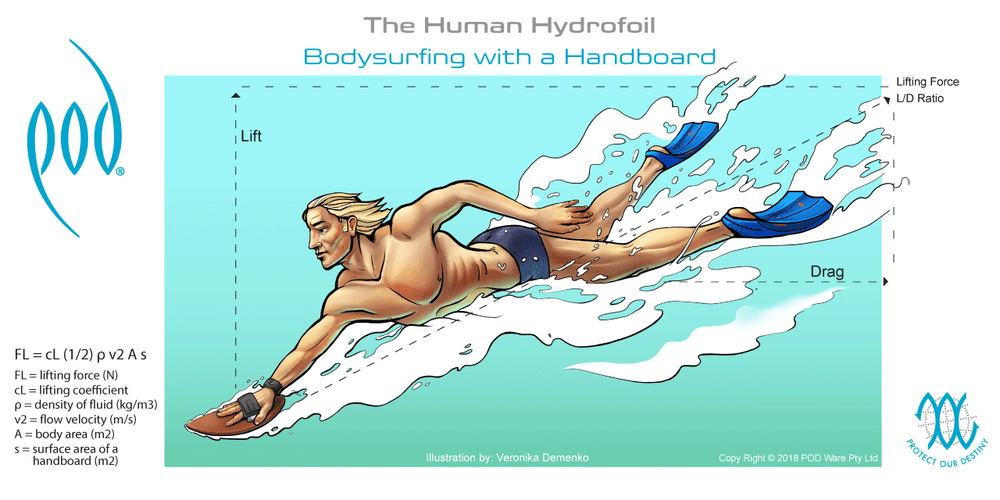
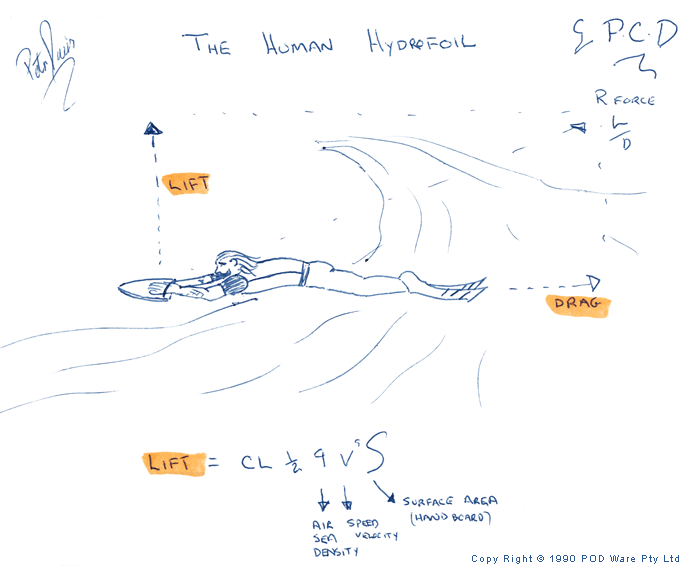
The illustration above shows the physics of the human hydrofoil - the bodysurfer in motion. Lift force, drag, and the lift-to-drag ratio all play a direct role in how a handboard performs. Understanding these forces is what separates a well-chosen handboard from one that works against you.
Choosing the right bodysurfing handboard starts with understanding size, shape, and how those two variables interact with your body and the waves you surf. This guide covers each factor clearly so you can make an informed decision before you buy.
Bodyboarders and Surfers Know What's Best
Bodyboarders and surfers select a board's length, width, and volume based on their height and weight. They understand how length, width, rails, thickness, and materials affect performance in real surf conditions. The same principle applies directly to bodysurfers choosing a handboard.
It's No Different for a Bodysurfer
With over 35 years of handboard manufacturing and bodysurfing experience, the relationship between a rider's body area and handboard surface area has been tested extensively in real surf conditions.
The right size handboard to suit a bodysurfer's height and weight should be just over the size of your hand, up to a maximum of two-and-a-half times the length of your hand and two-and-a-half times the width of your hand.
For example, at 170cm and 70kg, and observing bodysurfing friends at 180cm and between 80-90kg, handboards twice the length and width of the hand consistently provide the best combination of lifting force, speed, and control.
This is practical, tested advice grounded in real water experience across decades of shaping and testing.
The Best Shape for a Bodysurfing Handboard
With the wide range of handboard shapes now available, understanding which shapes work is actually essential before making a decision.
The best shapes are elliptical or oval (surfboard outline shapes) and rounded rectangles (snowboard or skateboard shapes). These shapes maximise the usable surface area for the fastest body lift out of the water, resulting in less drag and more efficient planing.
Handboards with cut-out tail shapes - crescent tails, fishtails, and similar designs - lose surface area and volume through those tail cuts. Less surface area means less lift. These tail shapes also direct fluid density to splay outward, spraying water toward your face. The result is reduced forward vision, less directional control, reduced lift, and lower speed. A board with a cut-out tail would need a larger overall footprint to compensate for that lost surface area, which defeats the purpose of the design.
Proven Hand and Strap Position
Hand position on a handboard directly affects performance and control. This has been researched and tested since the late 1980s through shaping and water testing across a wide range of conditions.
Testing showed that hand position in the middle of the board tends to reduce control. Boards with the hand placed further forward tend to nose-drive - the front of the board digs into the water rather than planing across it.
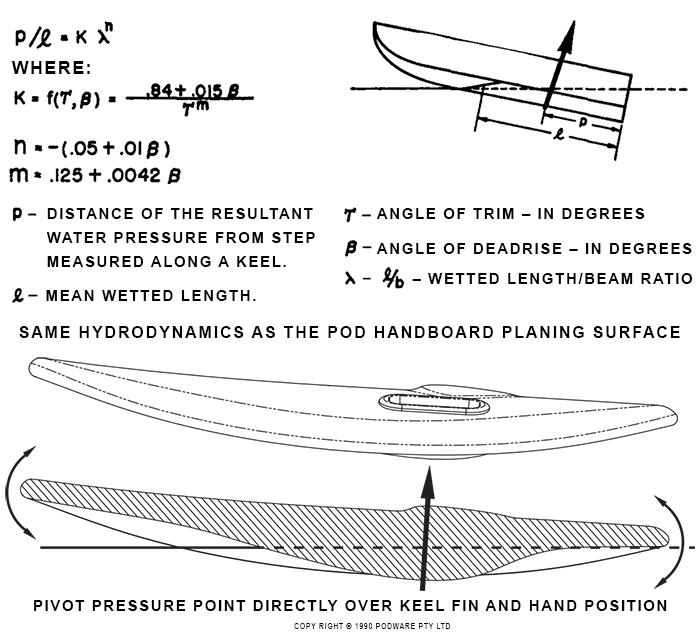
The best hand position is off-centre toward the rear of the board. This is consistent with the hydrodynamics of planing hull surfaces and the centre of pressure on a planing surface. The illustrations below clearly show this positioning.
Hydrodynamics of a Planing Hull - Centre of Pressure
For a deeper understanding of how these forces interact with your body position on the wave, read Bodysurfing Speed - The Missing Link Most Riders Miss.
Convex Deck and Concave Bottom
Before selecting a handboard size, the deck and bottom configuration matter as much as the dimensions.
- Convex deck: Provides comfort in the palm of the hand. A flat deck surface strains the hand and arm muscles throughout a session. The convex shape holds your hand in position and prevents it from slipping out from under the strap. POD developed the world's first ergonomic palm support based on this principle, further refining what the convex deck started.
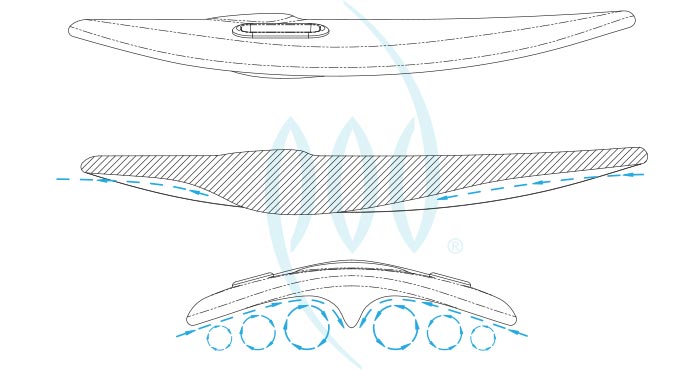
- Concave bottom: Generates optimum lift, speed, and directional control in the surf. The concave channel creates a high-velocity Venturi Effect - water and air mix through the channel to form an aerated cushion that reduces skin-friction drag and generates dynamic lift. No spray on the face is a direct result of this shape working correctly.
For the full physics explanation of how the concave and keel work together to generate lift, read The Invisible Cushion - Why Handboards Fail vs Physics-First.
POD Handboards - Flow Velocity Built for Bodysurfing
The POD handboard signature shape combines a concave bottom and keel fin surface area with the interaction of air and water to generate instant lifting force, speed, and control. This is not a marketing position - it's the result of decades of testing the same physics principles in real surf conditions.
Neutral Buoyancy - Why It Matters
A neutral buoyancy handboard is natural to swim with. It offers paddle freedom and comfort through effortless swimming strokes when cutting through the water without adding extra load to your shoulder.
An overly buoyant handboard creates problems immediately. It makes it difficult to cut through the water's surface while swimming. It adds load to the hand, wrist, arm, and shoulder, and twists your body to one side with each stroke. That's not bodysurfing - it's fighting your own equipment.
Buoyancy, volume, and surface area work together:
- A smaller handboard provides less lift
- A larger board with more volume and surface area offers more lift, less drag, and more speed
- Too large, and you can't swim efficiently to the break or catch waves cleanly
The handboard size needs to match your height and weight to achieve the right balance between lift and swimability. It is too small, and you won't get the lift and speed needed for real performance. Too large, and the board becomes an obstacle rather than a tool.
Boards larger than three times the rider's hand length and width, with thickness over 40-60mm, are closer in size to a swim kickboard or training board. Some are as large as a small bodyboard. Boards manufactured with the same materials as bodyboards are over-buoyant and not suited to bodysurfing. Even for an experienced swimmer, paddling with a board that size and with that buoyancy is physically difficult and quickly discouraging.
A board that forces you to kick your legs like a training board rather than swim naturally is not a bodysurfing handboard. It's a different piece of equipment being sold under the wrong name. There are also real safety considerations: an oversized, over-buoyant board in surf conditions poses an injury risk to the rider and others nearby.
Before You Buy a Bodysurfing Handboard
Take the time to research the full range of bodysurfing brands and individual shapers available before deciding. The market has expanded significantly, and not all handboards are designed around the physics that actually govern performance in the surf.
Find the size that suits your height and weight so you can swim naturally and efficiently to the break, catch waves cleanly, and improve your bodysurfing performance wave after wave.
Your five priorities when selecting a handboard:
- Surface area - matched to your body size
- Volume - enough for lift without over-buoyancy
- Convex deck - palm comfort and hand position stability
- Concave bottom - dynamic lift, speed, and directional control
- Neutral buoyancy - natural swimming without added load
These five factors together determine whether a handboard delivers comfort, lift, speed, and control - or works against you from the moment you paddle out.
For more on bodysurfing technique with and without a handboard, read Body Surfing With or Without a Board - What Actually Makes the Difference.
For guidance on choosing the right swim fins to complement your handboard, read Swim Fins: How to Choose Bodysurfing Fins.
Know the Physics. Choose the Board.
Size, shape, buoyancy, deck configuration, and bottom contour all determine how a handboard performs in real surf. Getting these right means the board works with your body and the wave rather than against both.
A well-chosen handboard becomes part of your movement in the water. You stop thinking about it and start riding better because of it.
That's what 35 years of testing in the ocean looks like when it's built into a board.