
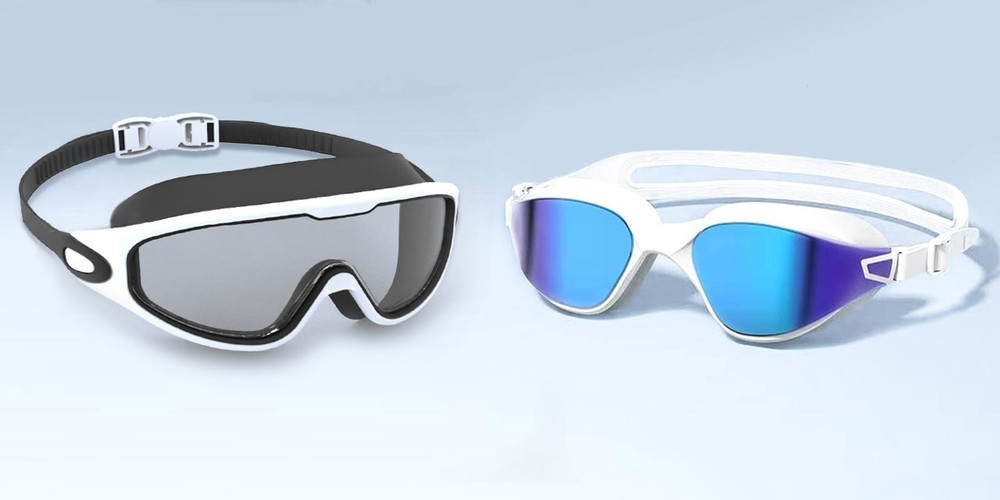
Swim Mask vs Goggles - Which One Actually Fits Your Swimming?
Posted by POD Collective on 27th Apr 2025
Masks vs Goggles
Swimmers often face a straightforward choice between swim masks and goggles. Both have real advantages, and the right option depends on how and where you swim.
This article breaks down the key differences to help you make a clear, informed decision.
If you've already decided that goggles are the right fit for your swimming, explore our POD Swim Goggles range. The AquaLuxe swim goggles deliver comfort, clarity, and reliable performance across pool training, open-water swimming, and everyday recreational use.
Key Differences Between Swim Masks and Goggles
Understanding the practical differences between swim masks and goggles helps you choose the right tool for your swimming environment.
Design and Fit
Swim masks and goggles are built for different purposes. Swim masks cover the eyes, nose, and sometimes the mouth, providing a broader seal across the face. Goggles cover only the eyes and the surrounding area, relying on a tighter seal around the eye sockets with an adjustable headband for a secure fit.
Swim masks typically feature a flexible facial gasket that conforms to the shape of the face. This wider contact area distributes pressure more evenly and reduces the seal failure common with ill-fitting goggles.
Field of Vision
Swim masks generally offer a wider field of view. Their larger lenses provide better peripheral coverage, which is particularly useful in open water where awareness of your surroundings matters.
Goggles have smaller lenses that provide a more focused forward view. For pool swimming, where you're following a lane line, that focused view is rarely a disadvantage. In open water, the narrower peripheral vision can be more limiting.
If you swim in open water regularly or want to take in more of what's around you, a swim mask offers a practical advantage.
Comfort and Seal
Swim masks are designed for extended wear. Their larger surface area distributes pressure across the face rather than concentrating it around the eye sockets, which reduces fatigue during longer sessions.
Goggles can fit too snugly around the eyes, leading to discomfort over time. Fit is critical - too small and the pressure builds, too loose and water gets in. Many swimmers prefer goggles for their lighter feel and lower profile. The right choice often comes down to personal sensitivity to pressure and how long you're in the water.
Can swim goggles cause headaches?
Yes. There are a few common reasons:
- Tight fit: Excessive pressure around the eyes and forehead leads to discomfort and headaches during or after a swim.
- Nasal bridge pressure: Some goggles press too firmly on the bridge of the nose, which compounds the problem.
- Inadequate padding: Goggles without sufficient cushioning create pressure points that build up over a session.
- Prolonged use: Extended time in ill-fitting goggles amplifies all of the above.
If you experience headaches regularly, adjust the fit first. If the problem continues with the same pair, try a different model. Persistent issues are worth discussing with a medical professional.
Can you wear goggles while surfing?
Yes - goggles work well for surfing, bodyboarding, and bodysurfing. They improve underwater visibility, reduce glare, and protect your eyes from UV exposure. Quality UV-rated lenses help reduce the risk of eye damage from prolonged sun exposure, which is a real concern for surfers spending extended time on the water.
For bodysurfing and bodyboarding specifically, where your face is closer to the water surface, goggles reduce the impact of water splashback and help you see clearly through the wave.
Lens Options
Goggles come in a range of lens types, each suited to different light conditions and environments.
- Clear lenses: Best for indoor swimming and low-light conditions. They let the most light through and offer the clearest view under artificial lighting or on overcast days.
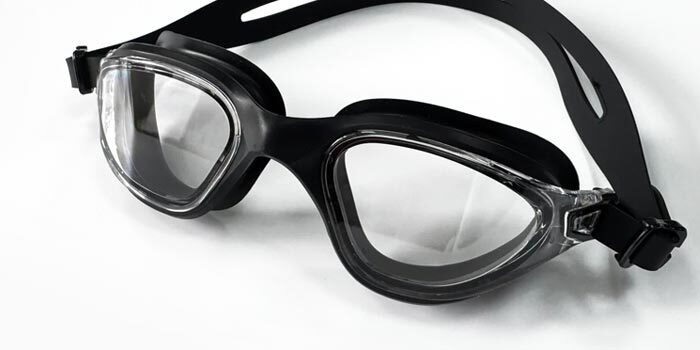
AquaLuxe Black Swim Goggles - Clear Lenses
- Tinted lenses: Designed for outdoor swimming in bright conditions. They reduce glare from the sun and improve contrast in open water or outdoor pools.

AquaLuxe Black Swim Goggles - Black Tinted Lenses
- Mirrored lenses: Add a reflective coating over the tinted base. They block more sunlight, reduce glare more effectively, and improve depth perception in bright outdoor conditions. Popular for open-water swimming, triathlons, and outdoor training.

AquaLuxe White Swim Goggles - Blue Mirror Lenses
The AquaLuxe range covers all six lens types across the full goggle collection:
- Clear Lens AquaLuxe Goggles - pool training and low-light conditions
- Black Tinted Lens AquaLuxe Goggles - outdoor swimming and glare reduction
- Blue Mirror Lens AquaLuxe Goggles - open water, neutral colour rendering
- Green Mirror Lens AquaLuxe Goggles - contrast enhancement in variable light
- Gold Mirror Lens AquaLuxe Goggles - direct sunlight and depth perception
- Silver Mirror Lens AquaLuxe Goggles - accurate colour perception across outdoor conditions
Why are swimming goggle lenses blue or black?
Blue and black tinted lenses are common in swim goggles for practical reasons:
- Light reduction: Both colours reduce glare from the water surface and bright sunlight, improving eye comfort during outdoor sessions.
- Enhanced contrast: Tinted lenses improve contrast underwater, making it easier to read your surroundings in brighter conditions.
- UV protection: Many tinted lenses include UV filtering, which is important for swimmers who spend extended time outdoors.
- Aesthetics: Blue is a popular colour choice that naturally suits the aquatic environment.
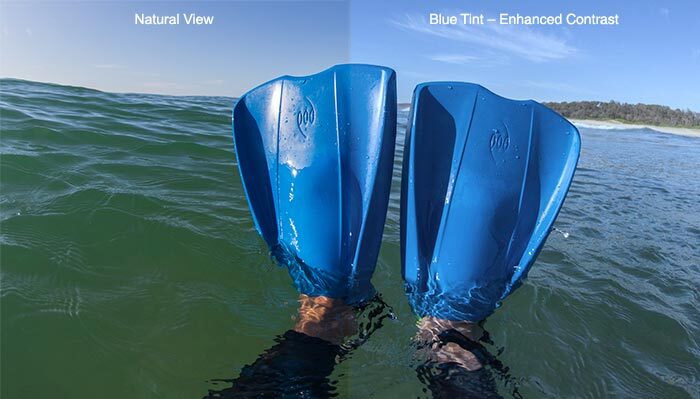
Natural View vs Blue Tint Lens - PF2 POD Swim Fins

Natural View vs Black Tint Lens - PF2 POD Swim Fins
Clear to lightly tinted lenses are better suited to indoor or low-light swimming. They allow more light through without altering the colours around you.
Should I consider mirror lenses for open-water swimming?
Yes. Mirror lenses are well suited to open-water swimming and outdoor water sports.
- Glare reduction: The reflective coating cuts glare from the water surface, making it easier to see and navigate in bright conditions.
- Comfort over long swims: Reduced brightness means less eye strain across extended sessions.
- UV protection: Many mirror lenses include UV filtering to protect against outdoor exposure.
- Visibility to others: The reflective surface can make you more visible in open water, which has a practical safety benefit.
Mirror Lens Options
- Blue mirror lenses: Neutral colour rendering with natural contrast enhancement and strong glare reduction. Well suited to open-water swimming, sailing, and triathlons.
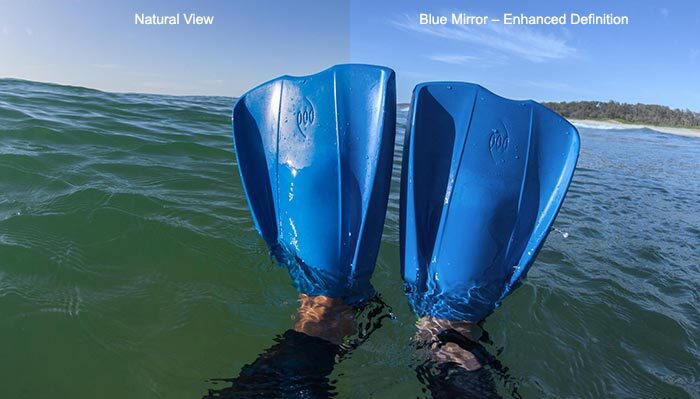
Natural View vs Blue Mirror Lens - PF2 POD Swim Fins
- Gold mirror lenses: A warm golden tint that improves contrast and depth judgment. Particularly effective in direct, bright, and reflective sunlight.
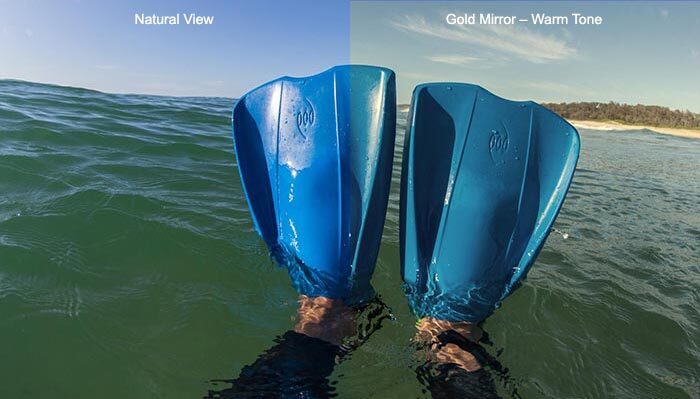
Natural View vs Gold Mirror Lens - PF2 POD Swim Fins
- Silver mirror lenses: Accurate colour perception and natural contrast. A versatile choice across a wide range of outdoor conditions and water sports.
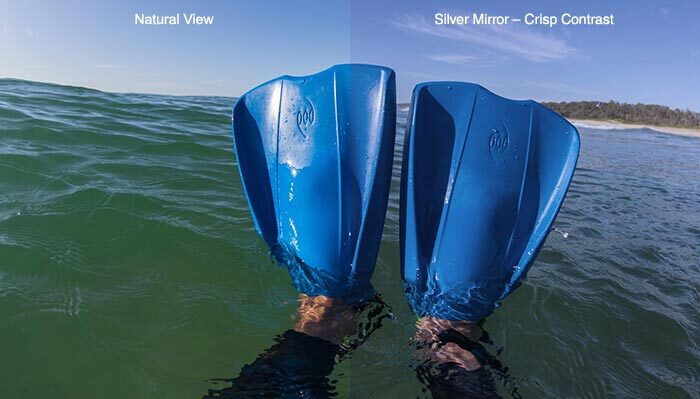
Natural View vs Silver Mirror Lens - PF2 POD Swim Fins
When choosing goggles for open-water swimming or triathlons, consider your typical conditions - time of day, weather, and water clarity - to match the right lens to your environment. Try different styles to confirm the fit is secure and comfortable before committing to a pair.
Choosing the Right Option for You
How do I prevent swim goggles from fogging?
- Anti-fog spray or gel: Apply to the inside of the lenses before swimming.
- Spit and rinse: Spit on the inside of the lenses, avoid touching with your fingers, and rinse lightly with water. The natural enzymes reduce fogging.
- Rinse with cold water: Before putting on the goggles, rinse with cold water to reduce the temperature difference between your face and the water.
- Dry properly after use:Let the goggles air dry, then store them in a case. Residual moisture encourages fogging.
- Avoid touching the lenses: Oils and dirt from your fingers degrade the anti-fog coating. In salt water, rinse immediately after use - salt residue can scratch the lens surface over time.
- Anti-fog lenses: A practical option for regular swimmers. More consistent than sprays and gels over time, though direct contact will gradually wear the inner coating.
Advantages of Swim Masks
Comfort for longer sessions
Swim masks distribute pressure more evenly across the face, reducing discomfort around the eye sockets that can build up during extended swims. If you're training for long-distance events or simply prefer longer water sessions, a swim mask is worth considering.
Better suited to open water
In open-water conditions, the wider field of vision a swim mask provides is a practical advantage. You can take in more of your surroundings without turning your head, which helps with navigation and awareness in unpredictable water.
Swim masks are available in two-piece and one-piece designs. The AquaLuxe range currently focuses on goggles rather than adult swim masks, given the complexity of achieving a functional, streamlined facial gasket that accommodates the full range of adult facial structures.
Advantages of Goggles
Streamlined for performance
Goggles are lower profile than masks. Their compact structure reduces drag, allowing you to move through the water more efficiently. Modern goggle lenses have improved significantly in curvature and peripheral coverage. For competitive swimming or any session where speed and efficiency matter, goggles are the more practical choice.
Consider your swimming environment.
Pool swimming suits goggles well. The lane structure means peripheral vision is less critical, and the snug fit effectively handles the controlled conditions of a pool. For open-water, lake, or ocean swimming, a swim mask's broader coverage may serve you better.
Fit and comfort
Everyone's face shape is different. The only reliable way to find the right fit is to try both options. Pay attention to the seal, pressure distribution, and how the goggle feels after ten minutes - not just when you first put it on. A goggle that's too tight will cause discomfort long before the session ends. One that's too loose will let water in.
For a fit that works across most face shapes, the AquaLuxe Goggles use a BioFit facial design with a customisable headband. Available across all six lens types to match your specific conditions.
AquaLuxe Swim Goggles by POD Ware
The AquaLuxe goggles are built around a single frame platform with six lens options. One fit system designed to work across pool training, open-water swimming, triathlons, and bodysurfing.
Key features across the range:
- Broad field of vision: Curved, anti-fog lenses provide a wide, clear view across all light conditions.
- UV protection: All lens types include UV filtering for outdoor use.
- BioFit design: A customisable headband and facial gasket that adjusts to most face shapes for a secure, comfortable fit.
Each pair includes a protective storage case. For added protection between sessions, the POD Dry-Capsule Eyewear Case features intelligent airflow and impact resistance to keep your goggles dry and protected.
Your Conditions. Your Lens.
Swim masks offer greater comfort and a field of vision for longer swims and open-water environments. Goggles are lighter, lower profile, and better suited for performance-focused swimming across pool and open-water conditions.
The choice comes down to where you swim, how long you're in the water, and what level of pressure around your eyes you find comfortable. Both options have a clear place - understanding that distinction is what helps you choose well.